Rembrandt
The file
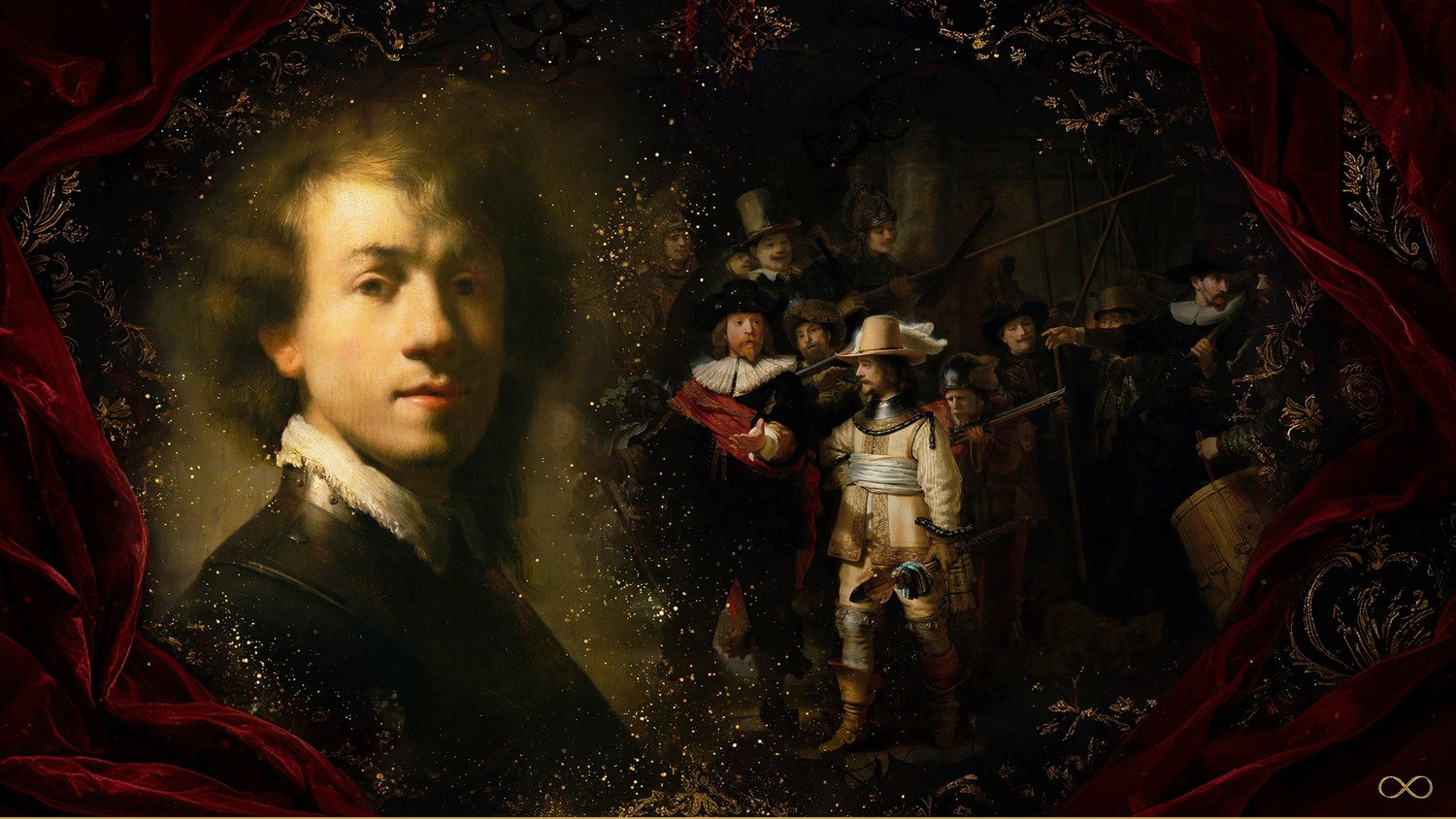
Twelve plates. Two covers. One gold light.
House of Gold was made by Aestas Infinity in 2026. It is a book in the archive, not a chapter of a series, and not a continuation of the Caravaggio book. Twelve paintings in the order they were made, from 1628 to 1669, and a cover at each end. The line under a title says whether the plate is after the painting or only set beside it. On two plates the woman is clothed. In the paintings she is not. The words sit under the picture. The page is narrow enough for a phone.
The twelve
Look at the picture first. A plate may move a painting. It may not put a new object in the frame and let the reader think Rembrandt put it there. Where a body is clothed here and bare in the museum, the line says so.
01 · The first watch
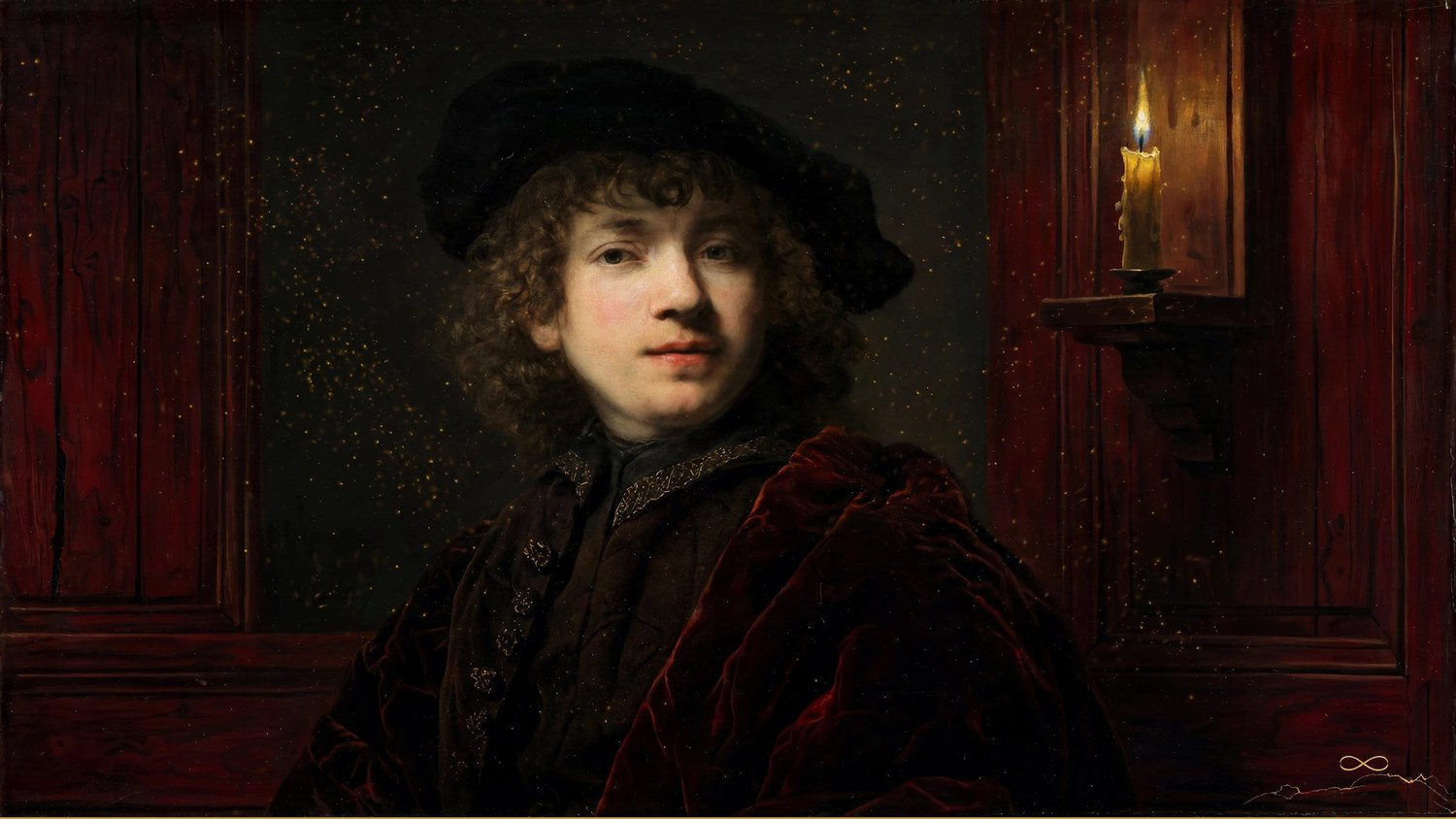
The first watch. After Self-Portrait as a Young Man, Rijksmuseum, SK-A-4691, 22.5 × 18.6 cm, 1628, painted in Leiden when he was about twenty-two. The face and the shadow are his. The candle, the red panelling and the gold dust are added.
02 · The prophet and the ruin
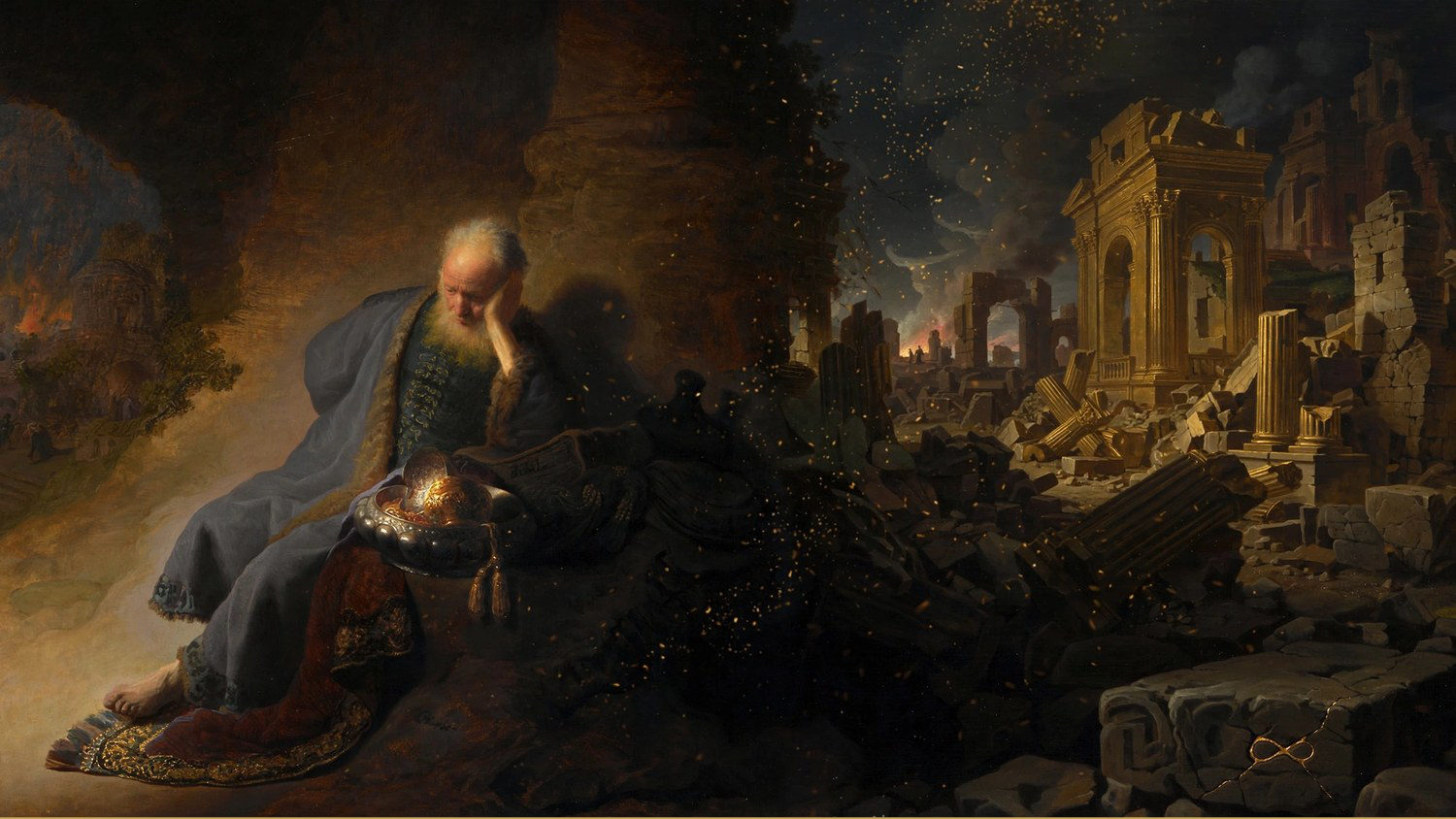
The prophet and the ruin. After Jeremiah Lamenting the Destruction of Jerusalem, Rijksmuseum, SK-A-3276, 58 × 46 cm, 1630. The museum bought it in 1939. The prophet and the burning city are his. The ruin in the foreground and the gold dust are added.
03 · The lesson
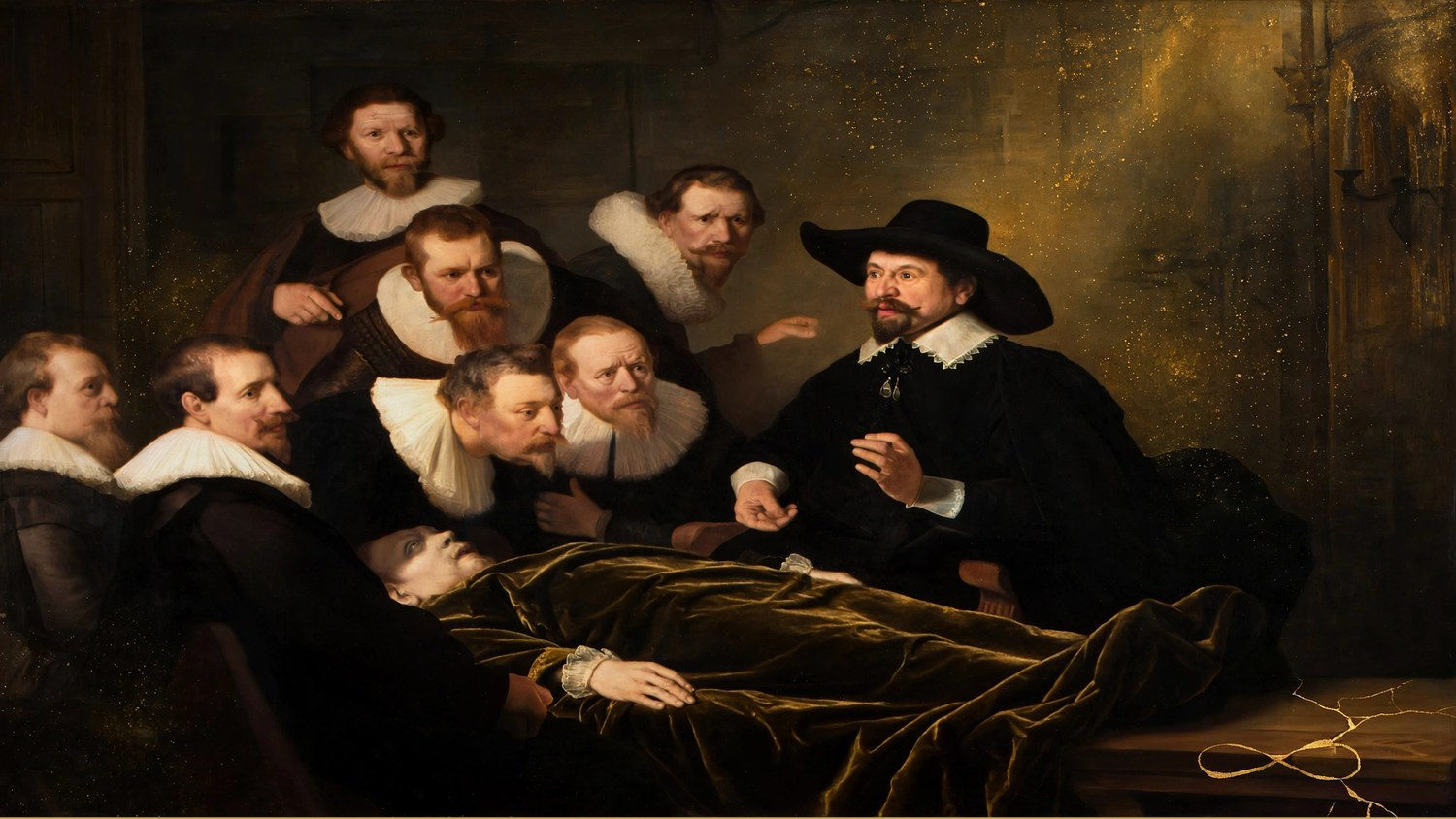
The lesson. After The Anatomy Lesson of Dr. Nicolaes Tulp, Mauritshuis, 146, 169.5 × 216.5 cm, 1632. The body is Aris Kindt, hanged on 31 January 1632. The Mauritshuis bought the painting in 1828. The group and the lit arm are his. The body stays covered. The dust is added.
04 · The writing on the wall
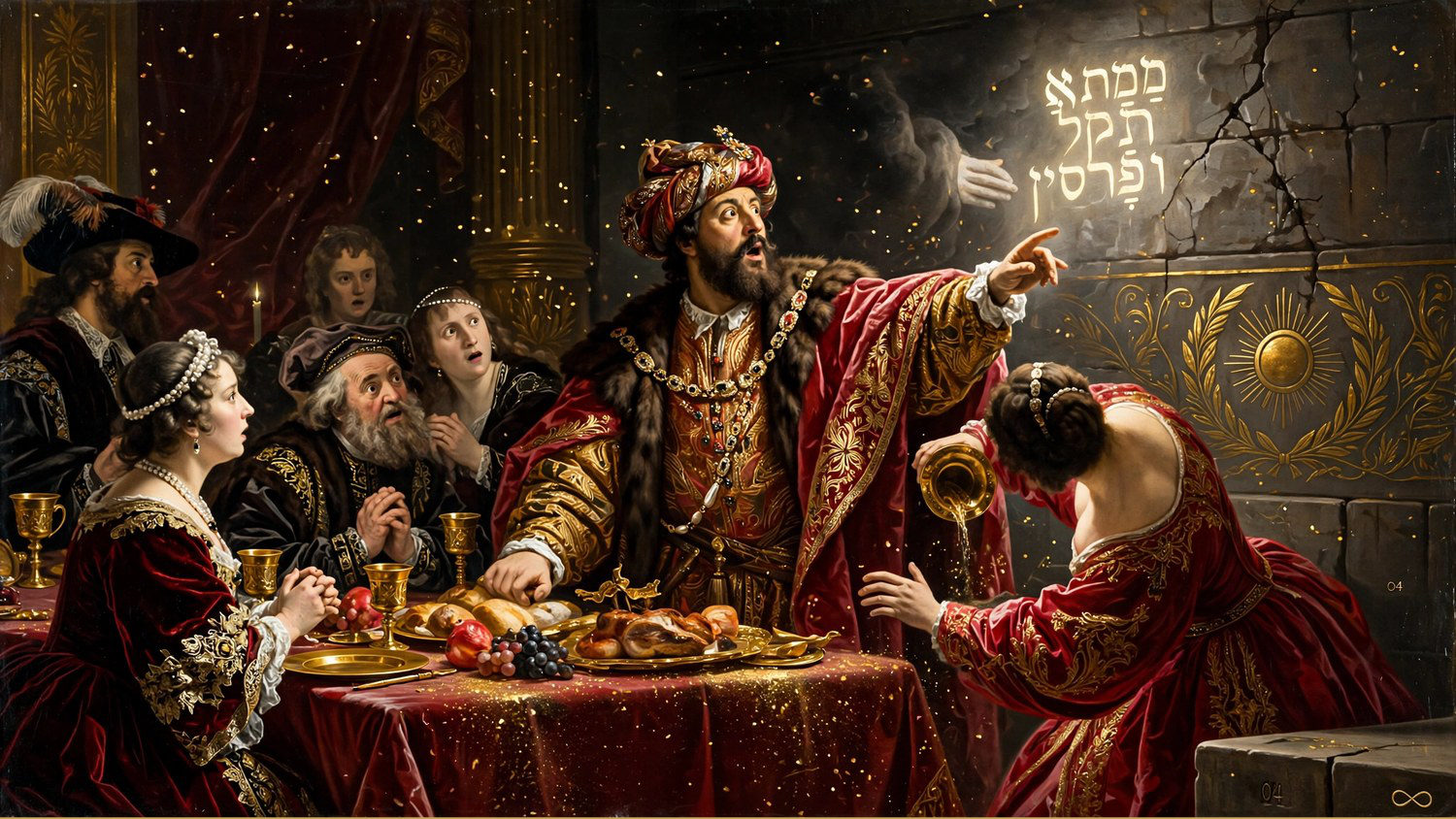
The writing on the wall. After Belshazzar's Feast, National Gallery, London, NG6350, 167.6 × 209.2 cm, about 1636–38. The king, the guests and the writing are his. The cracked plaster, the red table and the dust are added.
05 · The gold arrives as dust
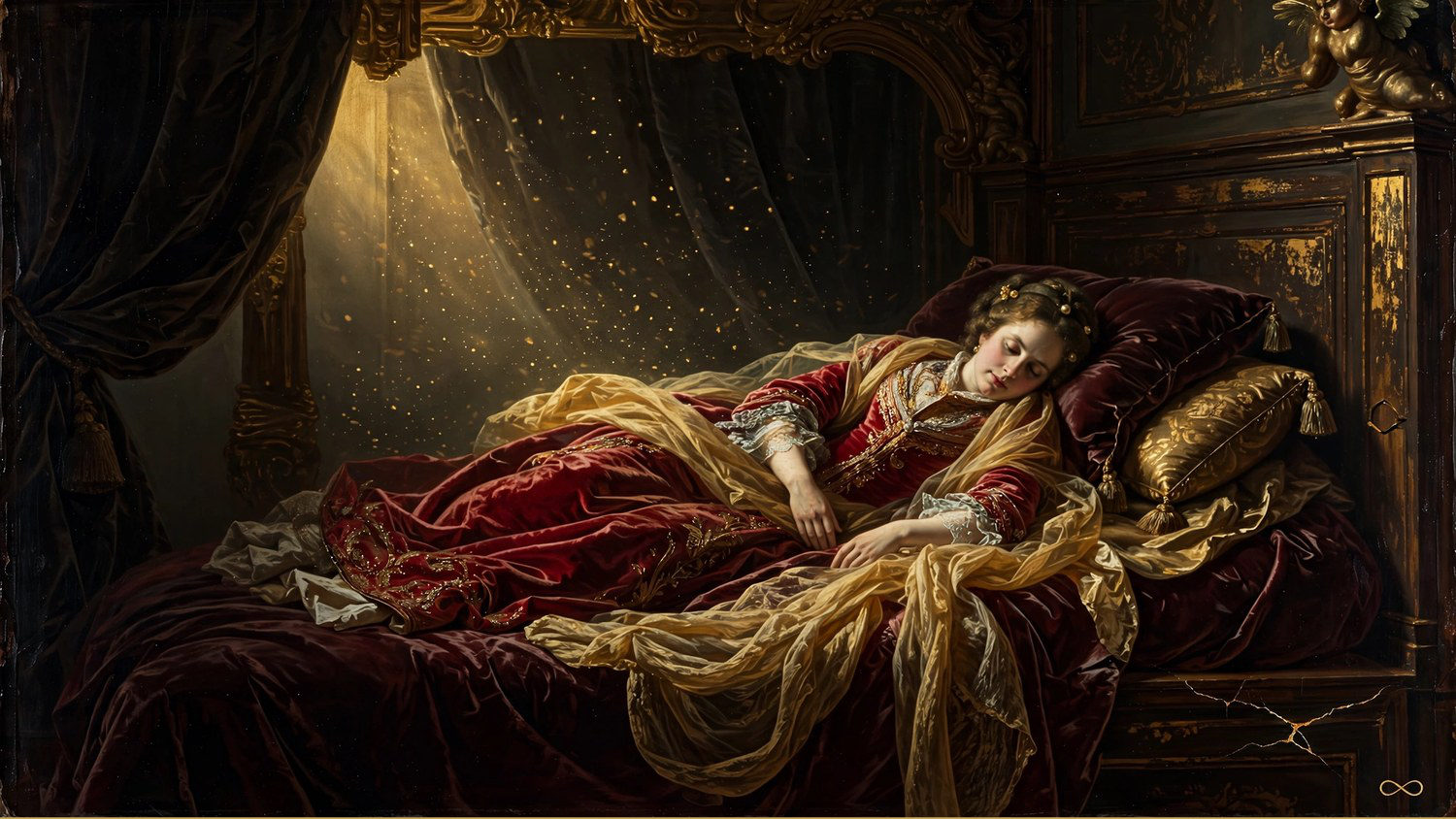
The gold arrives as dust. After Danaë, Hermitage, ГЭ-723, 185 × 202.5 cm, 1636, reworked about 1643. In the painting she is naked. In the plate she is clothed. A visitor threw acid on the canvas in 1985 and cut it. The bed, the curtain and the raised hand are his. The robe and the dust are added.
06 · The company
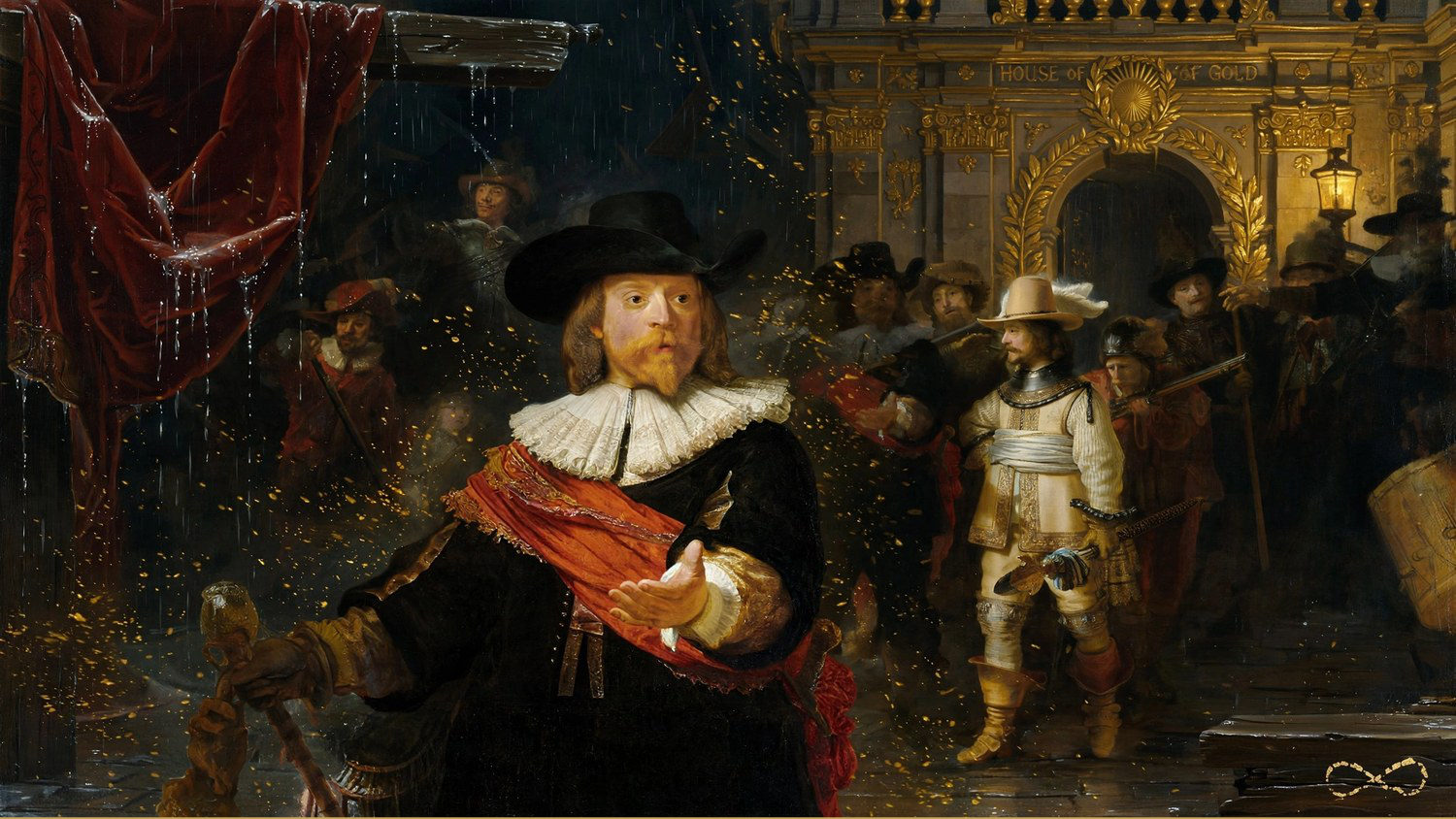
The company. After The Night Watch, Rijksmuseum, SK-C-5, 379.5 × 453.5 cm, 1642. Cut down on all sides in 1715. The name comes from the darkened varnish, not from a night scene. The captain, the lieutenant and the company are his. The gold dust and the wet street are added.
07 · The hand on the head
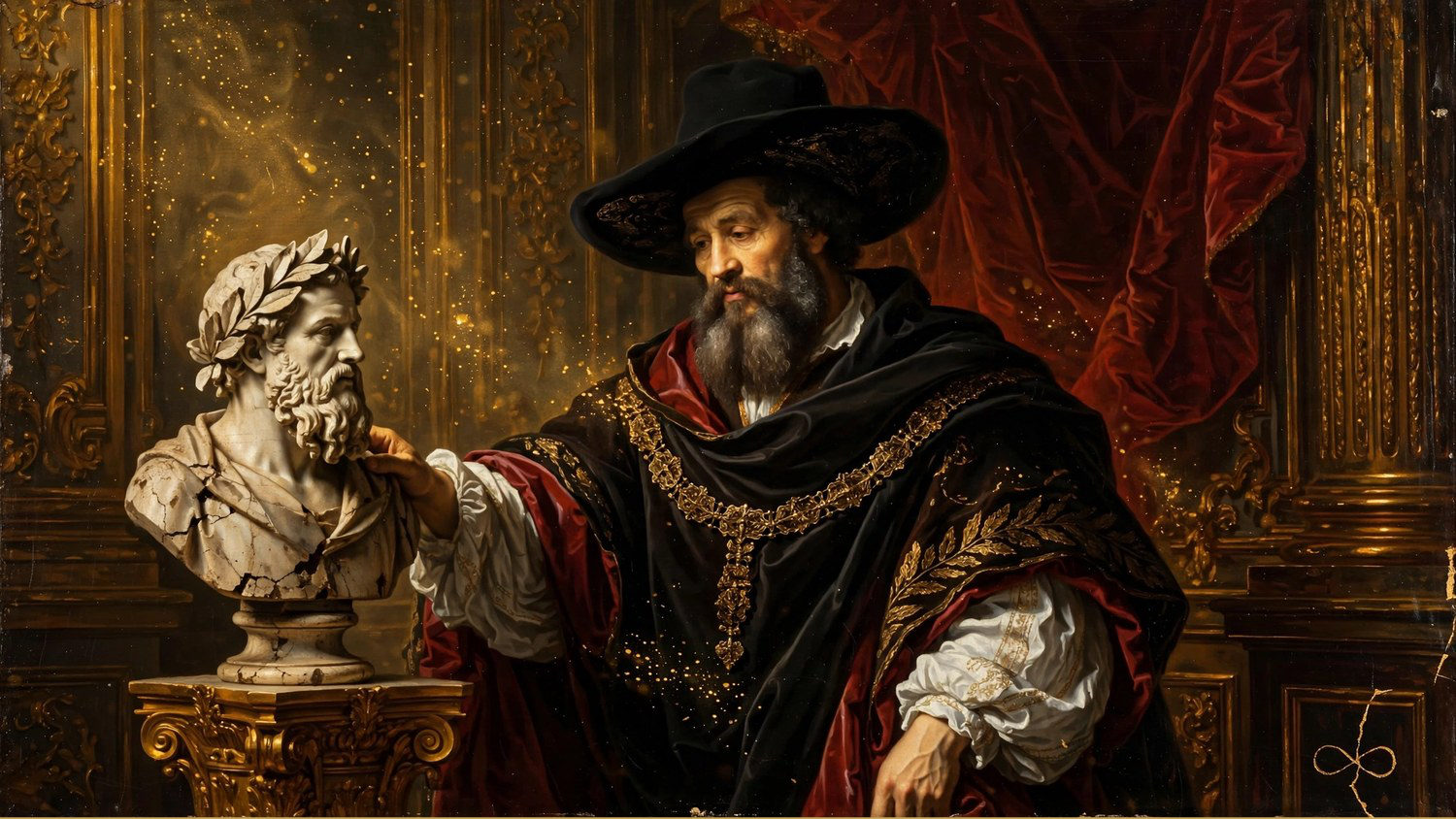
The hand on the head. After Aristotle with a Bust of Homer, Metropolitan Museum, 61.198, 143.5 × 136.5 cm, 1653, made for Don Antonio Ruffo. The Met bought it in 1961 for 2.3 million dollars. The philosopher, the bust and the chain are his. The panelling and the dust are added.
08 · The letter
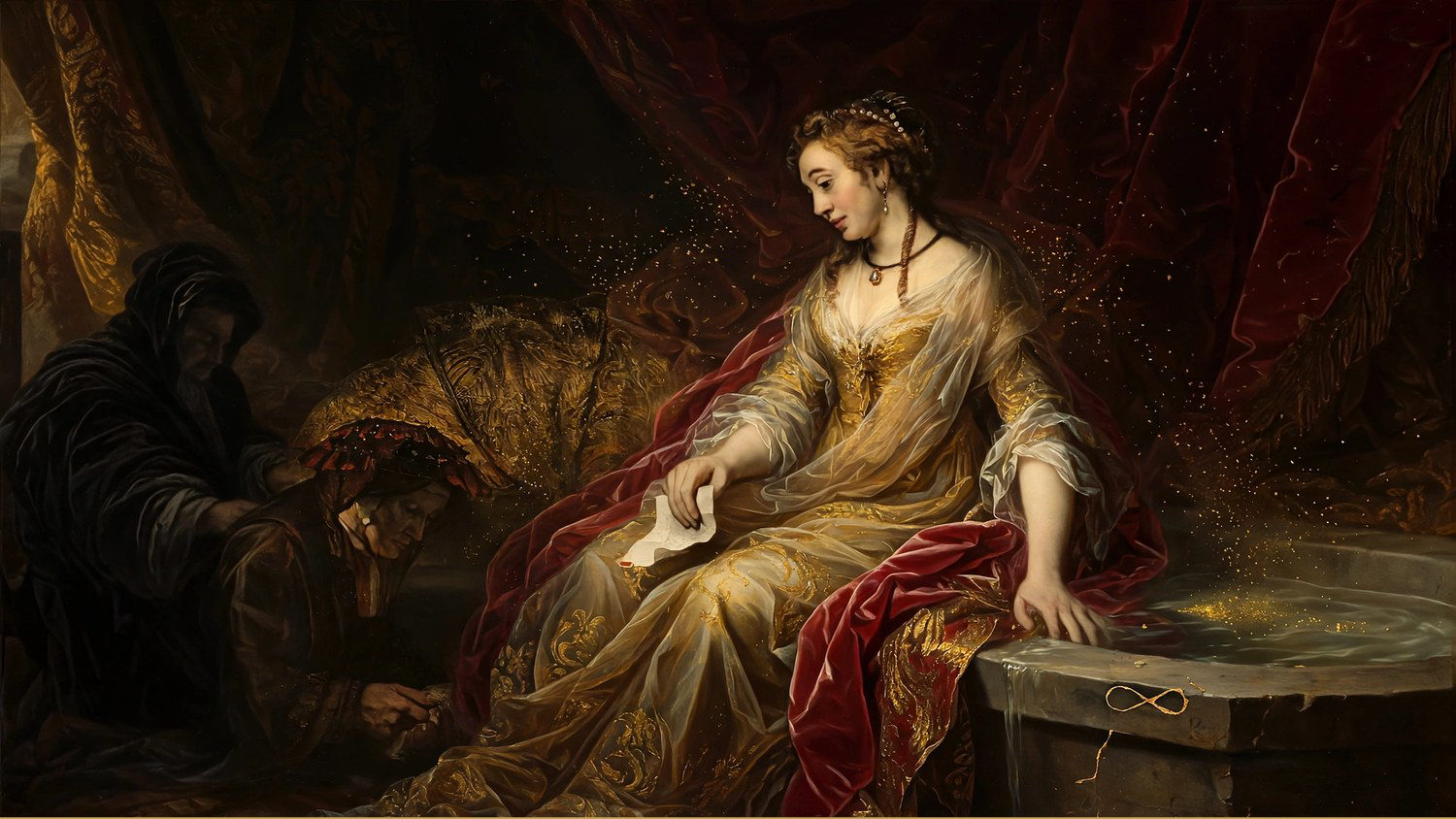
The letter. After Bathsheba at Her Bath, Louvre, MI 957, 142 × 142 cm, 1654. In the painting she is naked. In the plate she is clothed. The model is traditionally said to be Hendrickje Stoffels. The pose, the letter and the servant are his. The gown and the dust are added.
09 · The crossed hands
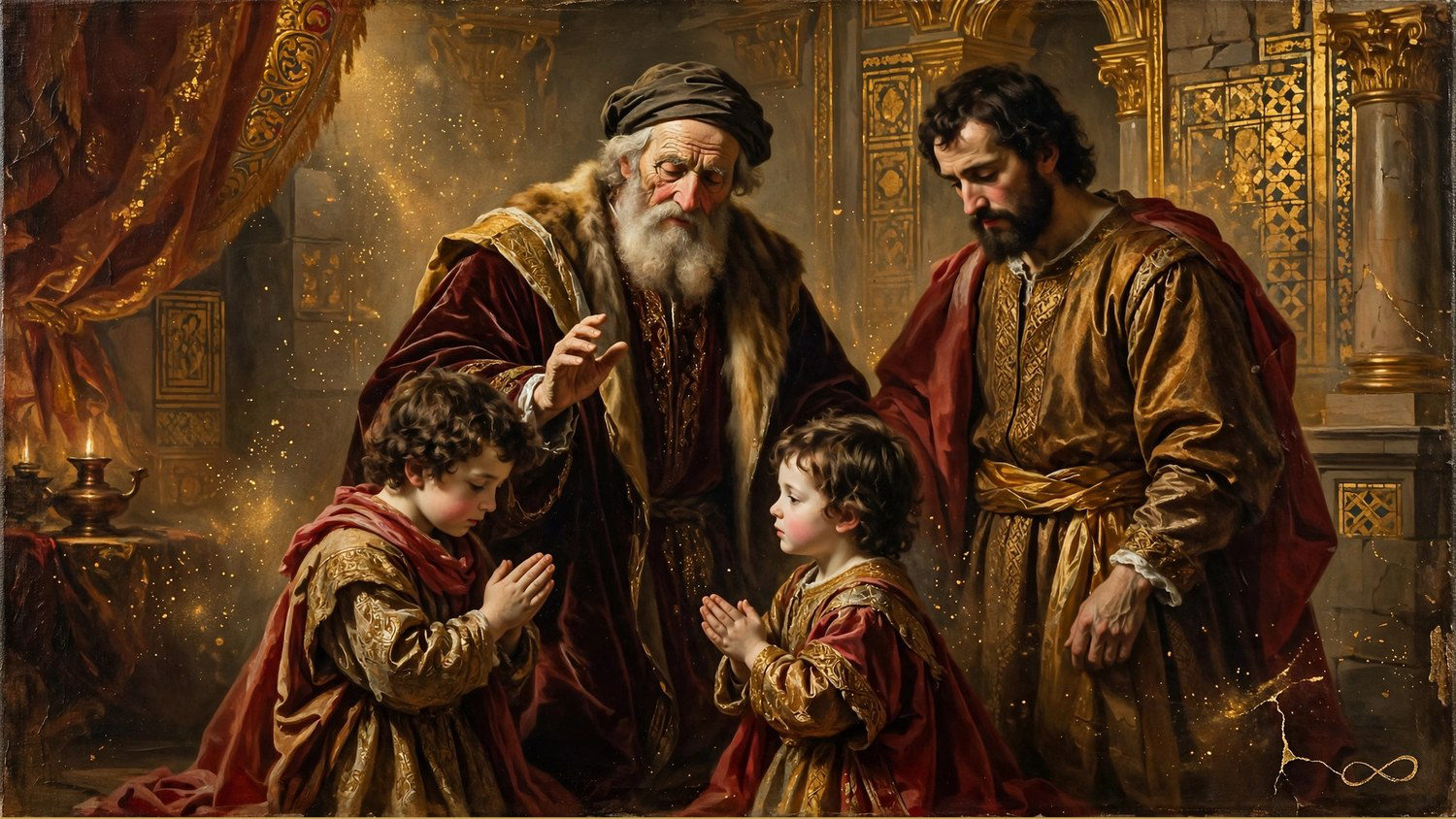
The crossed hands. After Jacob Blessing the Children of Joseph, Gemäldegalerie Alte Meister, Kassel, GK 249, about 175 × 210 cm, 1656. Jacob crosses his arms and blesses Ephraim over Manasseh. The museum page for the painting does not open as a single work, so the link is the painting. The group and the crossed hands are his. The panelling and the dust are added.
10 · The apostle

The apostle. After Self-Portrait as the Apostle Paul, Rijksmuseum, SK-A-4050, 91 × 77 cm, 1661. He is fifty-five. The face, the turban and the book are his. The panelling and the dust are added.
11 · The inspectors
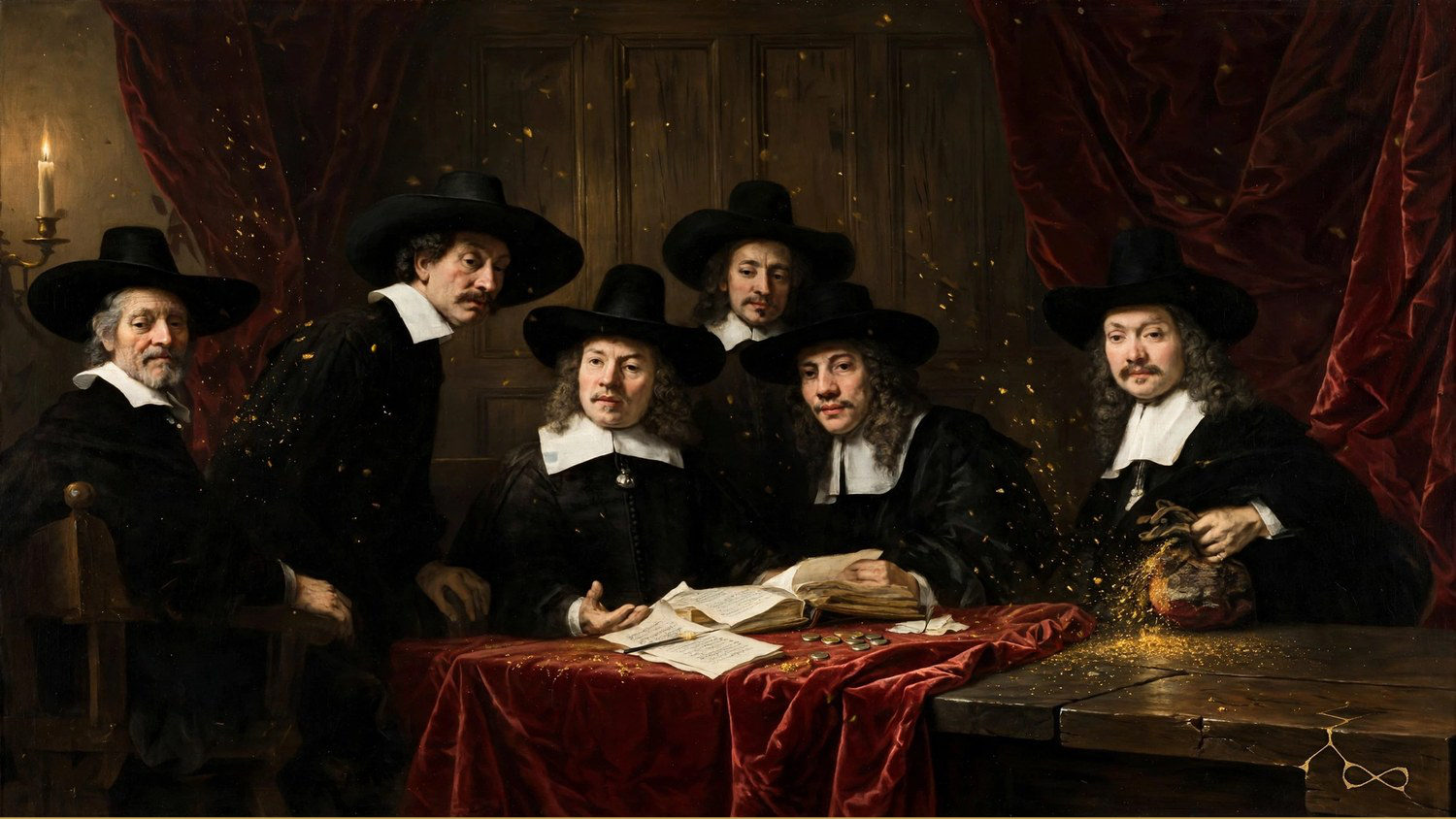
The inspectors. After The Syndics, Rijksmuseum, SK-C-6, 191.5 × 279 cm, 1662. The five men and the table are his. The curtain, the dust and the gold mark are added.
12 · The return
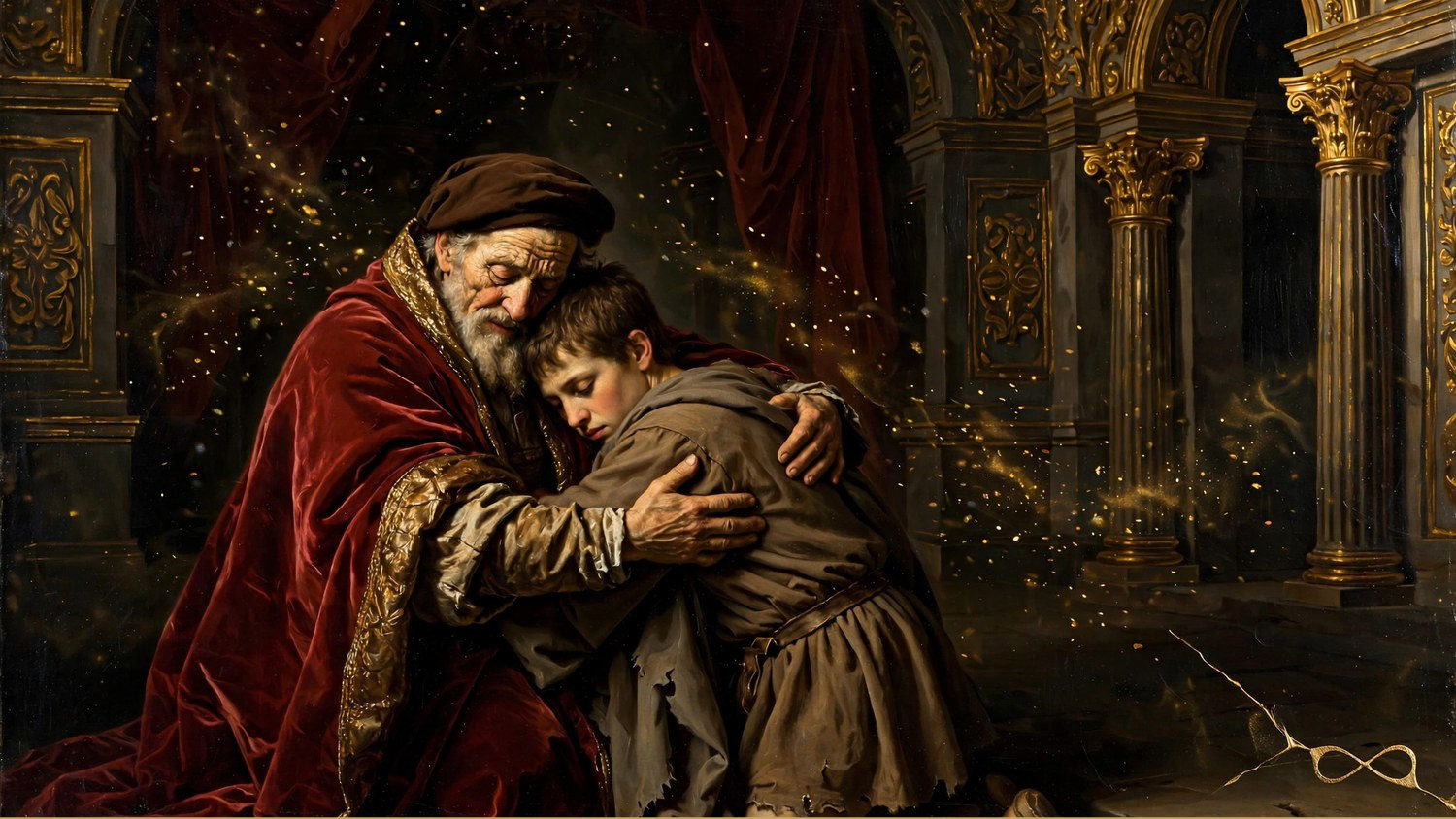
The return. After The Return of the Prodigal Son, Hermitage, ГЭ-742, 262 × 205 cm, about 1668–69. The father, the son and the embrace are his. The columns, the gold dust and the gold mark are added.
The figures
Each plate has a figure on black marble. The brass plaque names the plate. The figure is the plate, standing. It is not the painting, and it is not a toy.
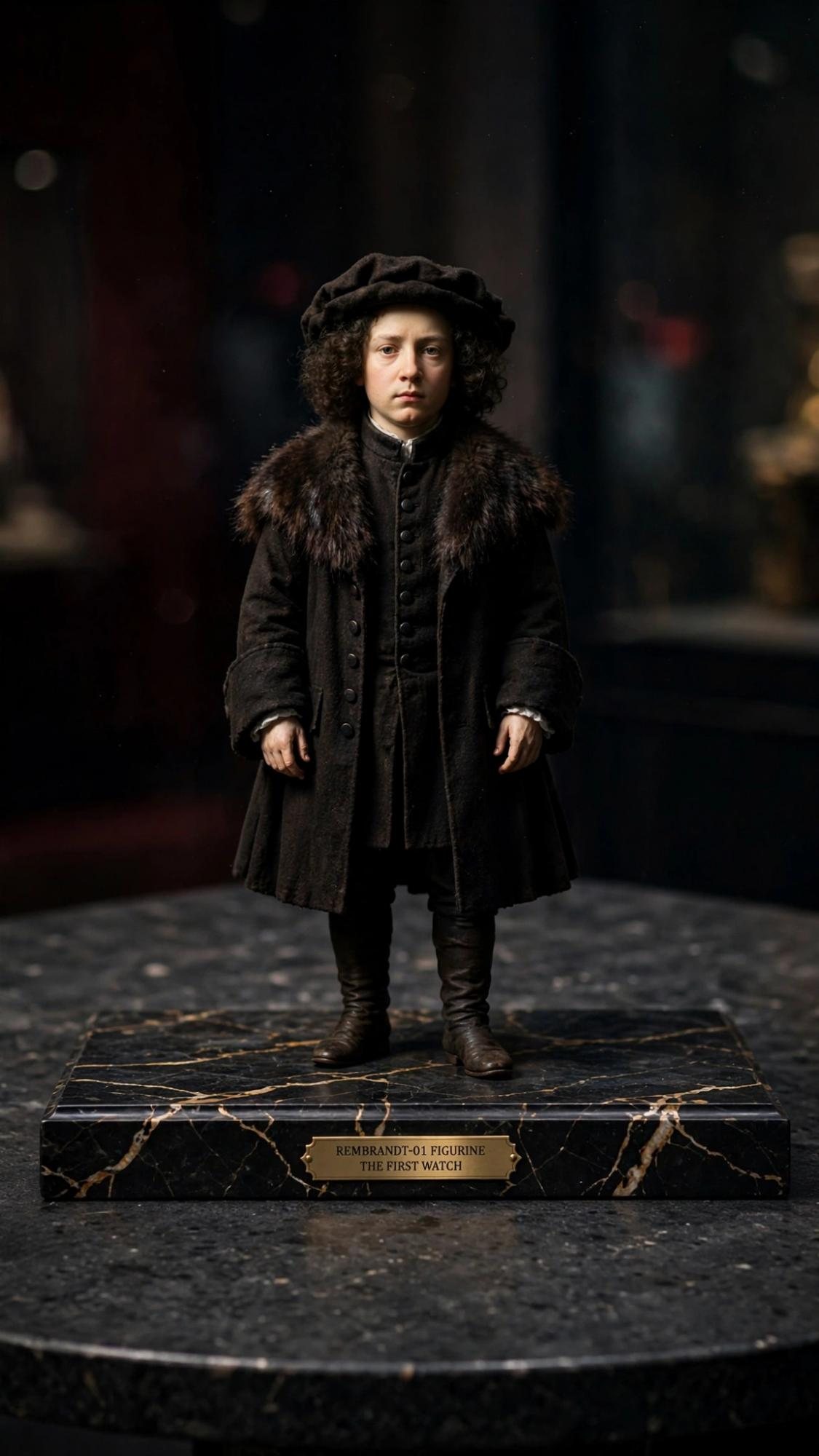 01 · The First Watch
Figurine
01 · The First Watch
Figurine
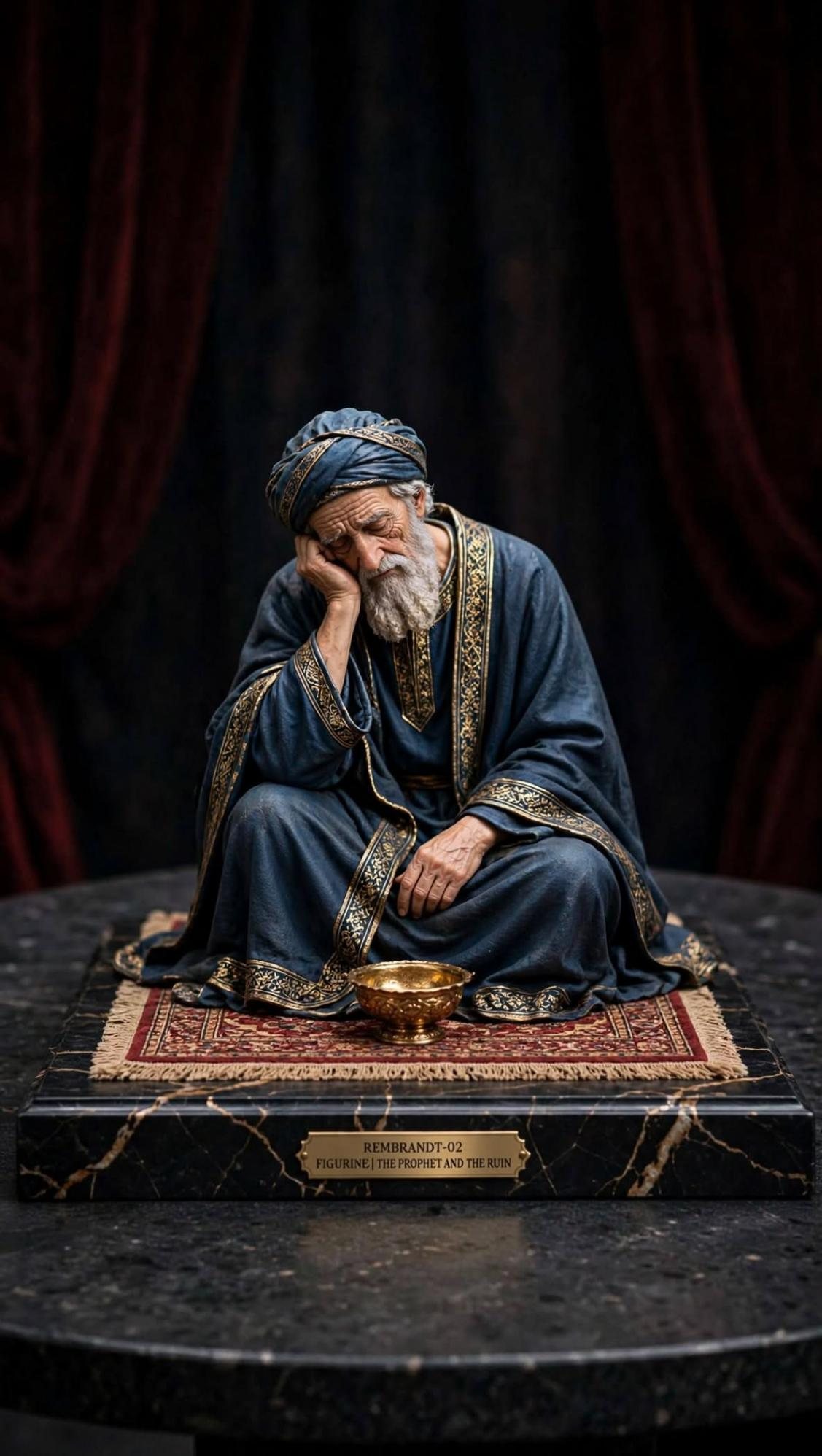 02 · The Prophet and the Ruin
Figurine
02 · The Prophet and the Ruin
Figurine
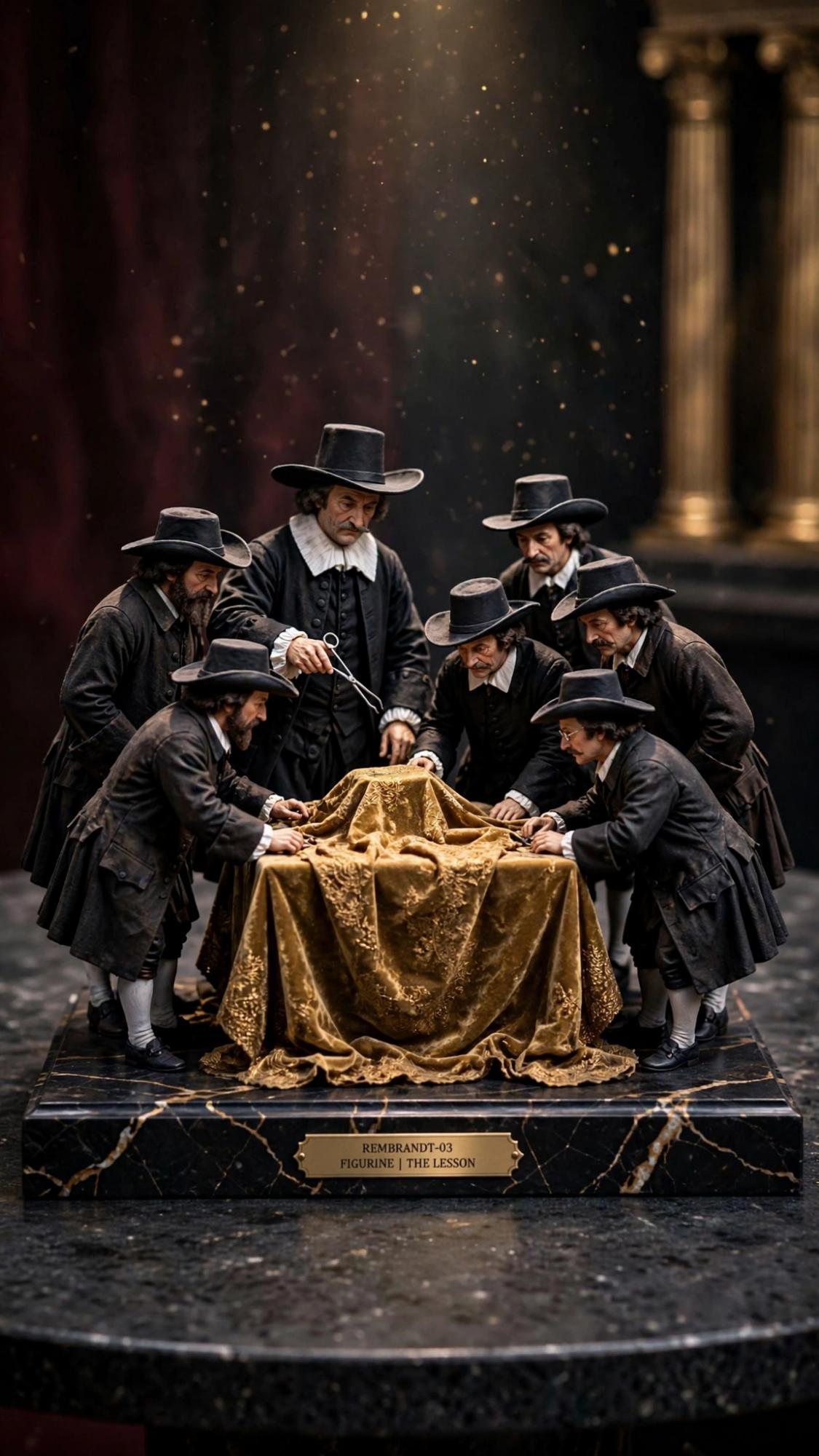 03 · The Lesson
Figurine
03 · The Lesson
Figurine
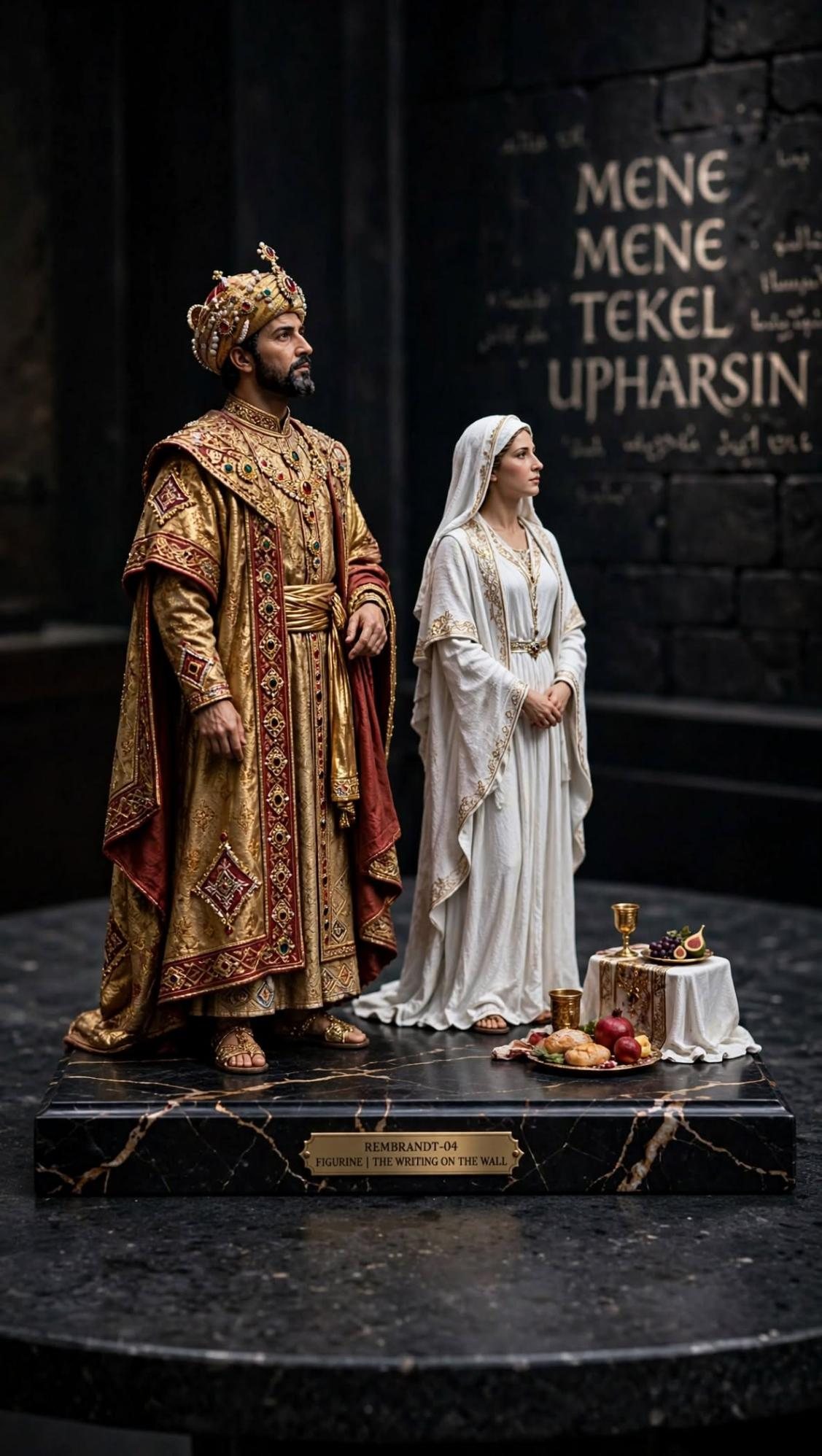 04 · The Writing on the Wall
Figurine
04 · The Writing on the Wall
Figurine
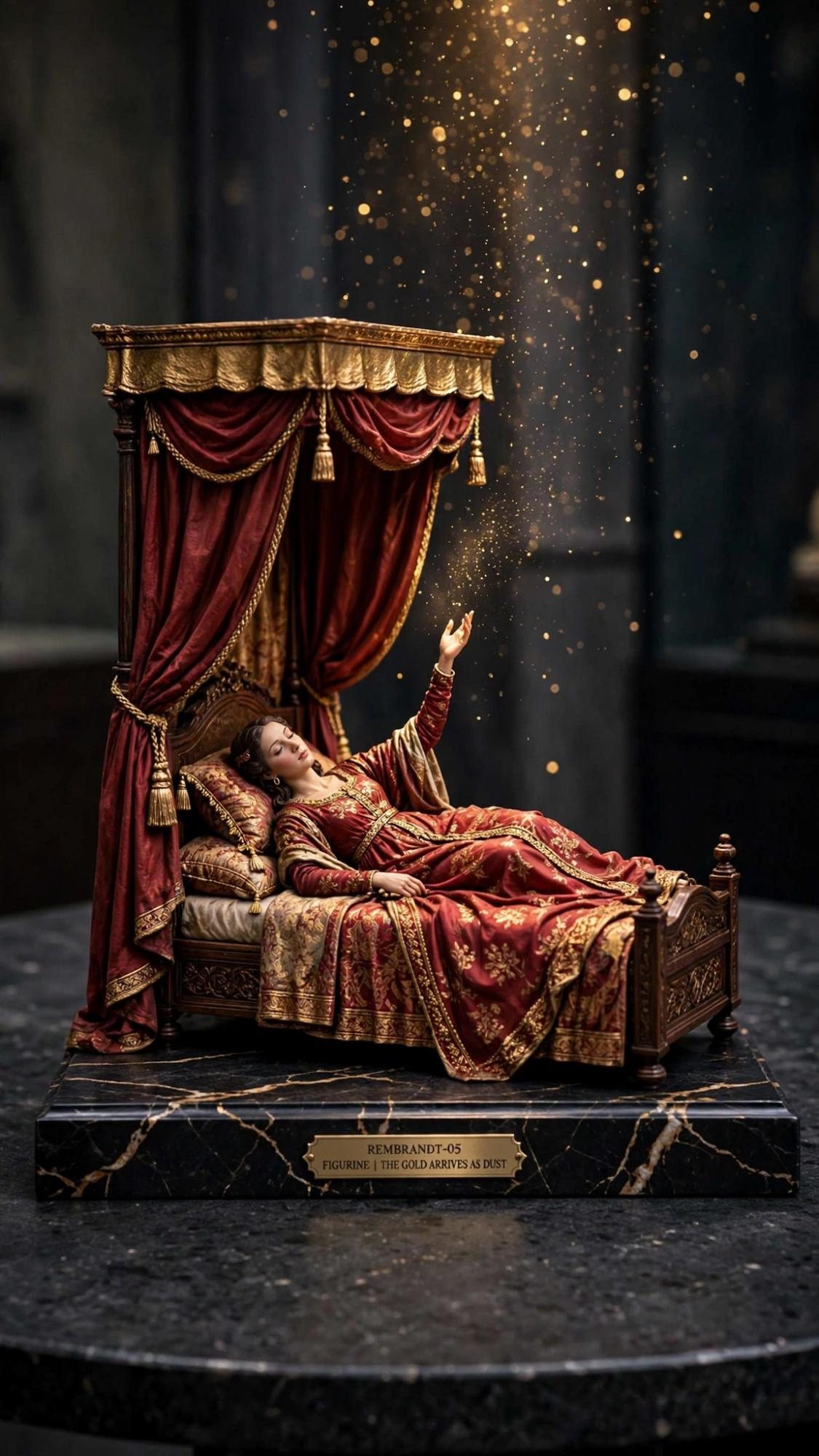 05 · The Gold Arrives as Dust
Figurine
05 · The Gold Arrives as Dust
Figurine
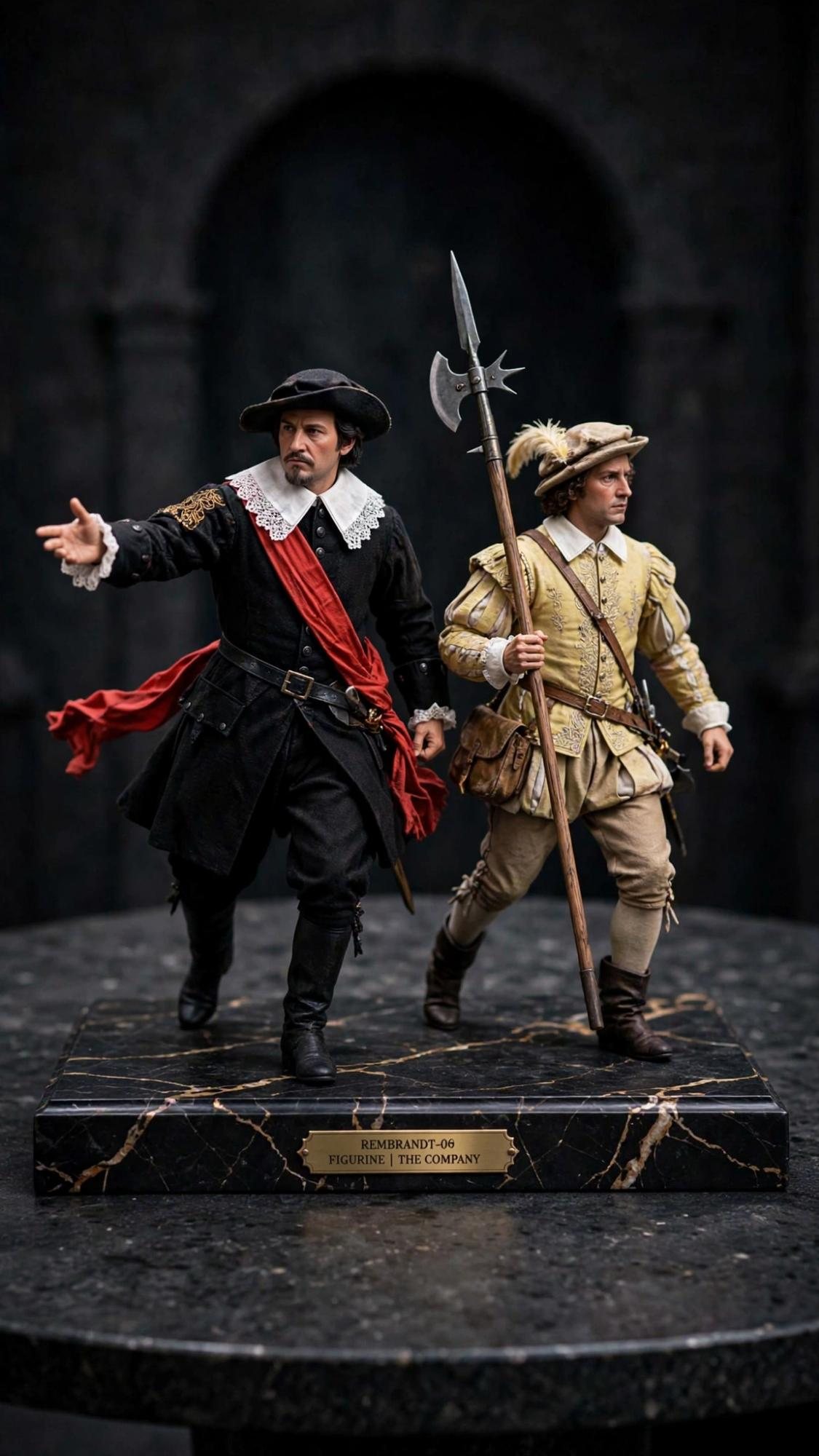 06 · The Company
Figurine
06 · The Company
Figurine
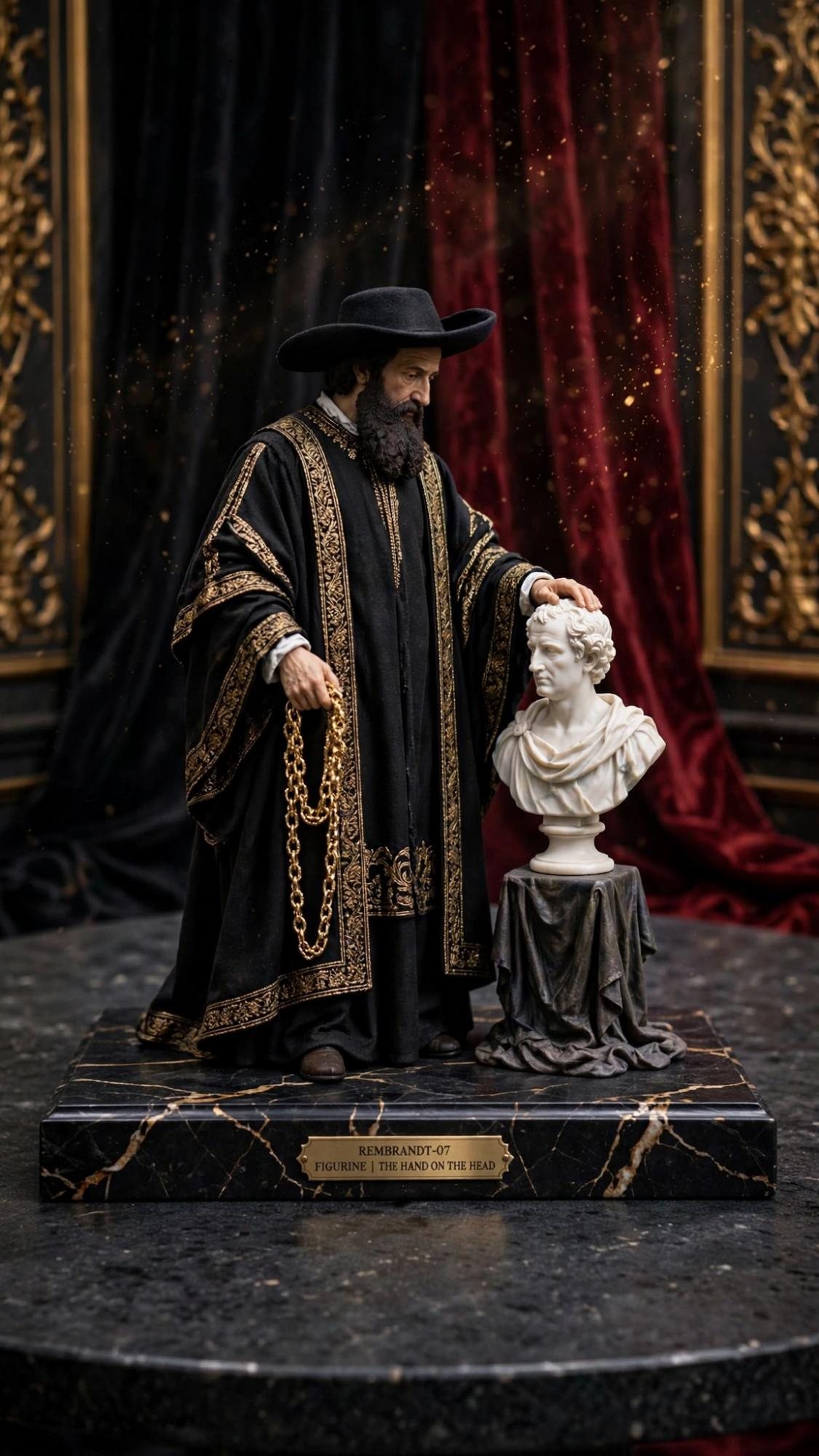 07 · The Hand on the Head
Figurine
07 · The Hand on the Head
Figurine
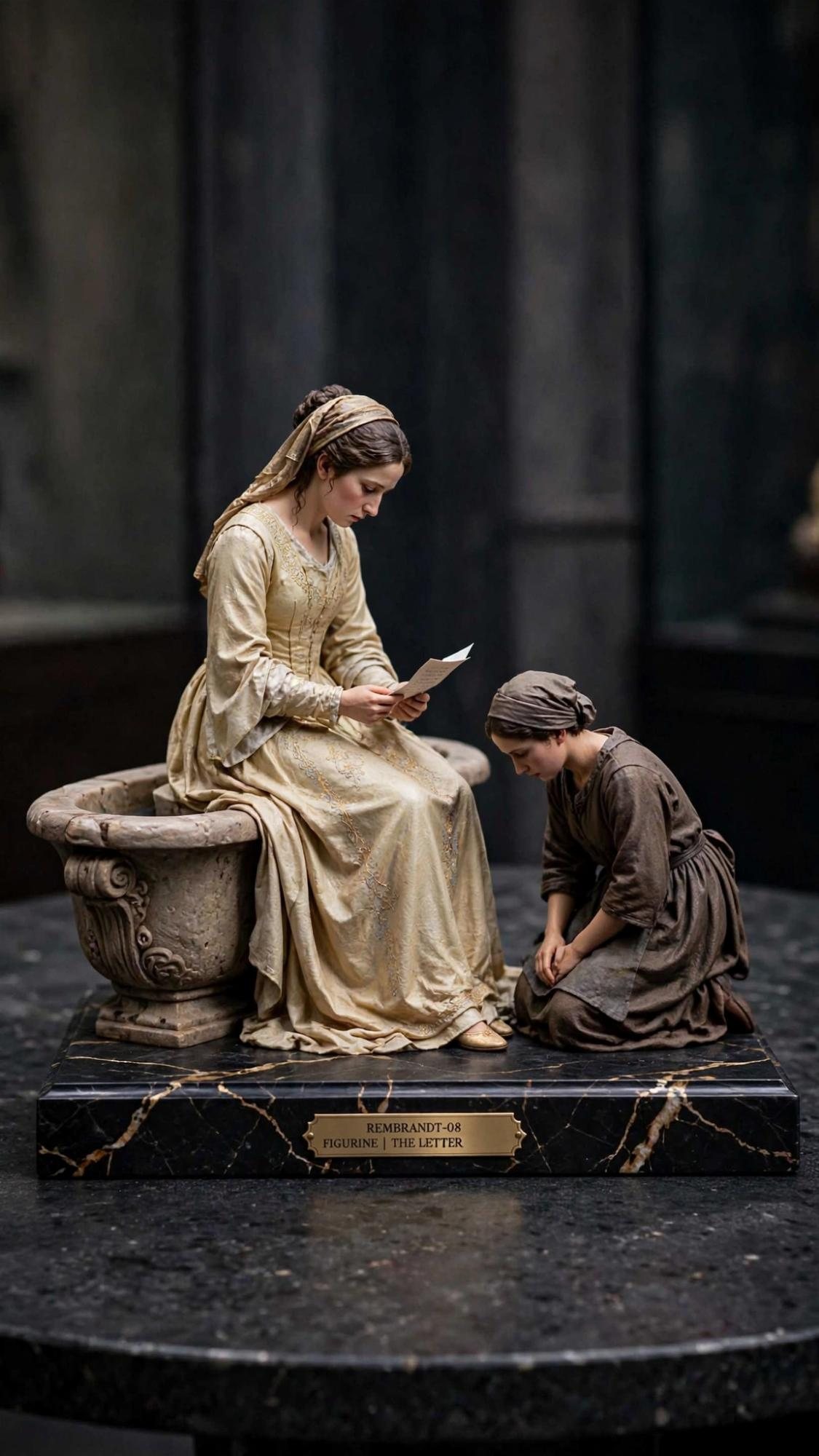 08 · The Letter
Figurine
08 · The Letter
Figurine
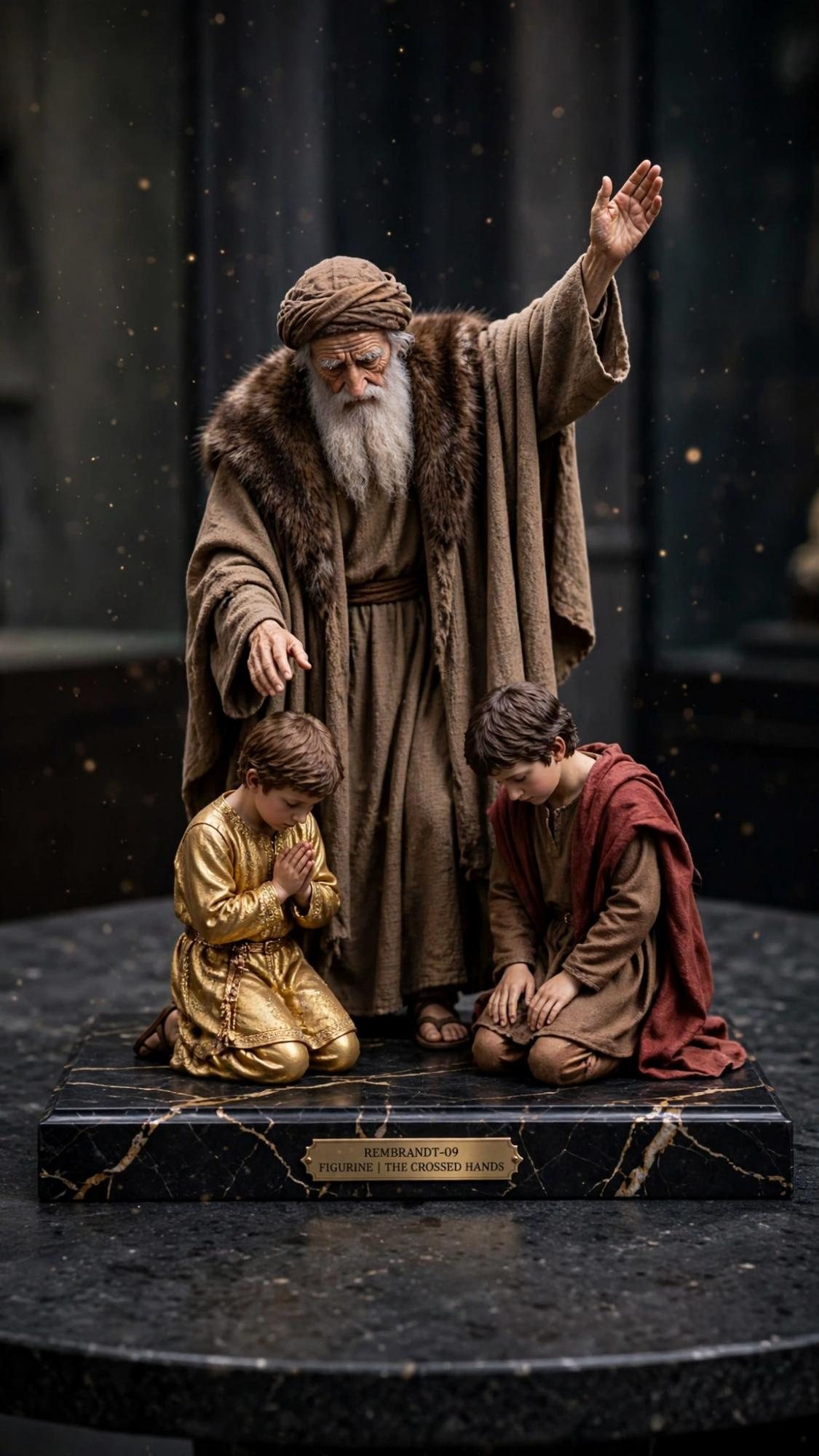 09 · The Crossed Hands
Figurine
09 · The Crossed Hands
Figurine
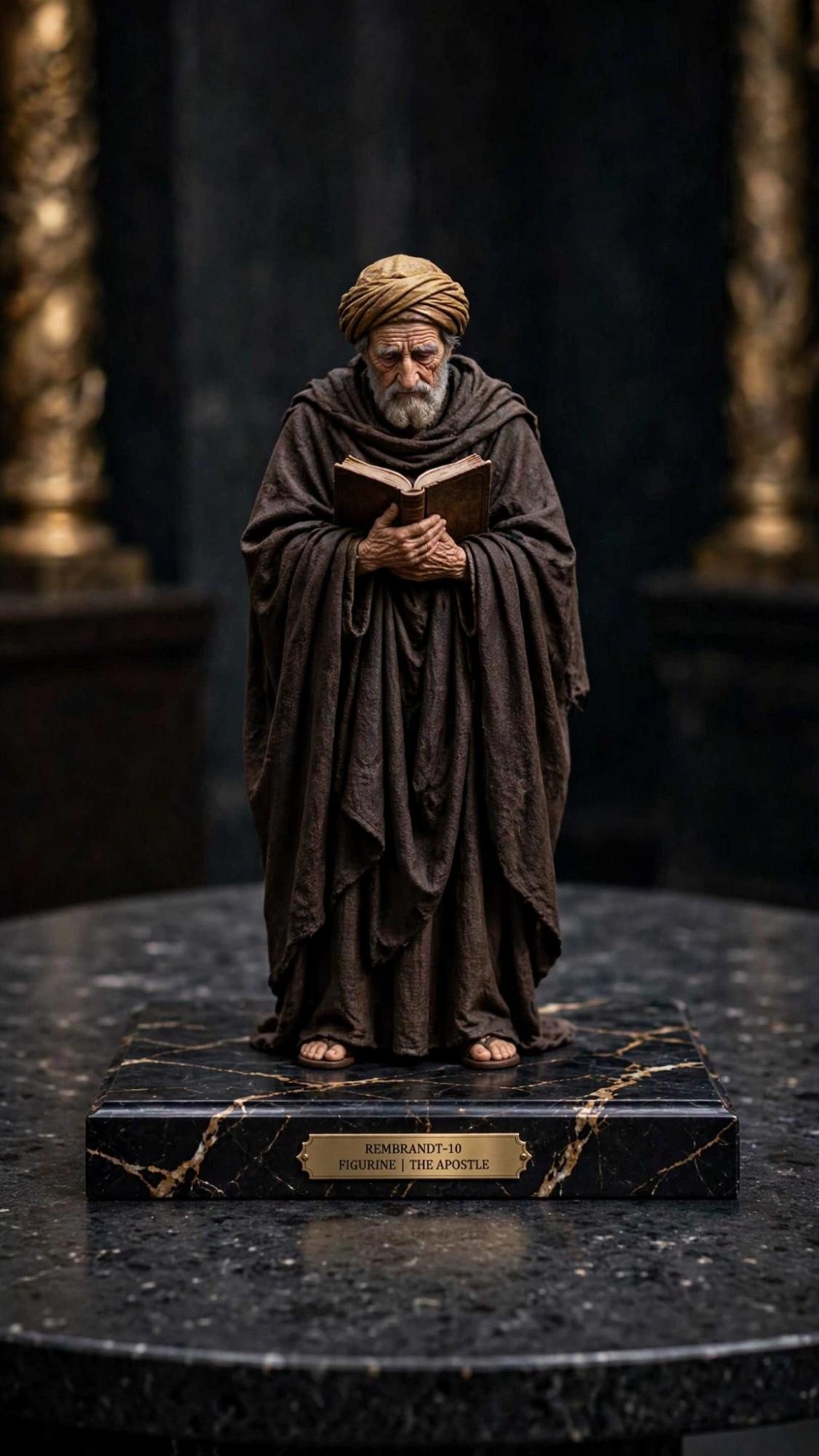 10 · The Apostle
Figurine
10 · The Apostle
Figurine
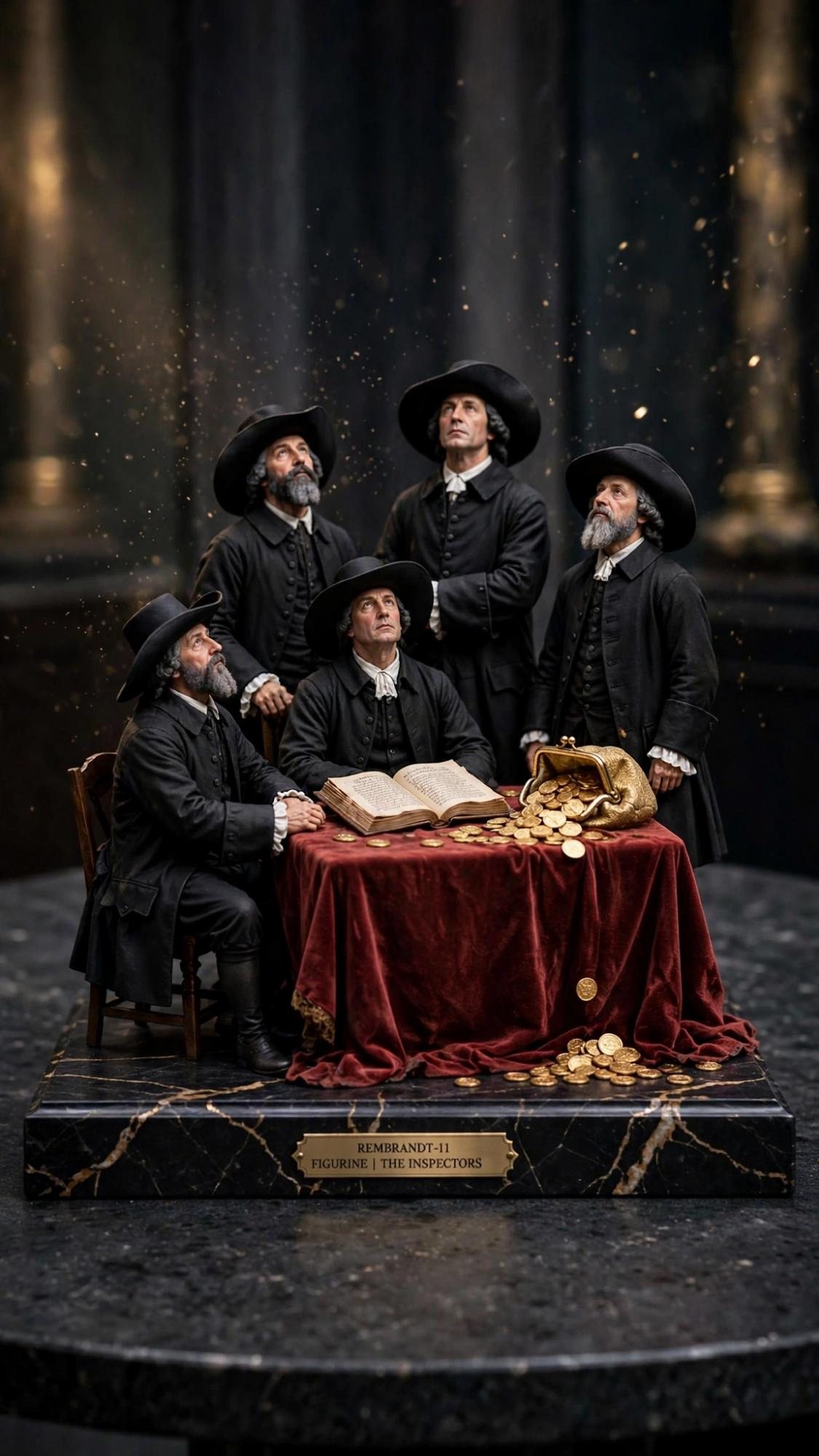 11 · The Inspectors
Figurine
11 · The Inspectors
Figurine
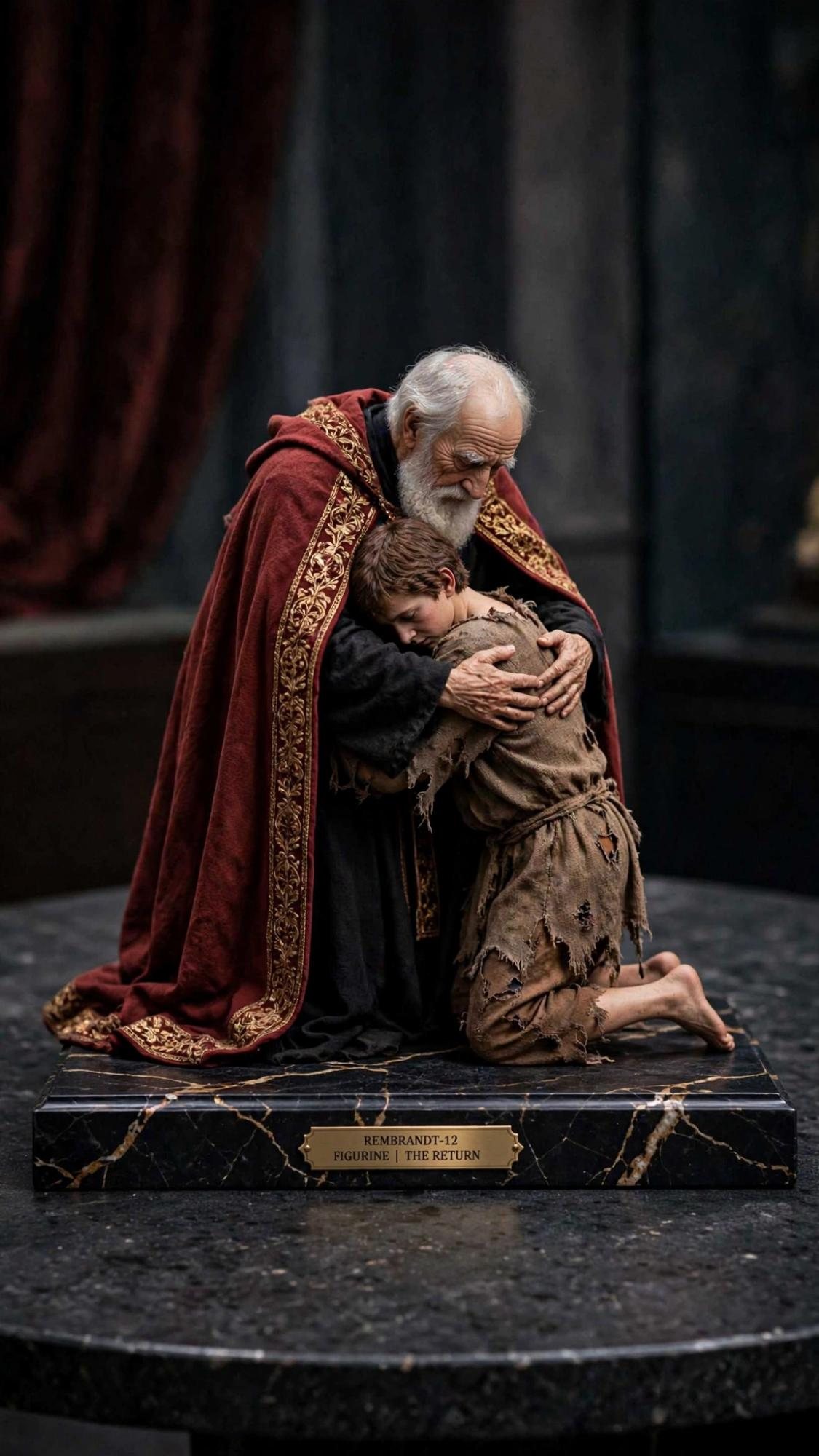 12 · The Return
Figurine
12 · The Return
Figurine
The covers
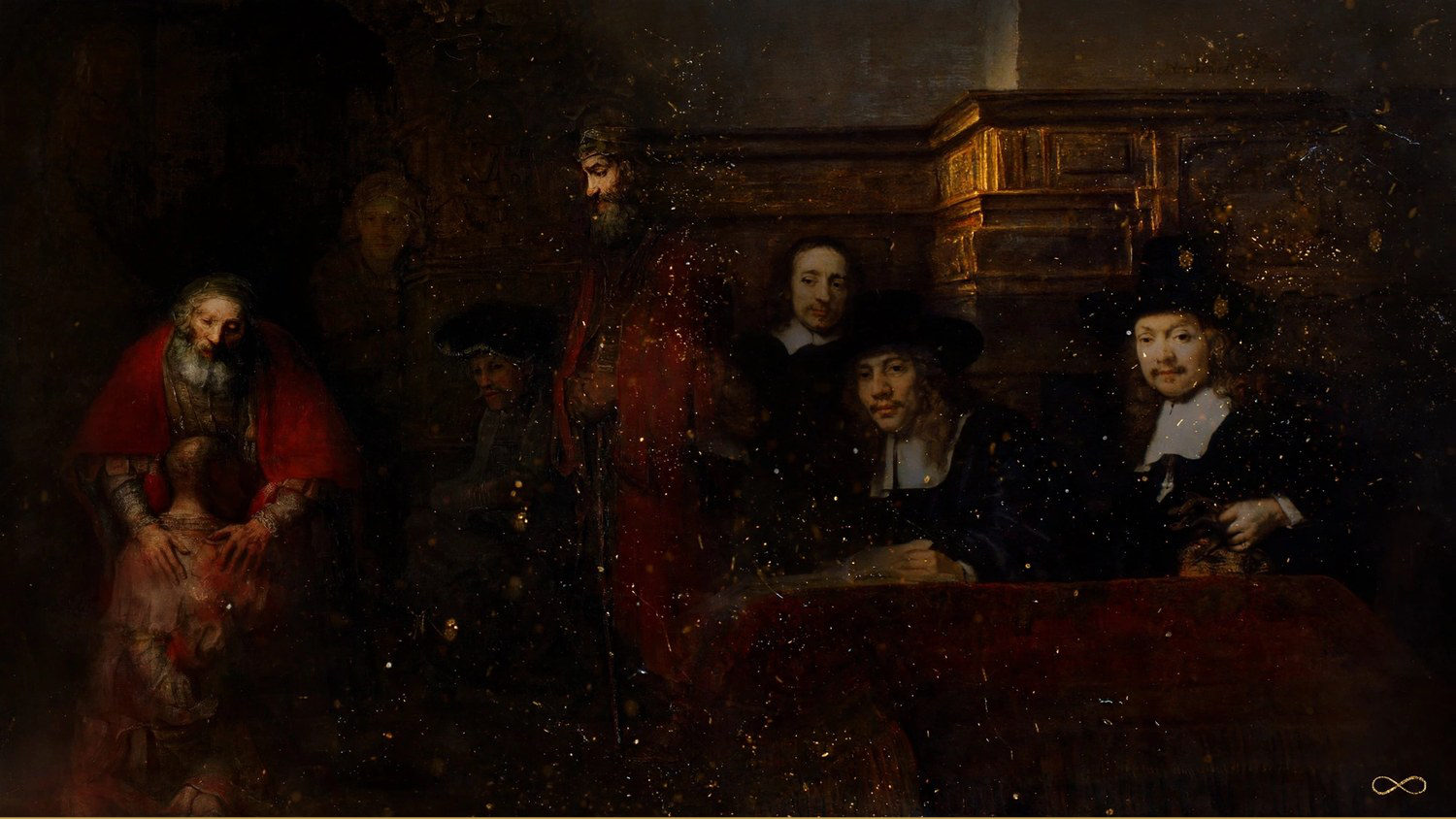
The mark, declared, and the seal.
The front cover puts the young man of 1628 beside the company of 1642. The back cover is not after one painting. It sets the Syndics of 1662 beside the Return of the Prodigal Son. On the plates the gold mark is small. On the cover it is shown. The mark is this book's own. It is not Rembrandt's, and it is not in any museum.
The name
Rembrandt Harmenszoon van Rijn was born in Leiden on 15 July 1606 and died in Amsterdam on 4 October 1669. The early plates are Leiden. The Anatomy Lesson made his name after the move. The Night Watch is 1642. The bankruptcy is 1656. The late plates are a tired face, a table of inspectors, and a father's hands.
His light is one gold source, and the rest of the room left dark. This book takes that literally. The gold dust is added. The faces are his.
The copy
The plates are new pictures, made after the paintings named under them. They are not reproductions. Tools were used in making the covers and the plates. The methods stay private.
The digital file may be shared under CC BY-NC-ND 4.0. Copy it as it is, for a non-commercial purpose, and say who made it. You may not sell the file, and you may not make a new work out of the plates. The license is the rule for this file. It is not a claim on the paintings.
LTD 100 is the specification for a physical run: one hundred copies, a black slipcase, gold foil, the number and the price left blank until a copy is made. The cover names that run. It does not mean the hundred copies are already in the world. Buying the object, if it is made, is not a license to republish the plates.