Caravaggio
The file
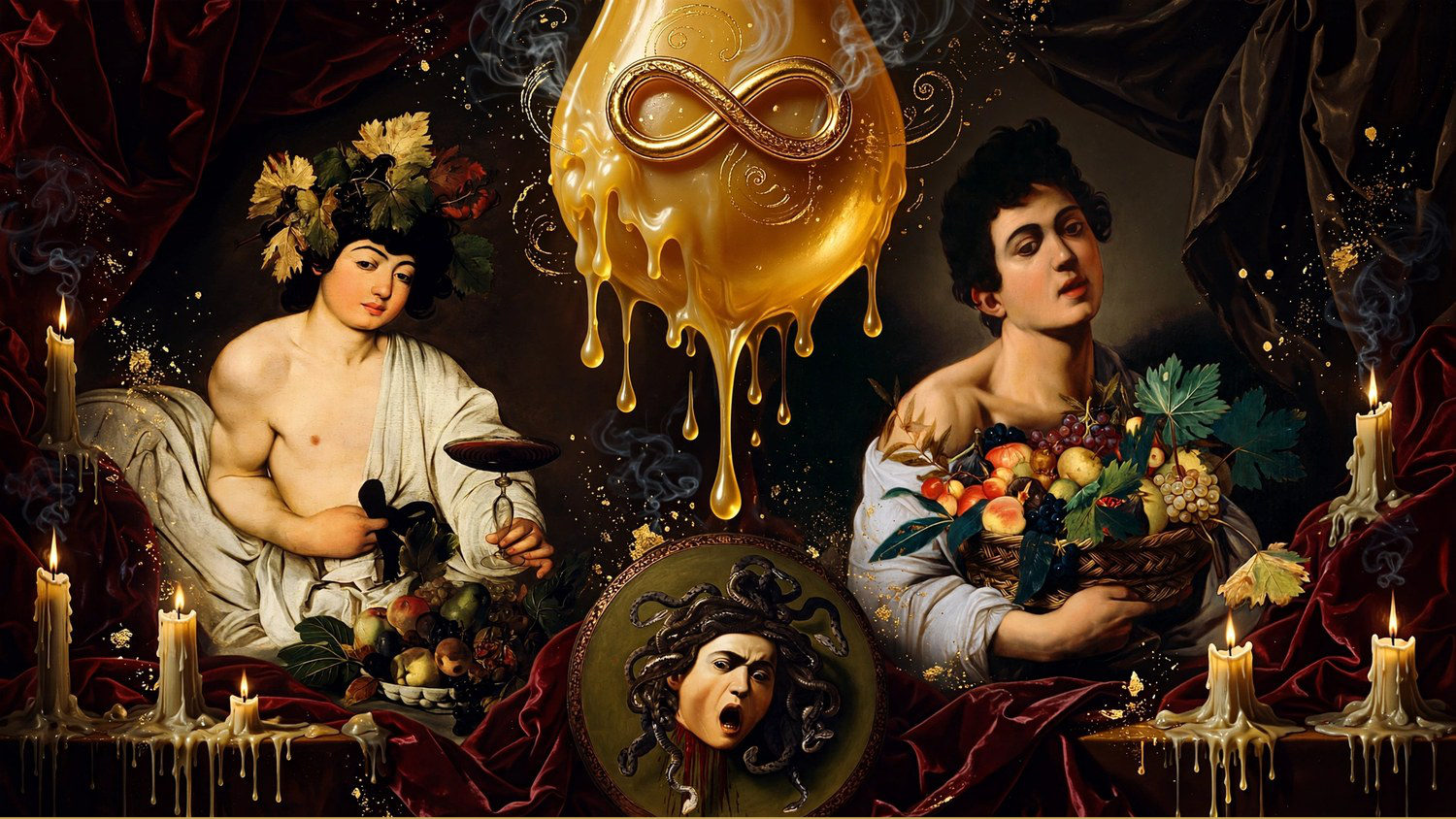
Twelve plates. Two covers. One flame.
House of Candle was made by Aestas Infinity in 2026. It is a book in the archive, not a chapter of a series, and not a continuation of the Picasso book or the Bosch book. Twelve paintings in the order they were made, from the early 1590s to 1610, and a cover at each end. The line under a title says whether the plate is after the painting or only set beside it. Three of them are set beside it. The words sit under the picture. The page is narrow enough for a phone.
The twelve
Look at the picture first. A plate may move a painting. It may not put a new object in the frame and let the reader think Caravaggio put it there. Where the line says set beside, the painting's own scene is not in the frame.
01 · The boy and the basket
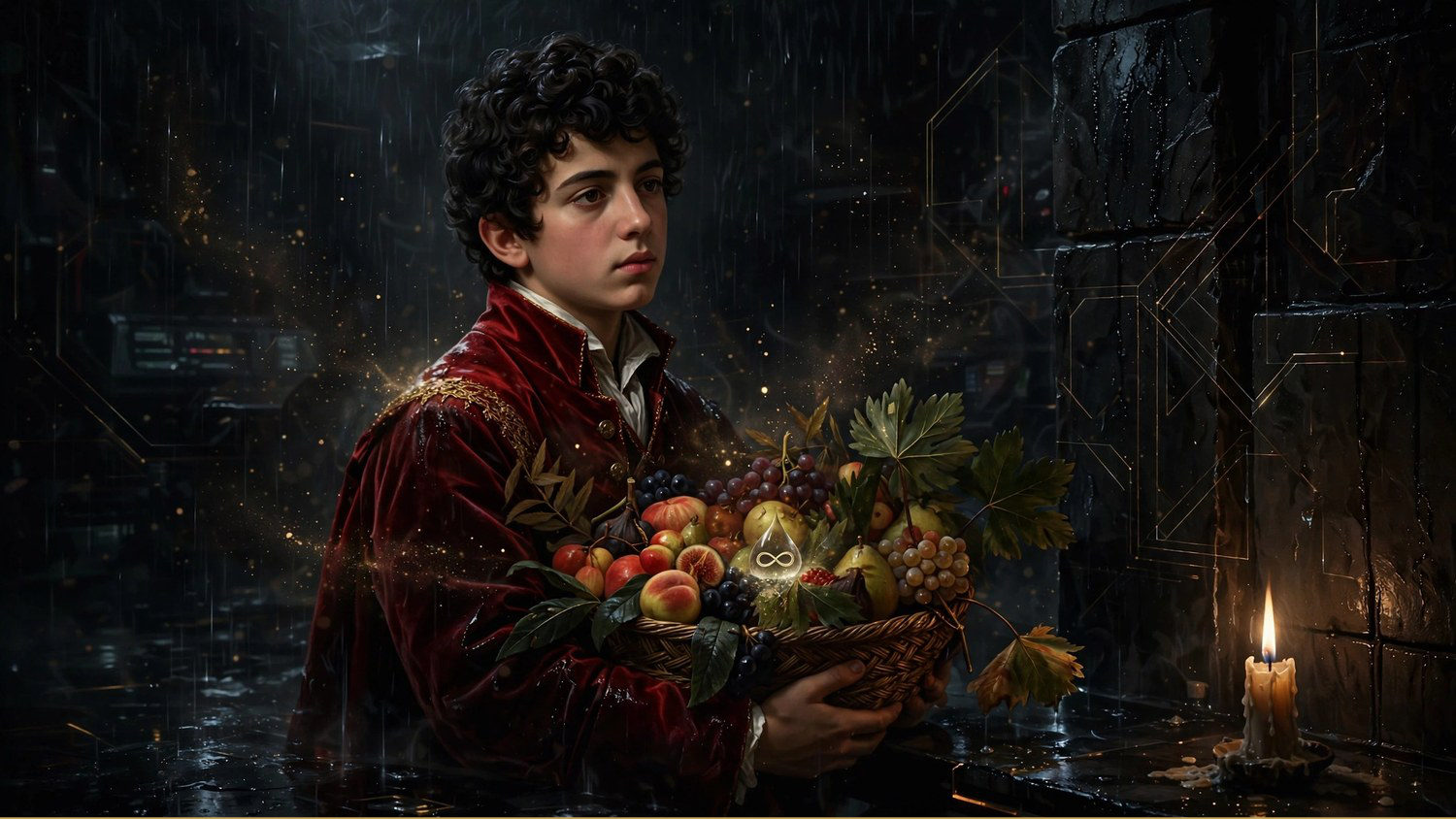
The boy and the basket. After Boy with a Basket of Fruit, Borghese, inventory 136, 70 × 67 cm, early 1590s. Painted in the workshop of Cavaliere d'Arpino. In 1607 Scipione Borghese took it with the rest of that collection. The boy and the basket are his. The candle, the wet stone and the wax mark are added.
02 · The glass of wine
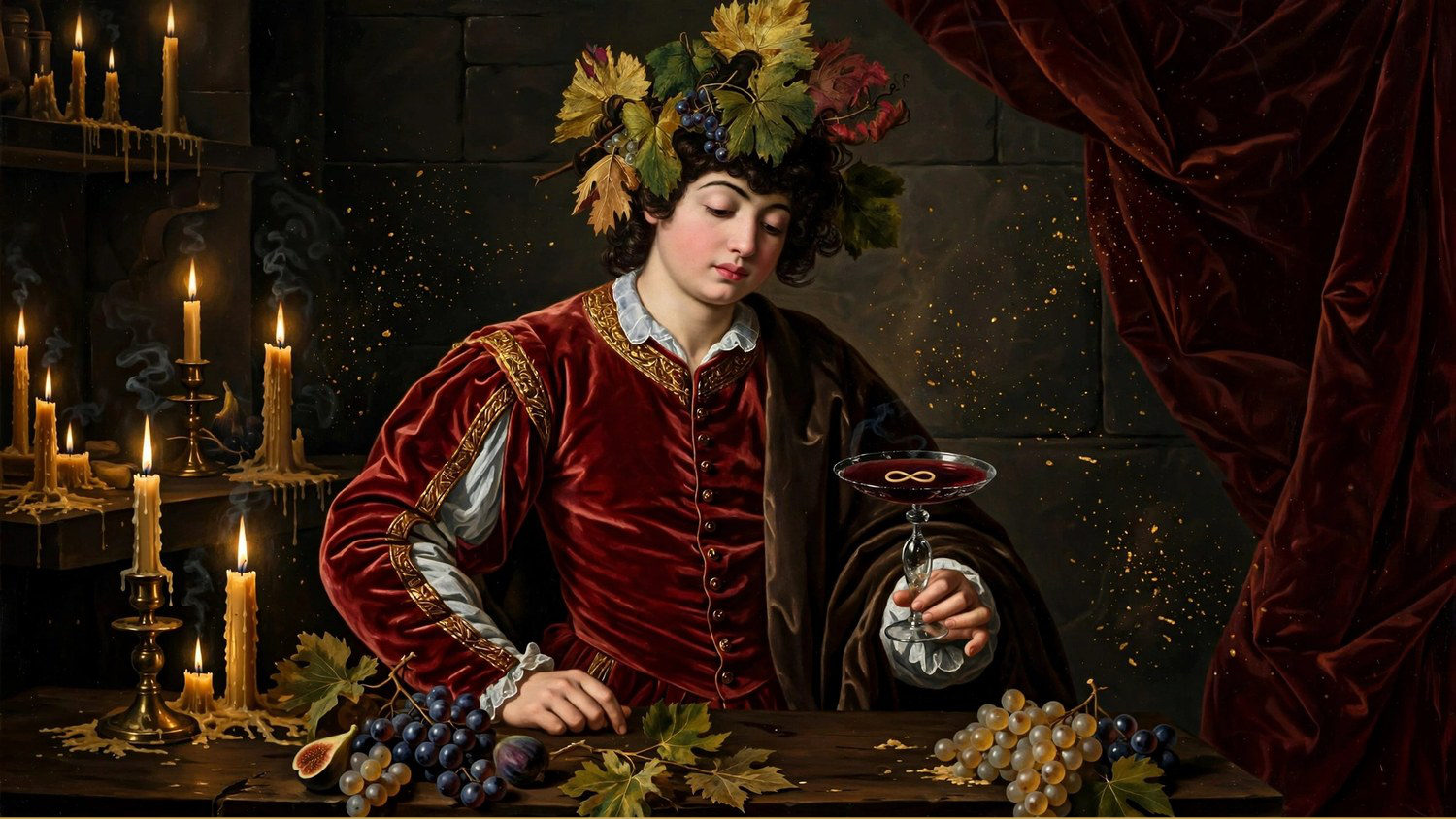
The glass of wine. After Bacchus, Uffizi, inventory 1890 n. 5312, 95 × 85 cm, about 1596–97. Painted for Cardinal del Monte, and found in the Uffizi storerooms in 1913. The youth, the fruit and the glass are his. The candles, the curtain and the dust are added.
03 · The shield
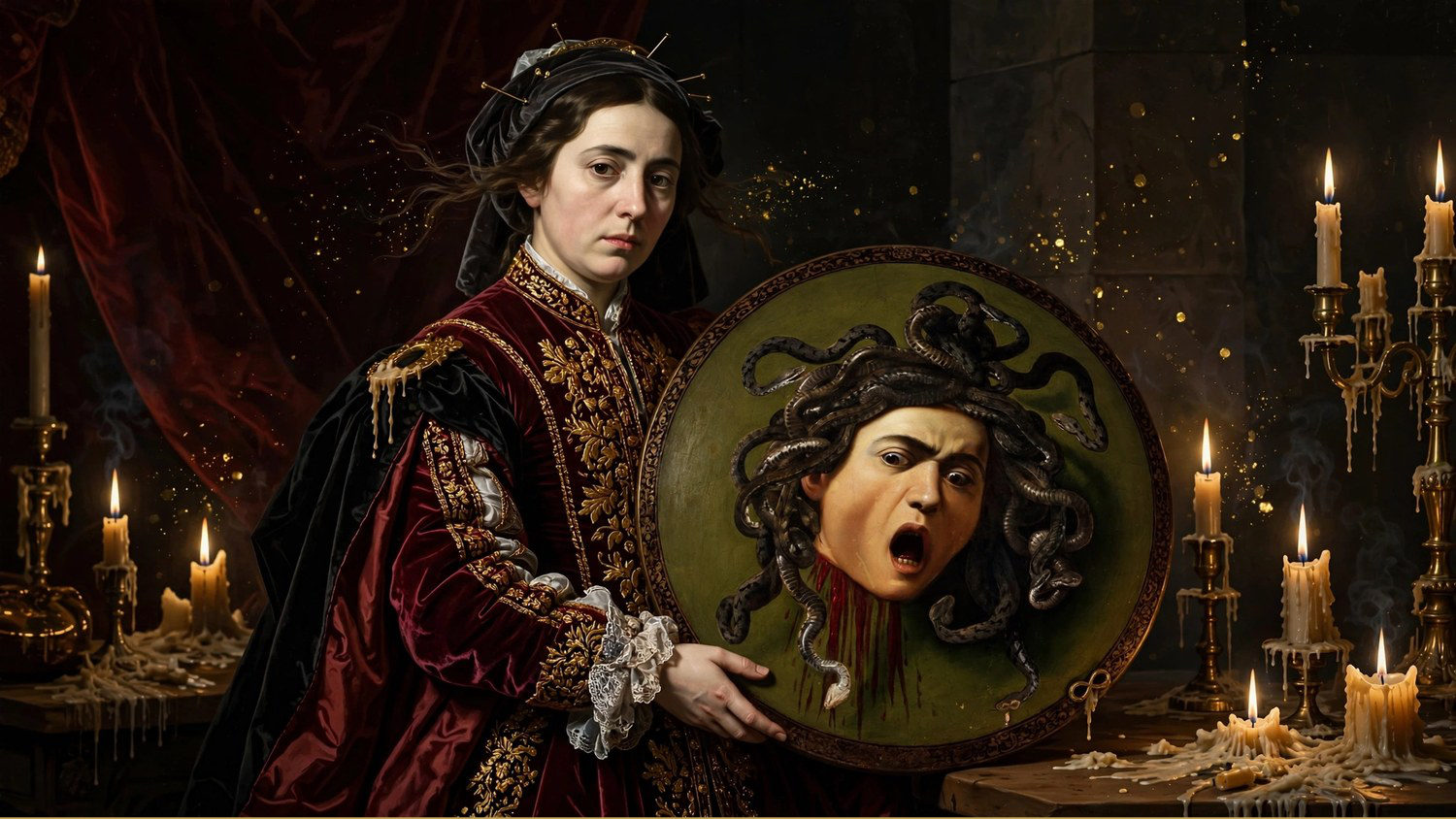
The shield. After Medusa, Uffizi, about 1597, a convex shield about 60 cm across. Del Monte gave it to Grand Duke Ferdinando I de' Medici in 1598. The Uffizi page for the shield does not open, so the link is the work. The head is his. The bearer, the candelabra and the dust are added.
04 · The sword lowered
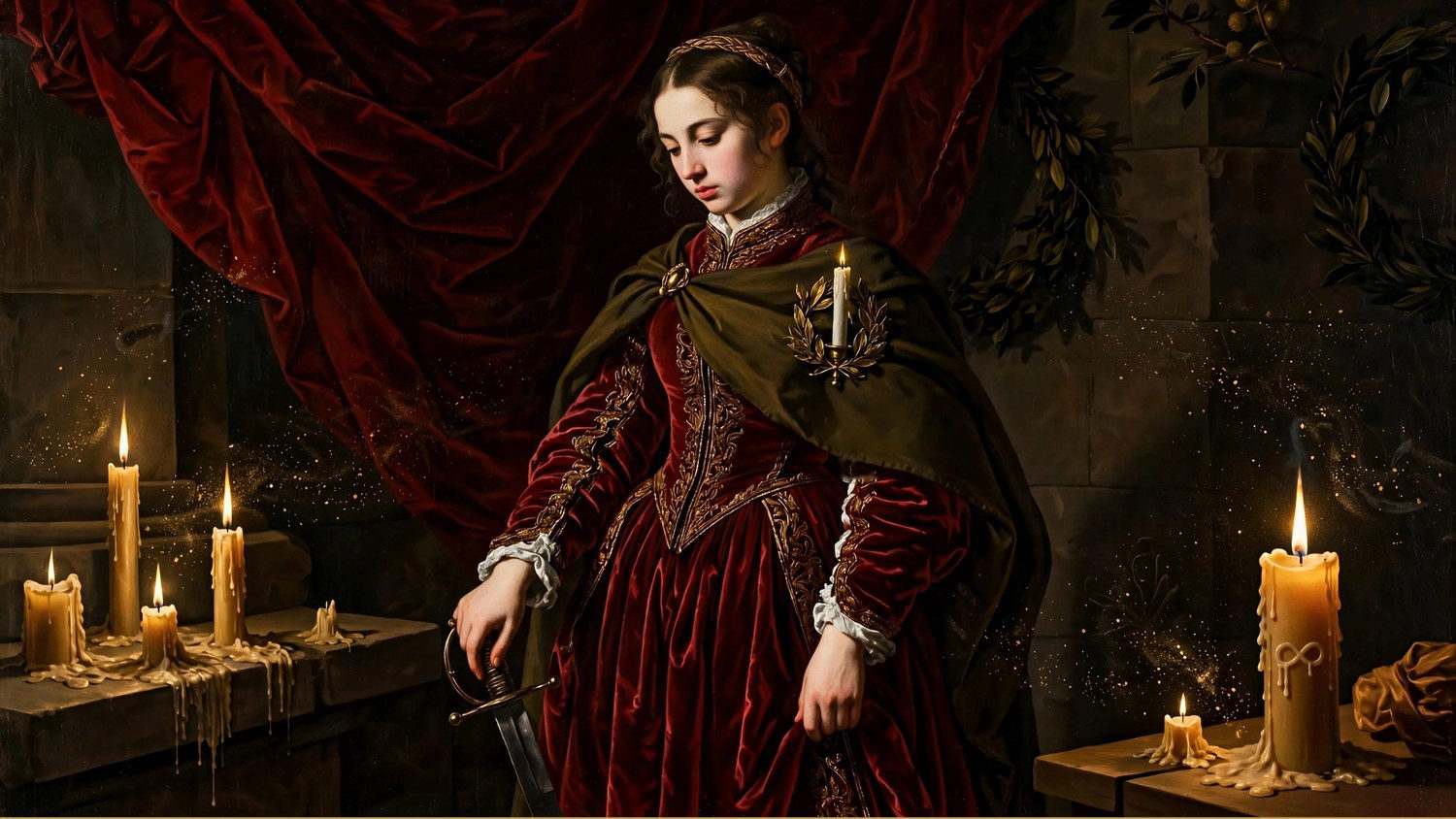
The sword lowered. Set beside Judith Beheading Holofernes, Palazzo Barberini, inventory 2533, 145 × 195 cm, about 1599, painted for Ottavio Costa. The beheading is not in this frame. Here the sword is lowered. The candles and the laurel are added.
05 · The pool
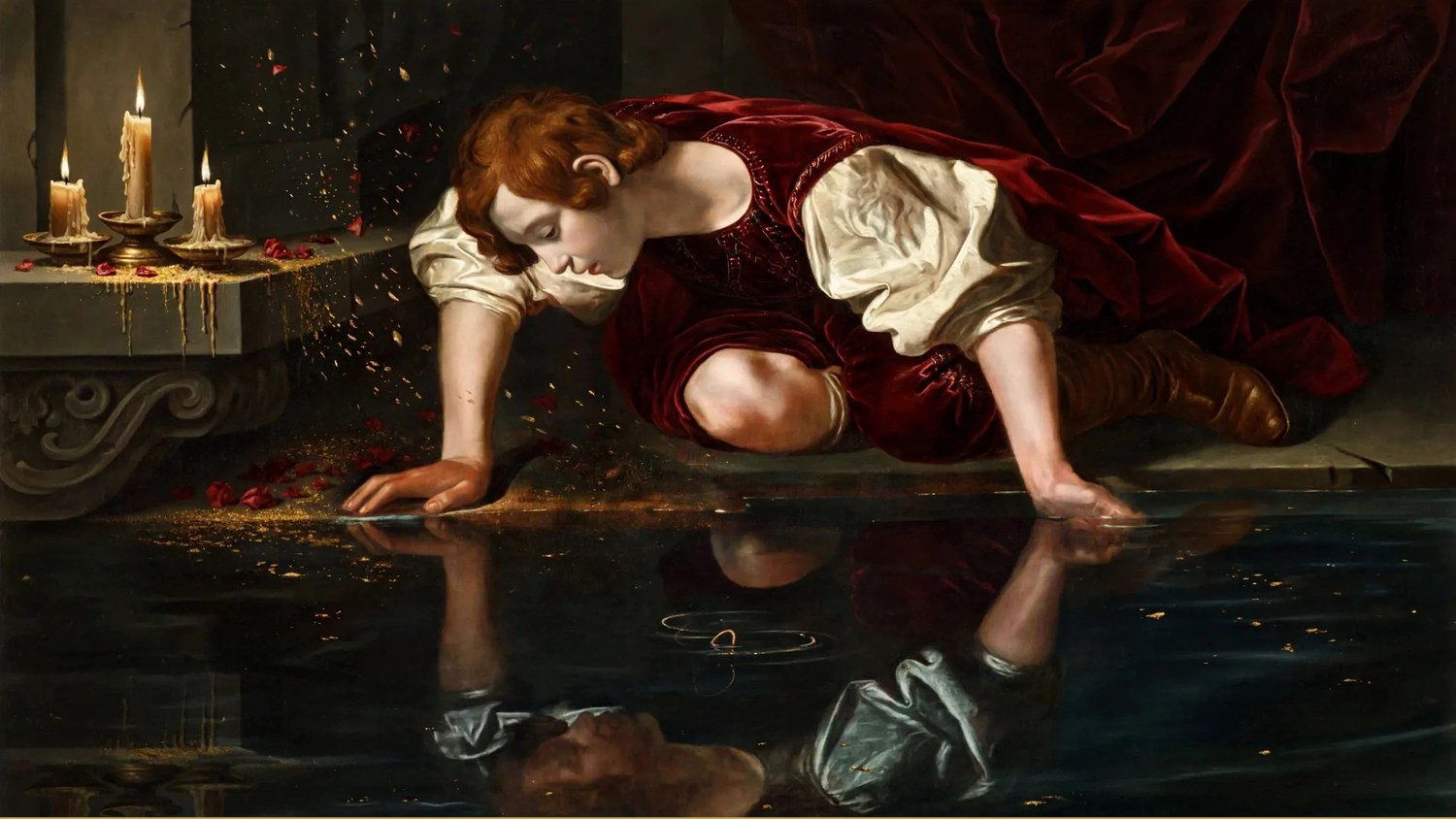
The pool. After Narcissus, Palazzo Barberini, inventory 1569, 113.3 × 94 cm, about 1597–99. Whether it is by Caravaggio is still debated. The kneeling youth and the reflection are the painting's. The candle, the wax pool and the dust are added.
06 · The beam
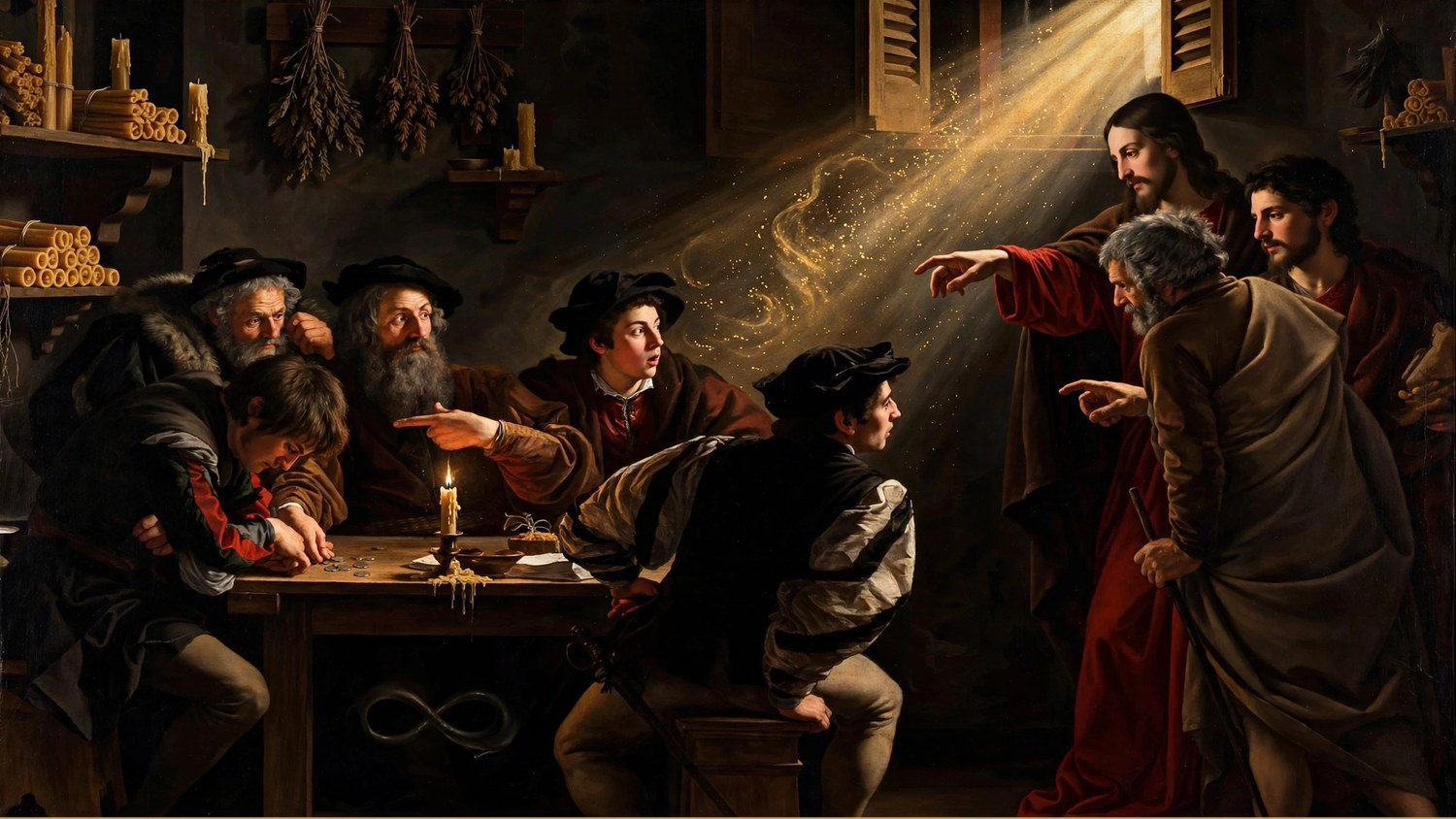
The beam. After The Calling of Saint Matthew, Contarelli Chapel, San Luigi dei Francesi, 322 × 340 cm, 1599–1600. The chapel's own page does not open, so the link is the work. The table, the gesture and the beam are his. The candle and the wax mark are added.
07 · The supper
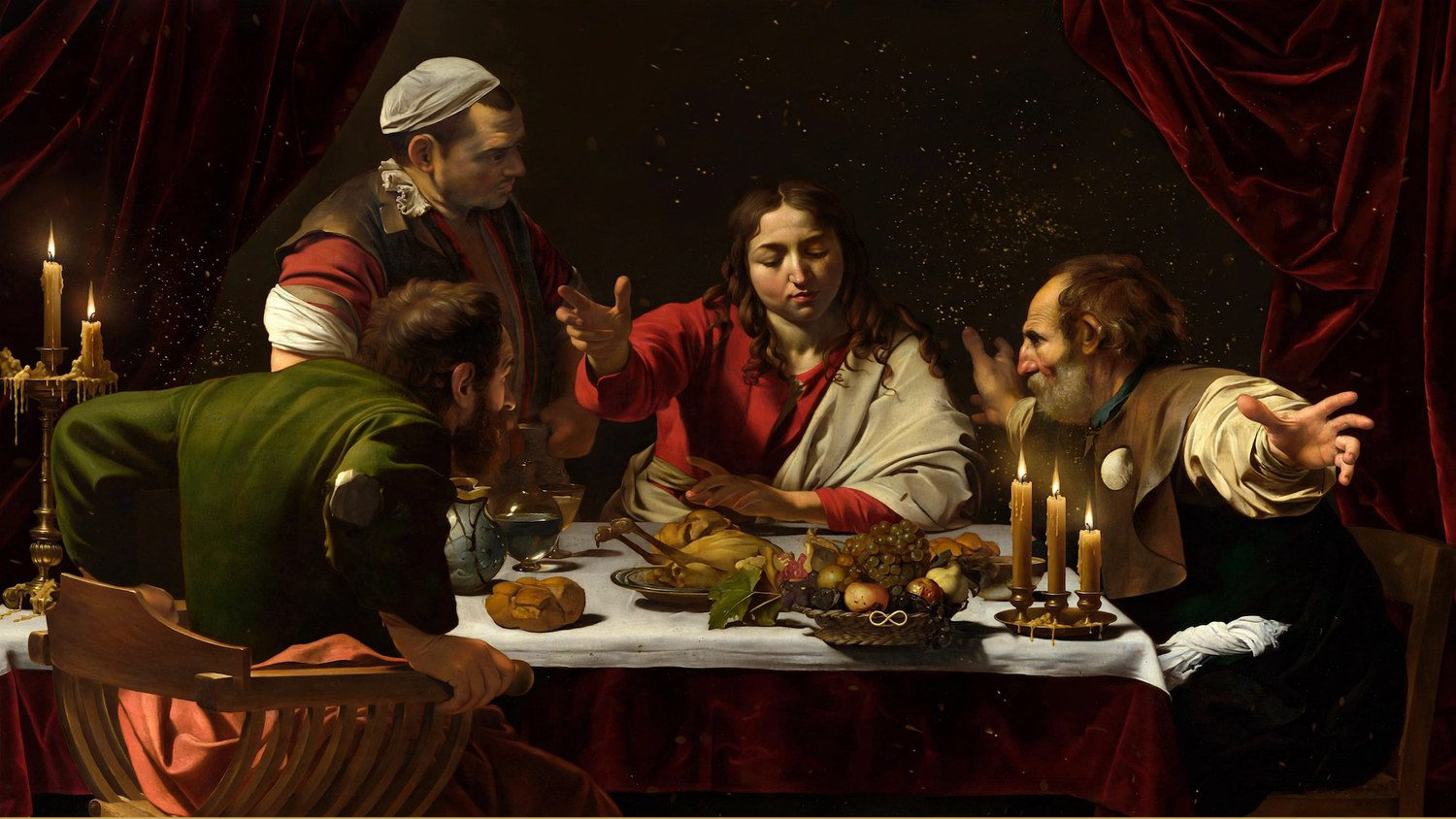
The supper. After The Supper at Emmaus, National Gallery, London, 139 × 195 cm, 1601, painted for Ciriaco Mattei. The figures and the flung arms are his. The curtain and the candles are added.
08 · The shroud
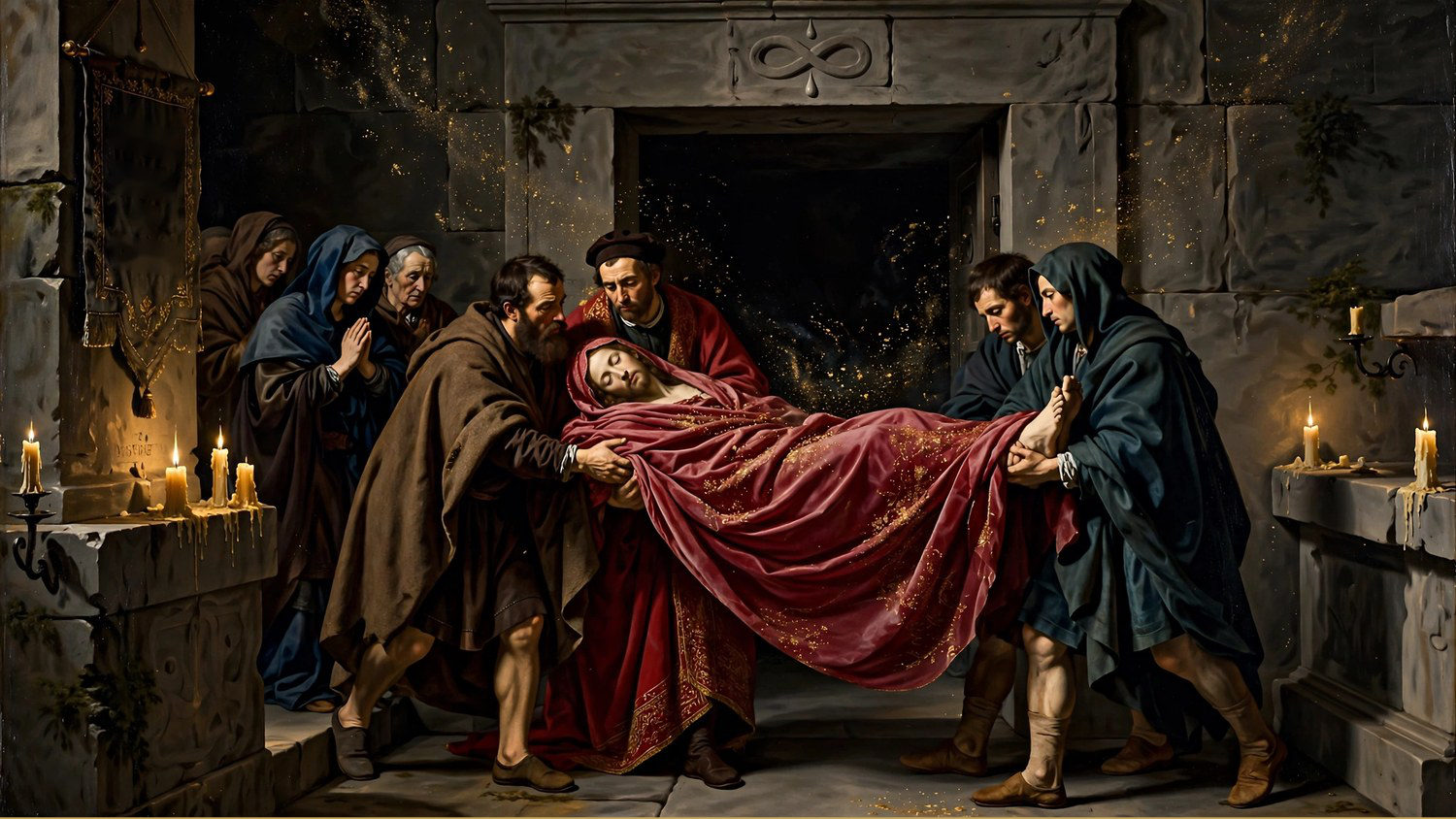
The shroud. After The Entombment of Christ, Vatican Pinacoteca, 300 × 203 cm, 1602–03, painted for the Chiesa Nuova. Taken to Paris in 1797 and returned after the Treaty of Tolentino. The group and the weight are his. The doorway, the candles and the dust are added.
09 · The skull and the pen
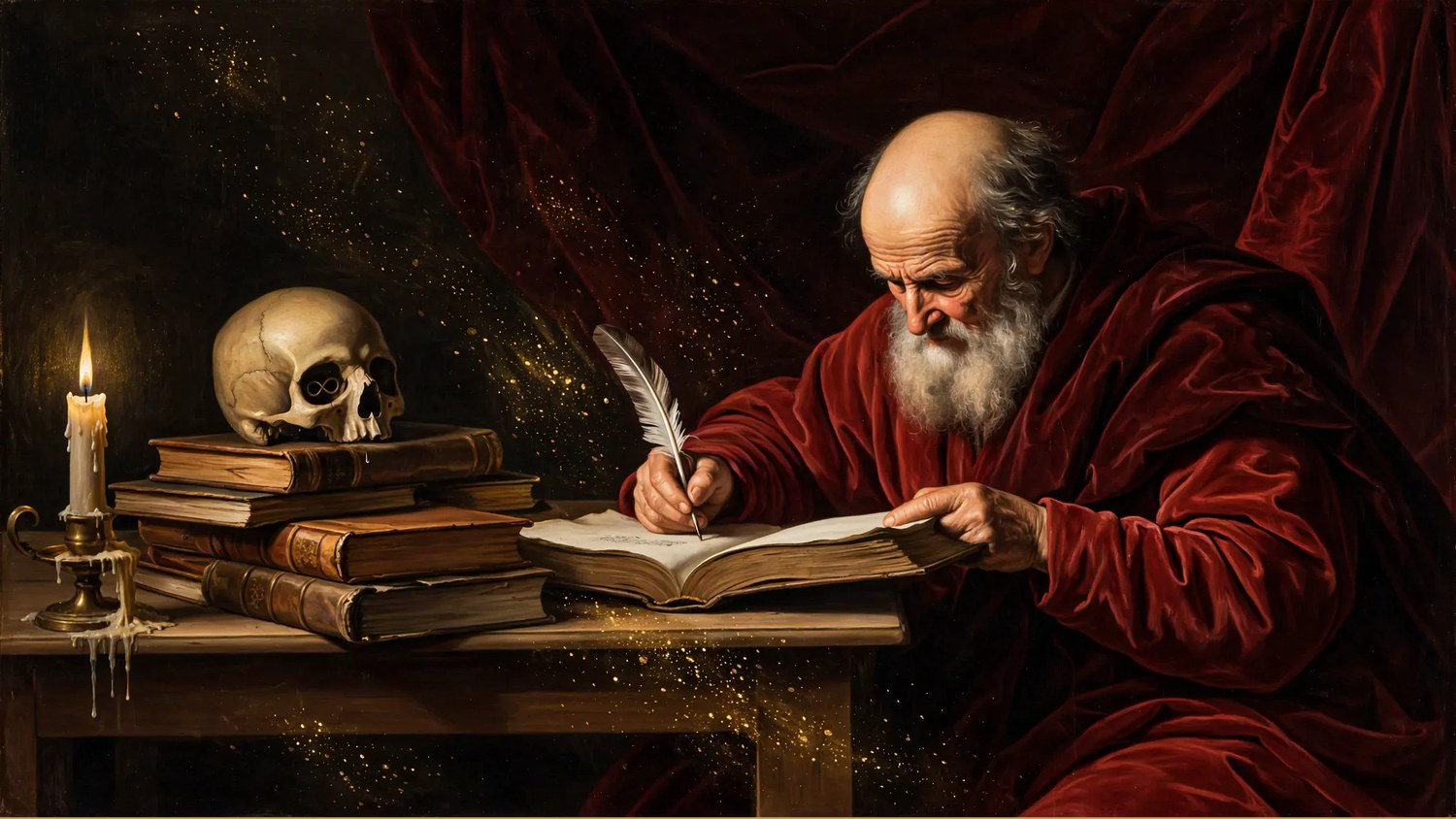
The skull and the pen. After Saint Jerome Writing, Borghese, 112 × 157 cm, 1605–06. The inventories gave it to Jusepe de Ribera from 1700 until 1893, and the attribution is still sometimes questioned. The saint, the skull and the pen are the painting's. The candle and the dust are added.
10 · The vigil
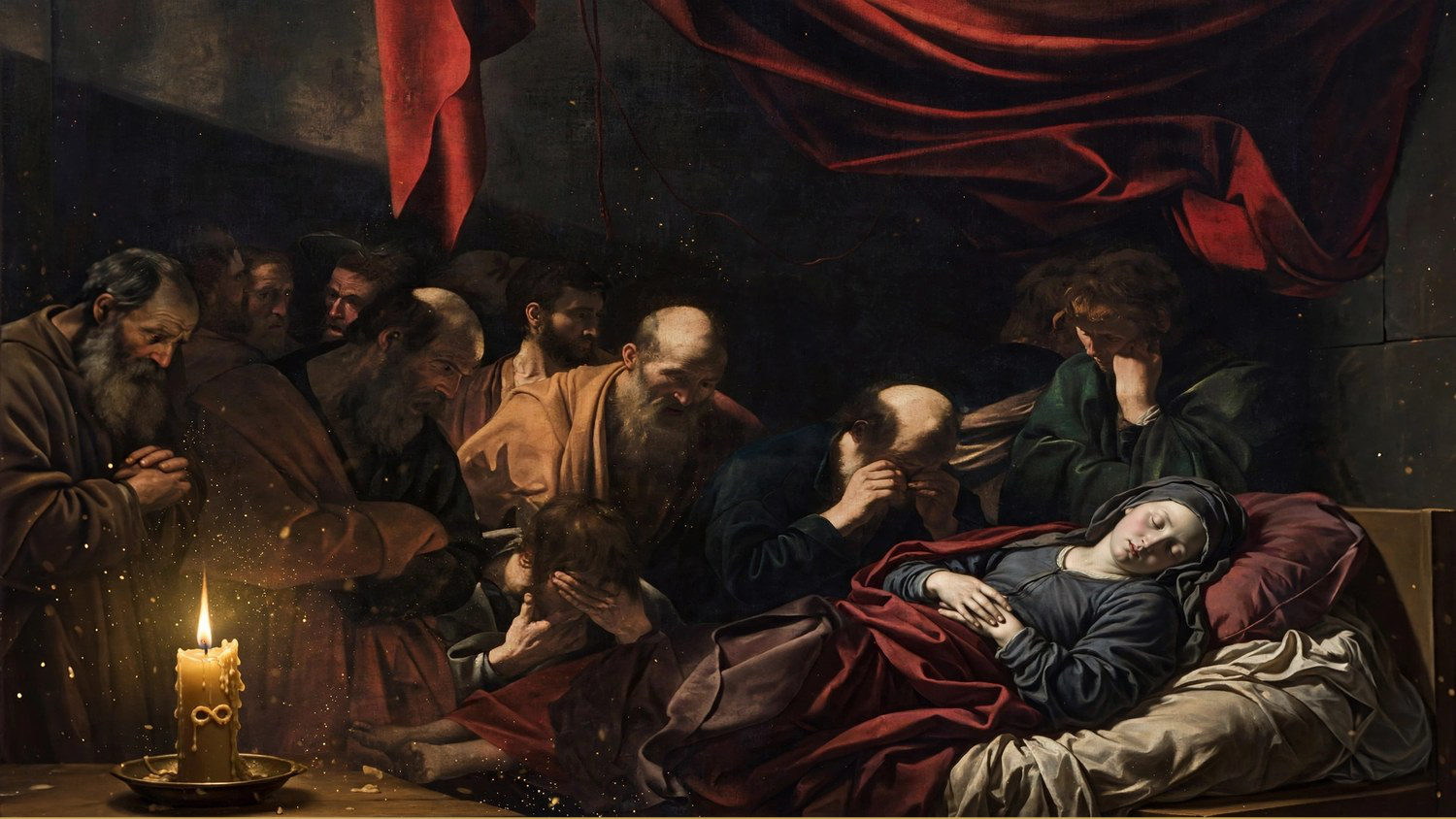
The vigil. After Death of the Virgin, Louvre, INV 54, 369 × 245 cm, 1601–06. Painted for Santa Maria della Scala. The Carmelites rejected it. The Duke of Mantua bought it in 1607. The Virgin, the mourners and the red drape are his. The candle and the dust are added.
11 · David and the drop
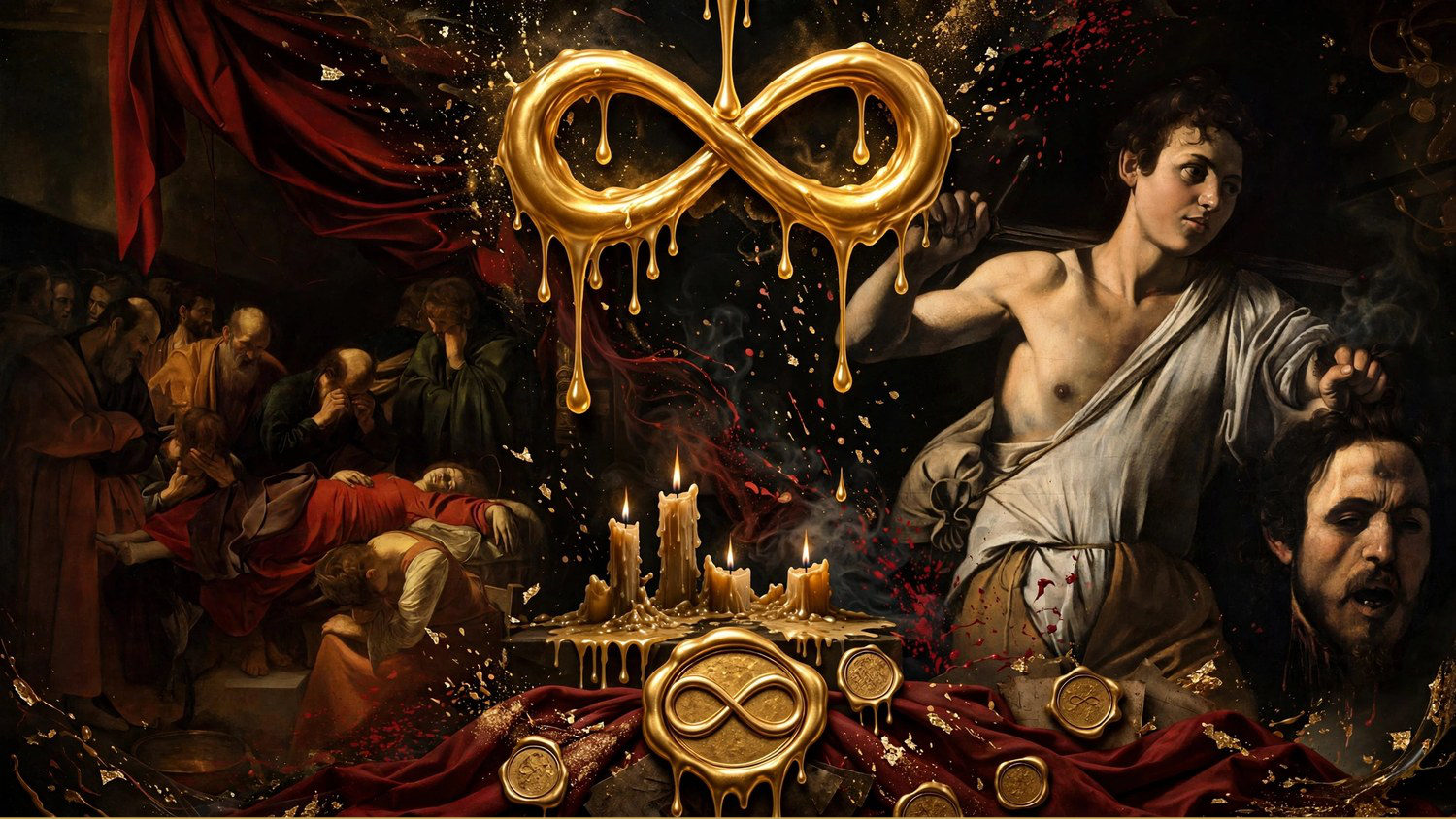
David and the drop. Set beside David with the Head of Goliath, Borghese, inventory 455, 125 × 101 cm, 1609–10. Goliath's head is his own face. This plate is a composite. The crowd and the table are the plate's. It is the one plate where the mark is large and not hidden.
12 · The prison yard
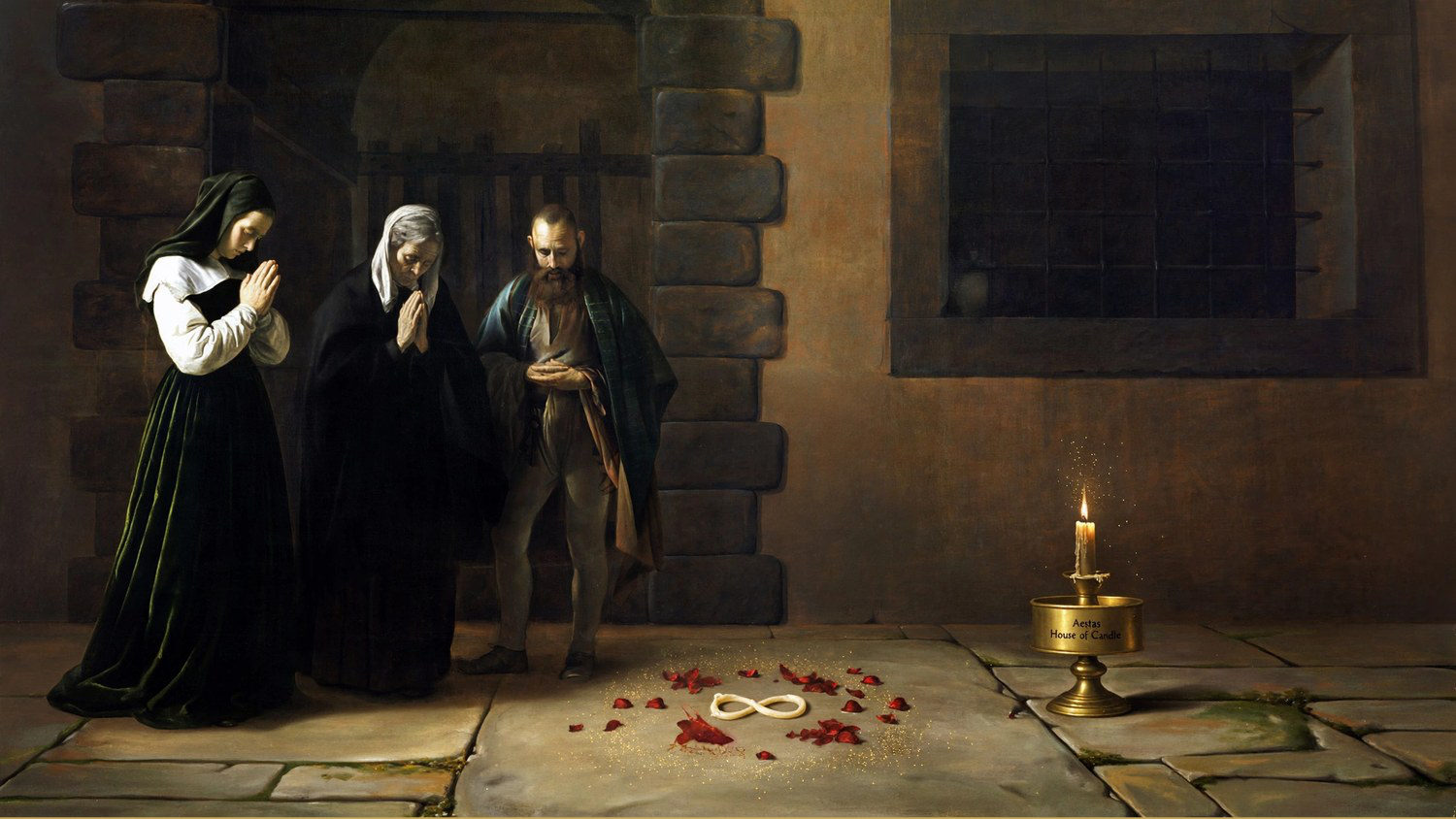
The prison yard. Set beside The Beheading of Saint John the Baptist, Oratory of St John's Co-Cathedral, Valletta, 361 × 520 cm, 1608. His largest canvas, and the only one he signed, in the blood at the saint's neck. The executioner and the saint are not in this frame. The yard is empty. The candle and the petals are added.
The covers
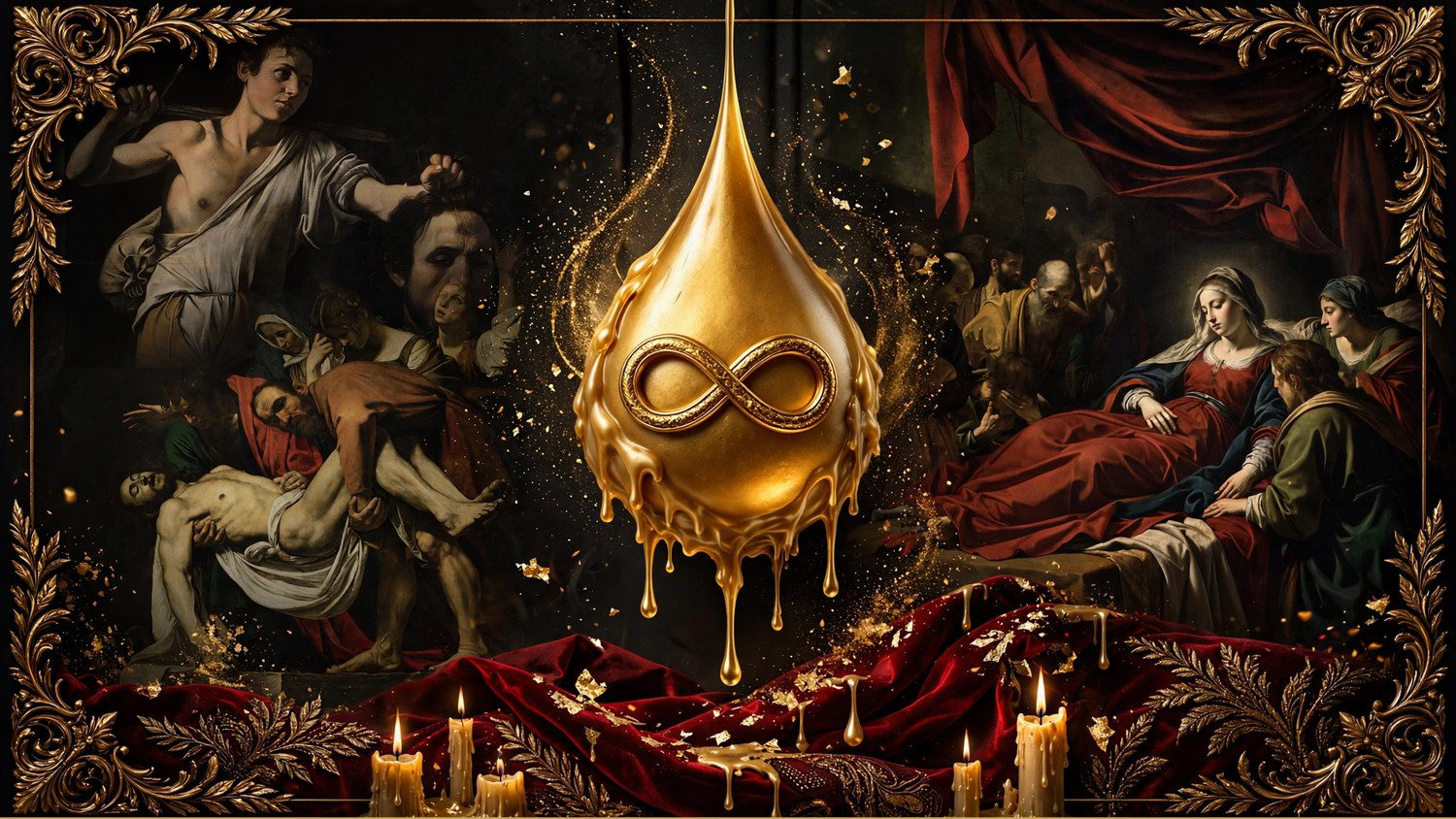
The wax, declared, and the wax from behind.
The front cover puts Bacchus, the boy with the basket and the Medusa shield under a gold drop of wax in the shape of an infinity sign. The back cover is the same drop, with the Entombment, the Death of the Virgin and the head of Goliath. On eleven plates the drop is small. On plate 11 it is large. On the covers it is shown. The wax is this book's own. It is not Caravaggio's, and it is not in any museum.
The name
Michelangelo Merisi was born in Milan in 1571 and died at Porto Ercole on 18 July 1610. He took the name of the town his family came from. He trained with Simone Peterzano and was in Rome by the early 1590s. The Contarelli Chapel made his name in 1599–1600. In May 1606 he killed Ranuccio Tomassoni and fled. He worked in Naples, Malta and Sicily, and he died on the way back.
His light is one source, and the rest of the room left dark. This book takes that literally. One flame, wet stone, heavy cloth, gold dust. The candles are added. The figures are his.
The copy
The plates are new pictures, made after or beside the paintings named under them. They are not reproductions. Tools were used in making the covers and the plates. The methods stay private.
The digital file may be shared under CC BY-NC-ND 4.0. Copy it as it is, for a non-commercial purpose, and say who made it. You may not sell the file, and you may not make a new work out of the plates. The license is the rule for this file. It is not a claim on the paintings.
LTD 100 is the specification for a physical run: one hundred copies, a black slipcase, gold foil, the number and the price left blank until a copy is made. The cover names that run. It does not mean the hundred copies are already in the world. Buying the object, if it is made, is not a license to republish the plates.