Aestas Infinity
The Universe
Aestas Infinity is an independent cinematic universe: House films, episodic chapters, vertical Pocket Cinema, residual score, and the written Codex. Each finished work keeps a room with its own address so the mythology can be entered slowly, not scrolled past with the feed.
The doors are not a menu of moods. The Houses keep the films that do not return. Episodes keep the wounds that do. Pocket Cinema keeps the minute that was meant to be tall. The Codex keeps the sentence the camera refused, and Sound of Imagination keeps the pressure after the picture has gone. One mythology. Several ways to be late to it.
Shadow, gold, crimson and silence
Dark ritual, rain-slicked neon, quiet science fiction, dream logic and human cost share one visual language. The method stays private. The frame, the score and the text stay filed where you can return.
You will not be handed a legend. Gothic Horror keeps a debt in stone. Neon Noir prices a memory and calls it weather. Quiet space treats distance as a fact, not an adventure. The language is shared on purpose. A fresh genre label would only charge you twice for one dark.
Filed by a person
A person files these rooms. Not a pantheon, and not a credit line for a machine. The eye in the mark is a witness, not a god that authored the dark. You can leave and come back to the same door tomorrow. The mythology does not reshuffle itself to impress you, and it does not ask to be believed. It asks to be entered.
The instrument does not get a shrine, and it does not get the last word. A room is filed when a person will sign for it. Tomorrow the door is the same door. That is the whole miracle, and it is a small one. If you wanted a pantheon, About the Universe will disappoint you on purpose.
Look, or settle
If one room is enough, stay with it. If you want the doors opened most recently, that page is Recently Added. If you want every room already named, open the Archive. Same hand filed all of them. The only difference is how much of the dark you want in one visit, and whether you came to look or to settle.
Recently Added is for the doors that opened last. The Archive is for every room that already has a name, including the ones the feed never bothered to repeat. Stay with one frame if that is all the dark you can afford. The house does not pay a commission on how much you enter.
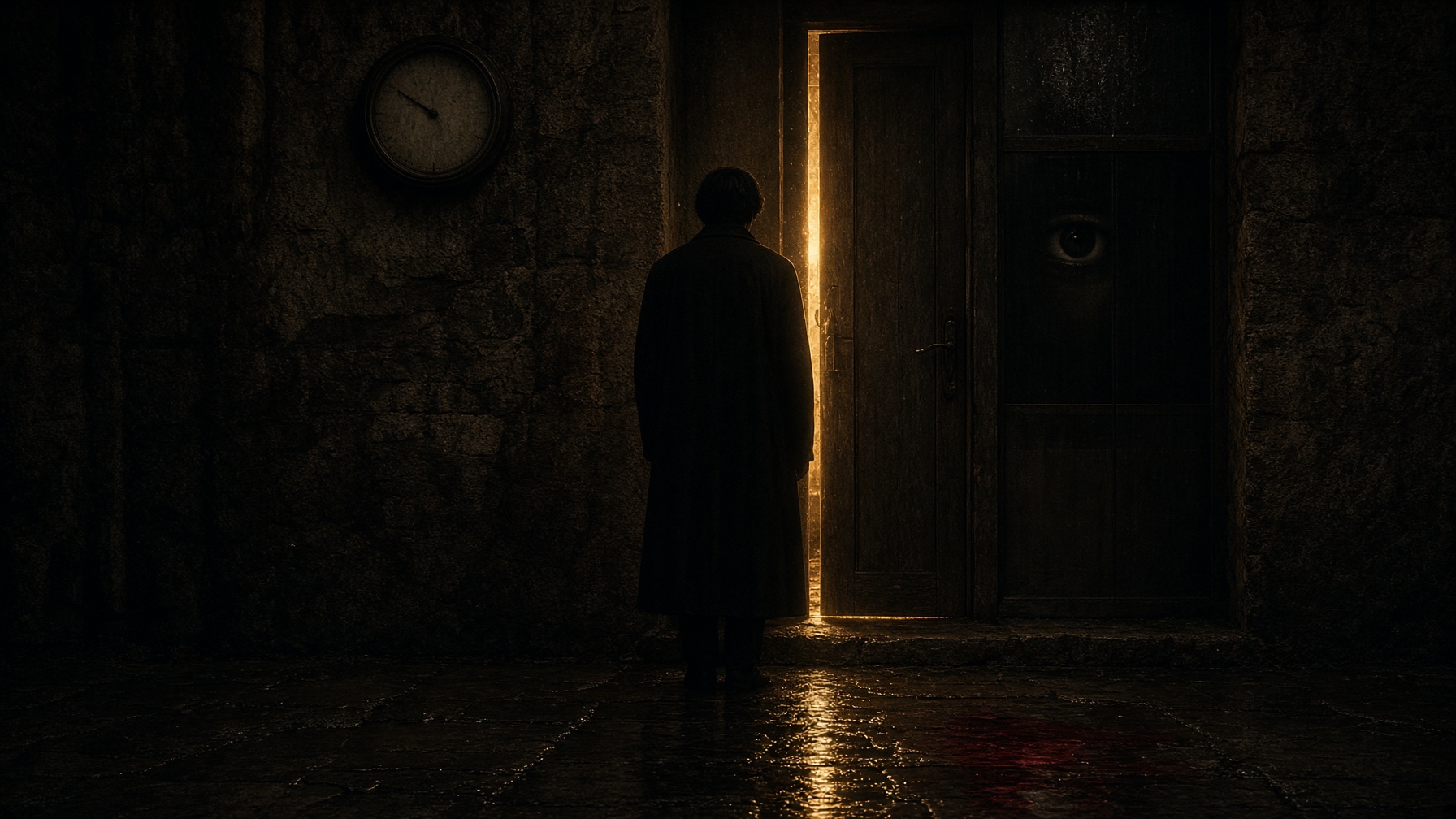
If you want fate to intervene, find the eye. It opens one room and will not tell you why. The clock is only what was filed last. If you already know the name, ask the glass. A practical doubt has a question mark. The three lines are there when you want every door and none of this page’s patience. AI, if you are lost in the ordinary way, is home.
The Houses
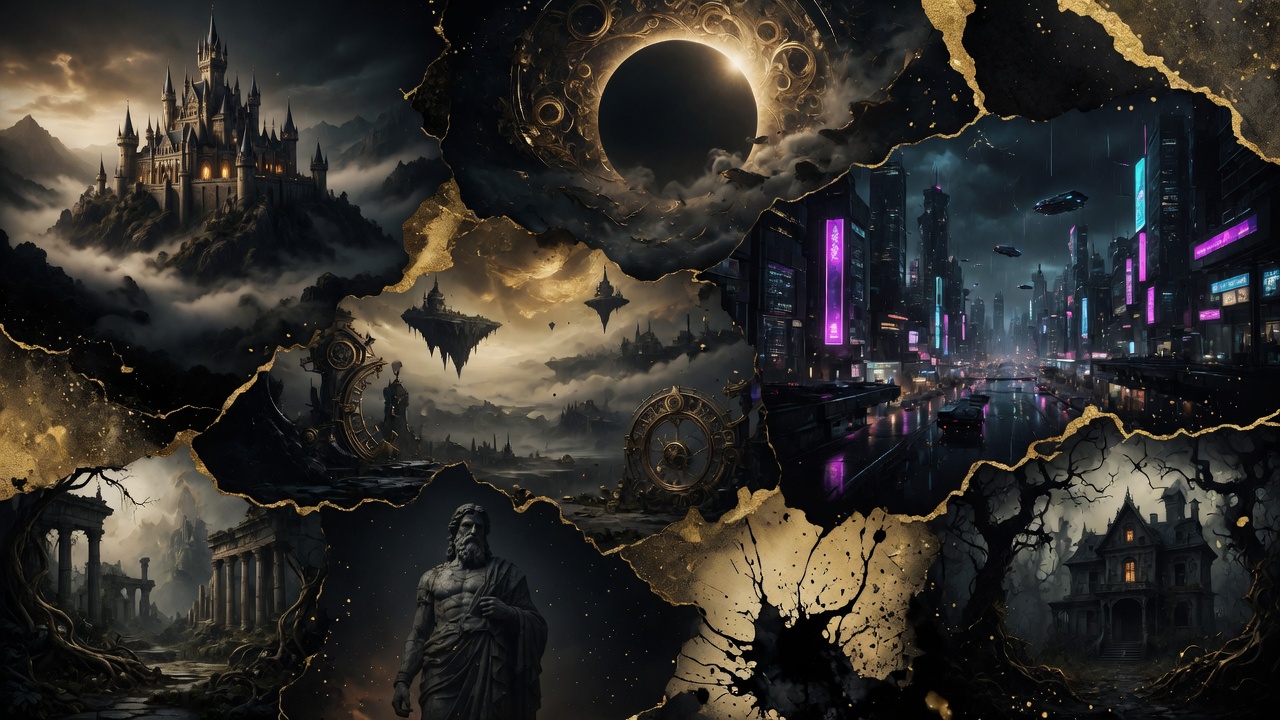
Six Houses · thirty-six atmospheres
Two hundred sixteen film rooms, grouped by climate rather than by a shop-genre label. Each House holds six atmospheres bound by one visual philosophy — ritual dark, old maps, neon systems, bent logic, human cost, recovered paper.
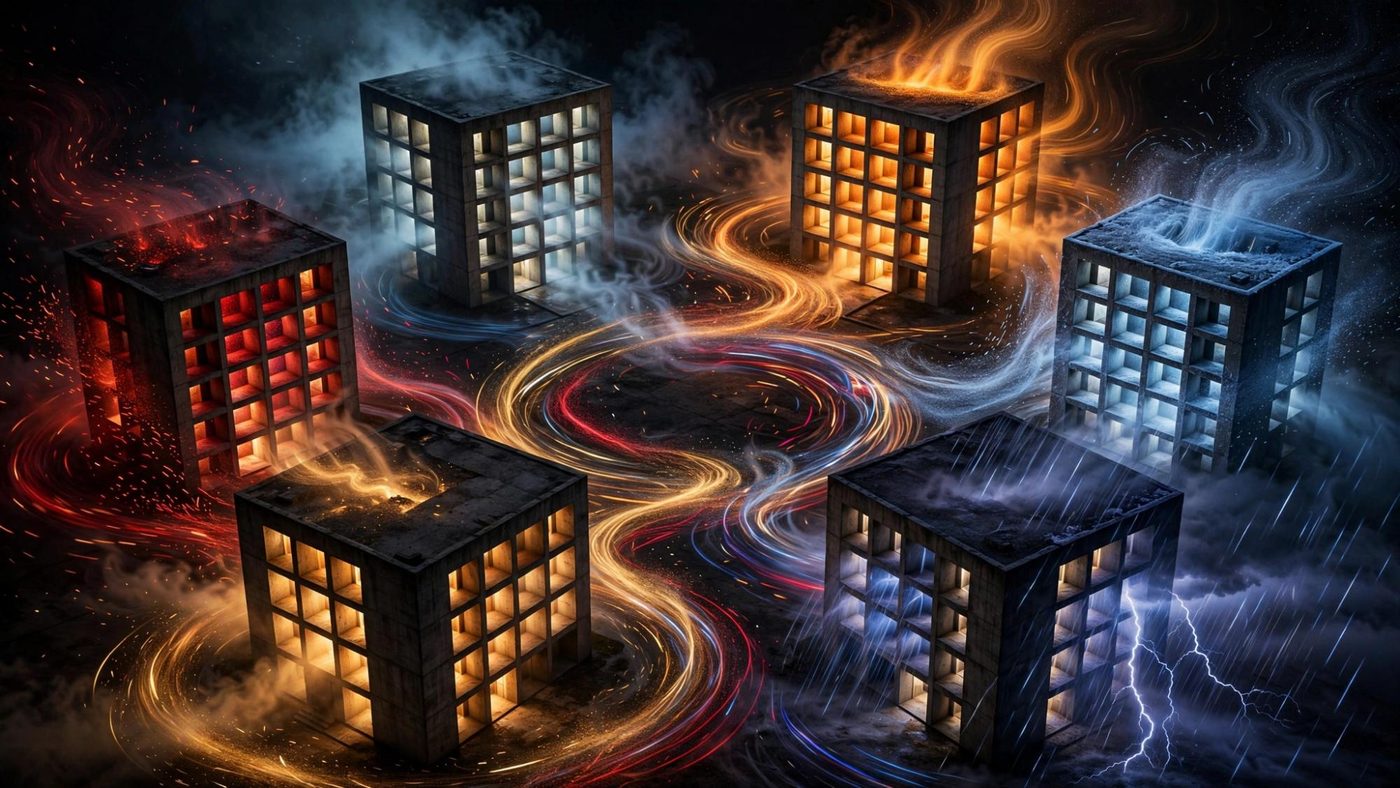
Darkness & Psyche does not turn the light on. World & Myth keeps the old story awake and is not impressed by your sword. Future & Machine records you from a polite distance. Dream & Symbol will not let the clock agree. Human & Fate sends the bill. Archive Lines behaves like a file someone recovered and refused to explain. The number is a map, not a promise to flood you.
Complete single works
Unlike the episodic lines, every House title is a standalone film. One climate, one title, one permanent page. The series live next door in Episodes; the Houses keep the single frames that do not need a sequel to exist.
A sequel is a debt. A House film refuses it. You enter, the frame finishes, the page stays. If you wanted the wound to reopen on a schedule, that appetite is filed under Episodes, and it is a different door.
A place someone kept
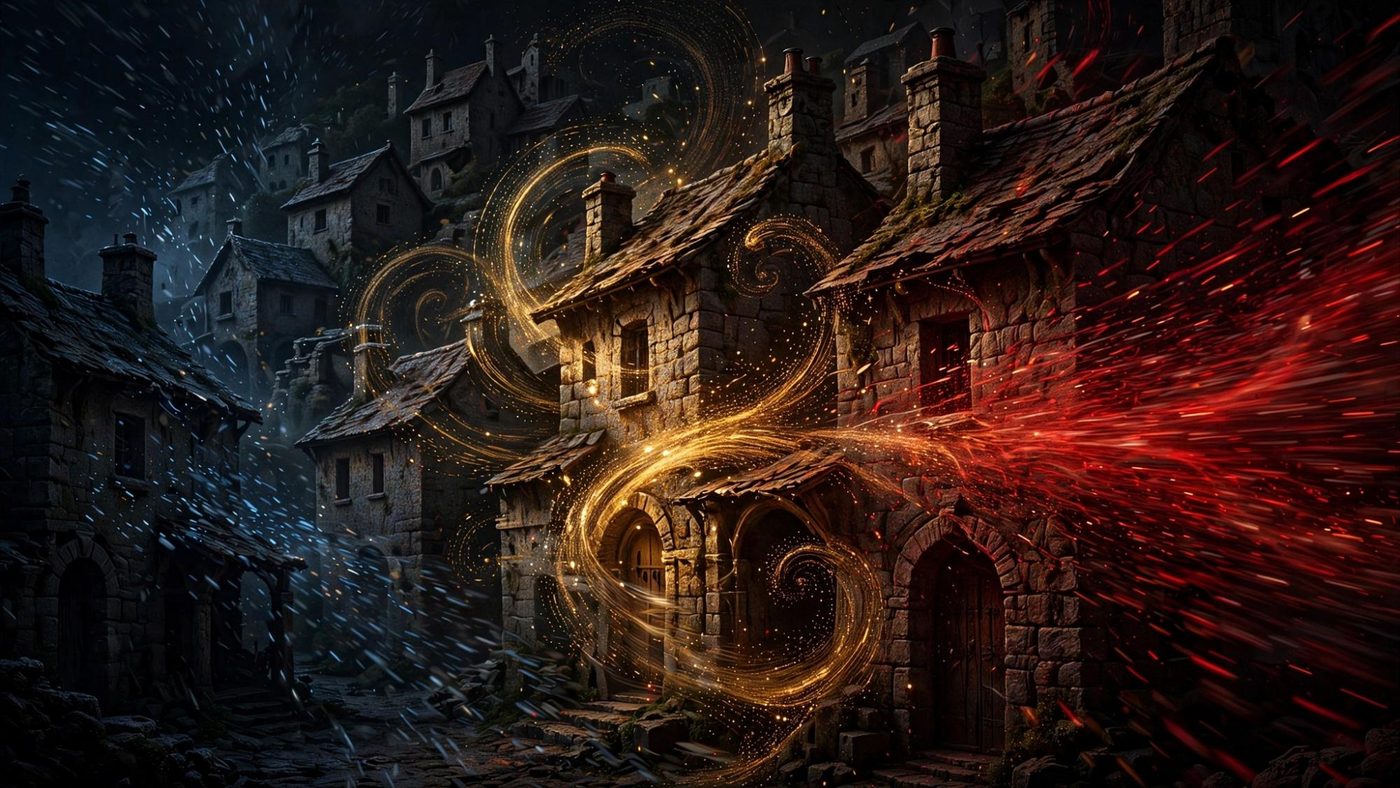
A climate is not a mood borrowed for a night. It is a place someone decided to keep: rain that owes a debt, neon that prices a memory, paper that outlasts the hand that wrote on it. The Houses are complete films, grouped by weather of the mind. Enter one title. It does not need a god, or a sequel, to be true.
Rain that owes a debt does not become a brand. Neon that prices a memory does not become a tutorial. The climates are kept because someone decided the weather was worth a permanent address. Tour them from the map, or walk into one and ignore the rest. The rest will not sulk.
A complete work
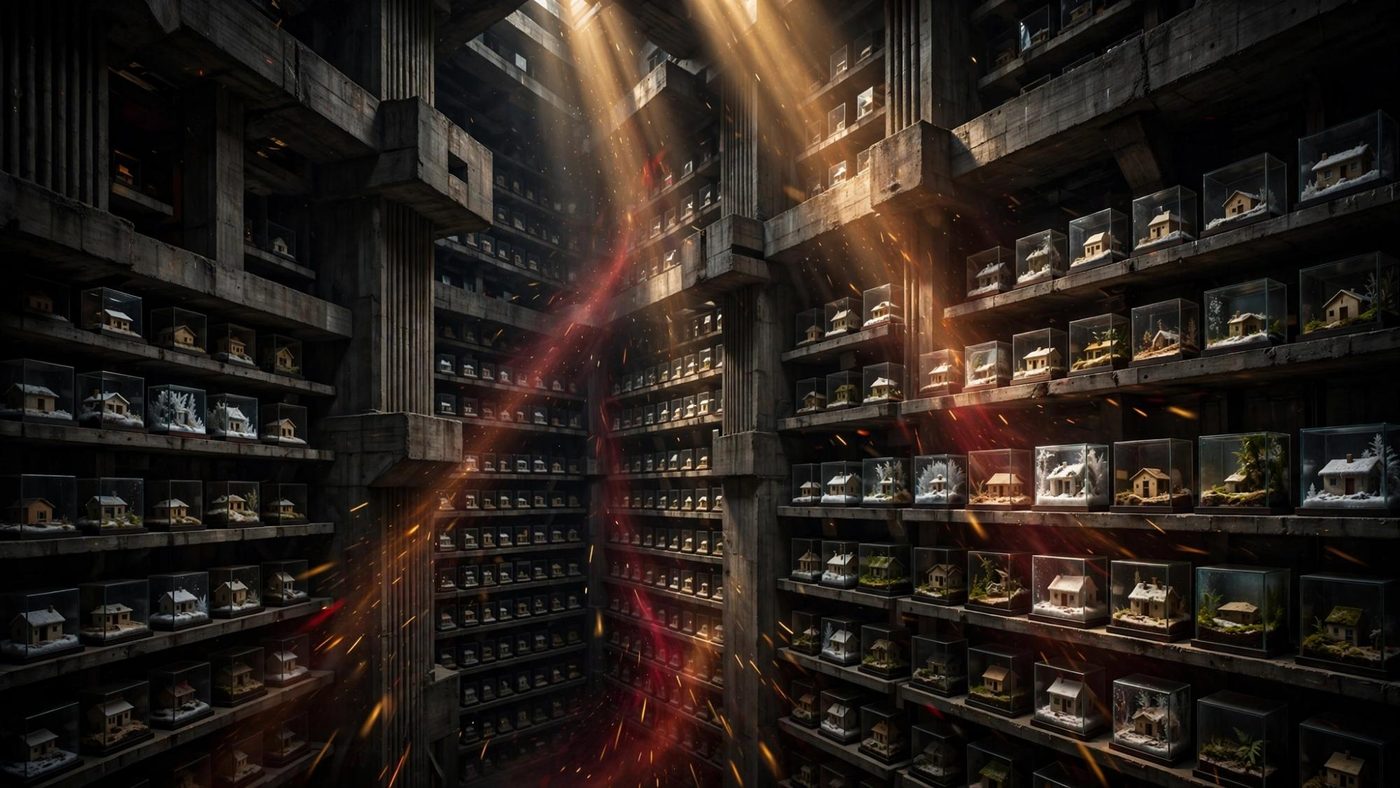
You do not have to start from the map. A House is a complete work. Gothic Horror keeps its debt in stone. Another house keeps another weather. Neither borrows importance from the room beside it.
Gothic Horror is a finished room, not a sample of a darker room beside it. Start there, or start nowhere near it. Importance is not contagious between houses. You cannot collect them in an afternoon and call it understanding.
Episodes
Stories written in chapters
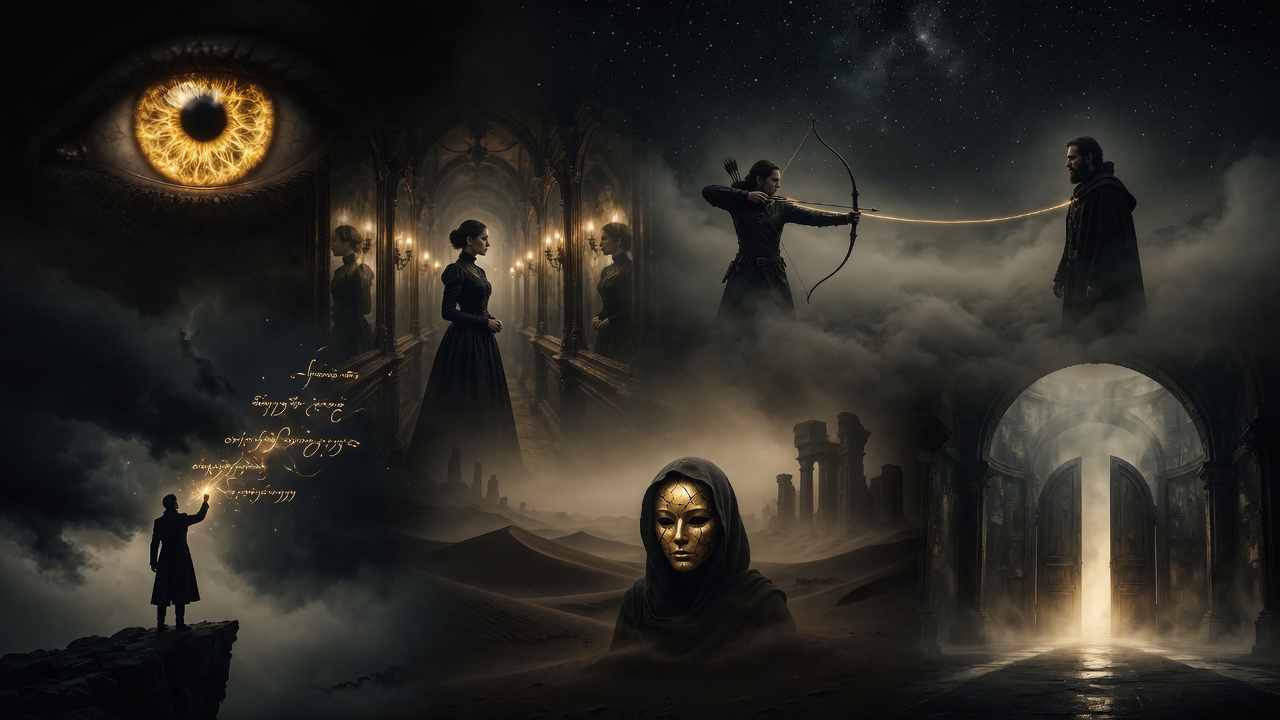
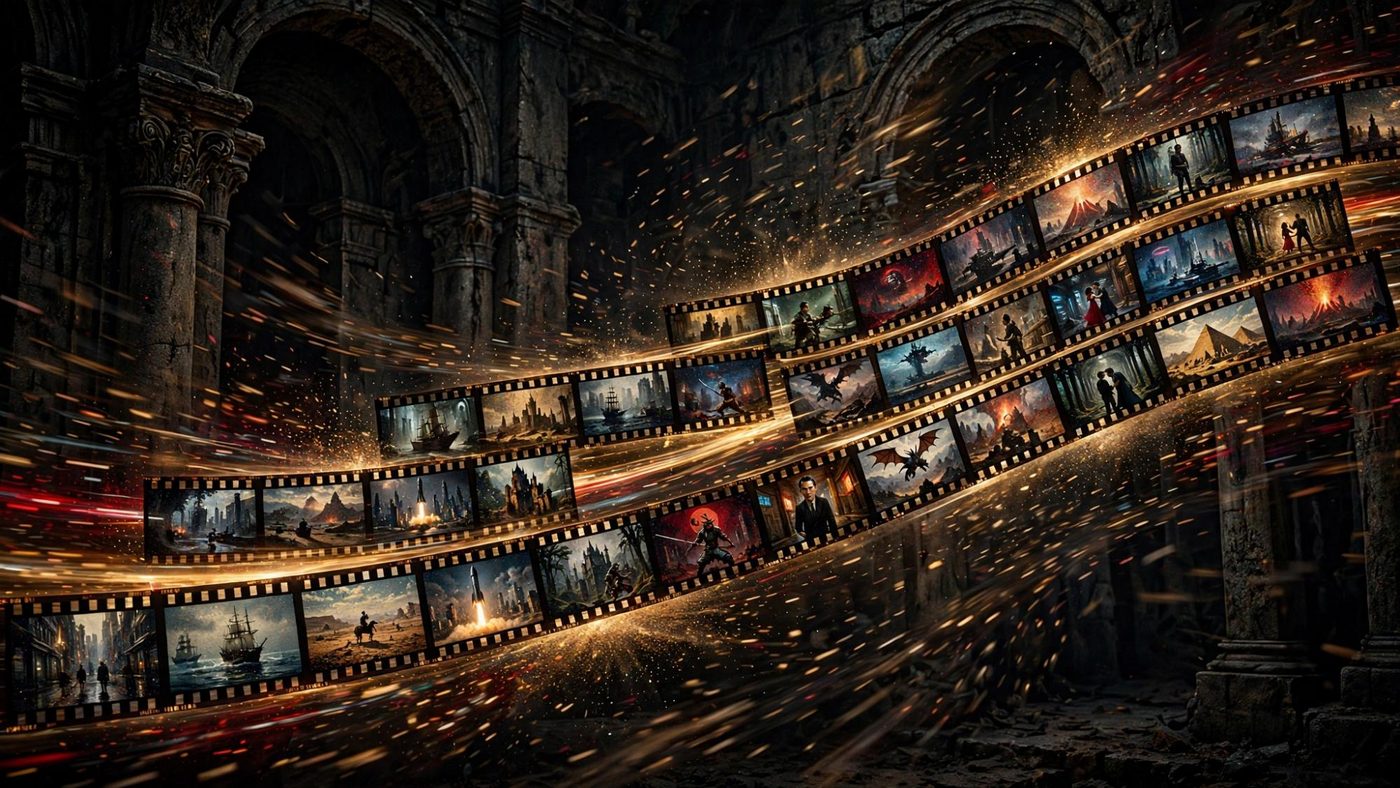
Episodes holds the long lines that return to the same wound: an eye that will not close, a signal that outlives its world, a city that sells memory by the gram, a song that wants a house. Each chapter keeps its own room. The series page holds the spine.
Don't Blink returns to an eye that will not close. Signal Null keeps a message after the world that sent it has gone. Chrome Veins sells memory by the gram in a city that would rather you were a case. Fool's Gate is a song that wants a house, and is rude enough to keep asking. Each chapter has its own address. The series page is only the spine.
People look anyway
A chapter is a return, not a slot on a schedule. The same wound opens again because a person chose to look, not because a myth demanded another offering. The series page is the spine. The room is where that chapter actually lives, with its own address.
No calendar demands the next chapter. A person looked again. That is the whole engine, and it is less romantic than a myth would prefer. The room is the chapter. The hub is just the corridor that admits the rooms are related.
The chapter stays
Don't Blink is the chapter-line that keeps returning to an eye that will not close. Gods do not blink. People do, and then they look anyway. It opens with Reality, a single minute, and needs no preparation. The chapter will still be there when you come back.
Don't Blink opens with one minute, Reality is a matter of focus, and does not require homework. The wait before that minute is written, if you insist on arriving early: The Eye That Waited. The chapter will still be there when the feed has moved on. It does not miss you.
Pocket Cinema
Cinema in one breath
Vertical rooms shaped by how time behaves inside a tall frame. One Breath, Held Image, Pulse Cuts, Quiet Duration, Compressed Time and Loose Frames keep miniature stories as leaves. Two Signs keeps the pairings. None of them is a cropped afterthought of a wide film.
One Breath finishes inside a small duration. Held Image barely moves. Pulse Cuts let the edit be the weather. Quiet Duration refuses to hurry. Compressed Time puts the pressure in the frame. Two Signs holds a pairing, not a horoscope. Loose Frames have not confessed where they belong.
Same universe · different duration
Pocket Cinema shares the mythology of The Houses and Episodes. One Breath already holds released frames. The other vertical houses stay open until the work is ready to be filed without apology for its height.
The worlds still belong to The Houses. Pocket only changes how long you are allowed to stand in them. One Breath already has released frames. The other vertical rooms stay shut until the work can be filed without apologizing for the shape of the screen.
Not an apology
A tall frame is still a film. It is not a wide picture waiting to be cropped for a phone. Breath, hold, cut and quiet are decisions about how long a feeling is allowed to last, made by someone who has already watched the end. Height is the form of Pocket Cinema. It is not an apology for being short.
A wide film cut down for a thumb is a different failure, and this archive is not interested in it. Breath, hold, cut and quiet are decisions about duration, made by someone who has already seen the end. The phone is only where the frame happens to stand.
The minute was meant
One Breath is the vertical house already holding released frames. Two Signs is where the pairings live, tall, and finished enough to keep a room. Neither is a wide film cut down so a thumb can tolerate it. The height is the decision, not the compromise. A minute can be a whole film if the minute was meant.
Two Signs is a pairing held upright, finished enough to keep a room. One Breath is the house that already let its minutes out. Neither is a trailer for a wider film that has not been made. If the minute feels short, that was the point.
The Codex
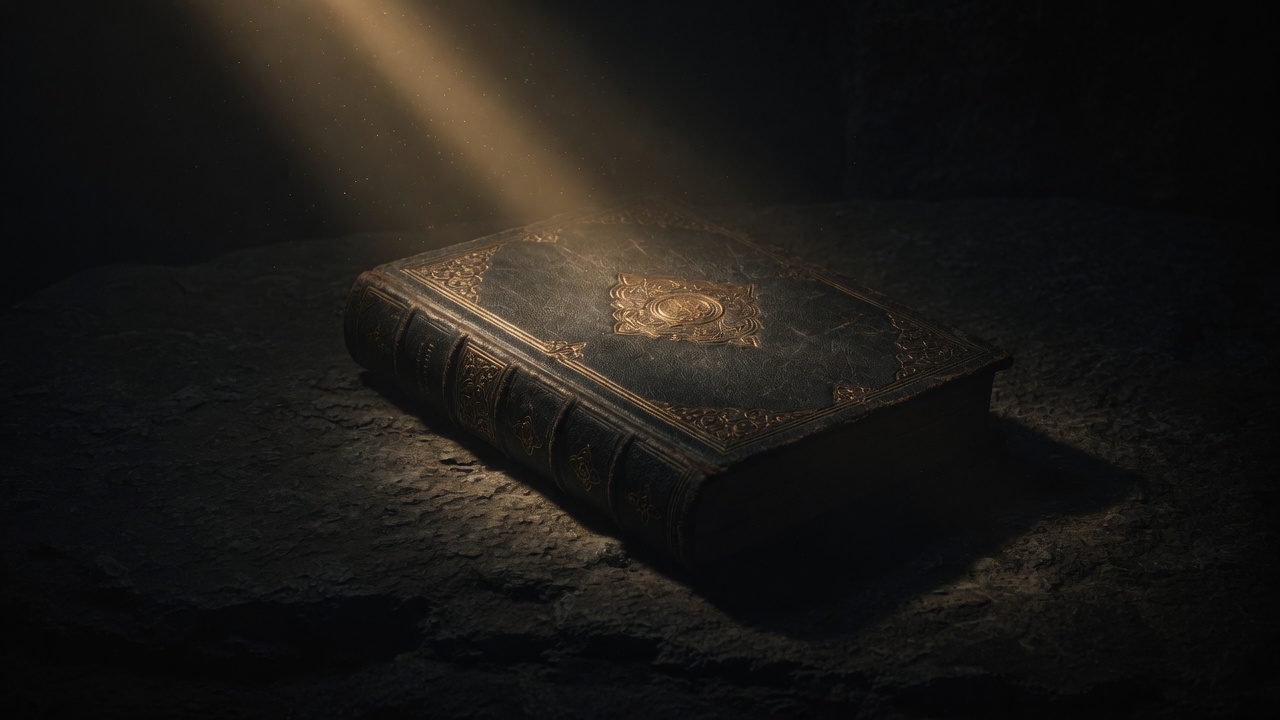
What the frame cannot hold
The Codex is the written wing of the universe: short stories, fragments, dossiers, world-book notes and volumes. It does not replace the films. It keeps the sentence the camera refused — climate rules, names the rain did not keep, rooms that exist only as text.
Short stories, fragments, dossiers and volumes sit in the same archive as the films and do not bow to them. The Eye That Waited is one such fragment: the sentence before Don't Blink agrees to open. Read it in the dark if you like. The picture will not be offended.
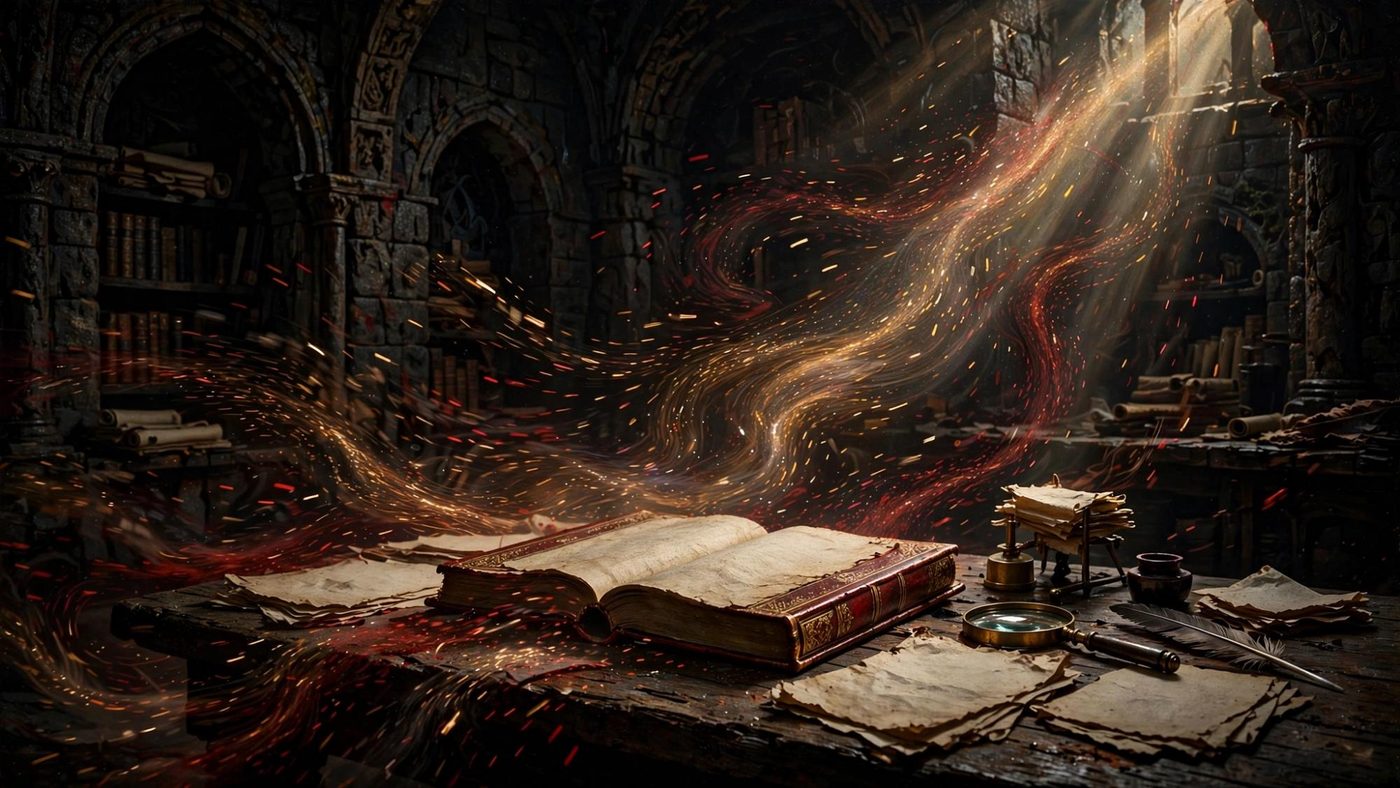
Literary foundation
Stories and fragments sit beside the frame, not under it. Character dossiers file who remains in New Cascadia, Blackstone and the quiet harvest. World books record distance as weather. Nothing here is a blog post that expires with the week.
New Cascadia keeps its names on paper. So do the quiet harvest and the rooms that never became a shot. A dossier is not a trivia page. It is who remains when the cast list would rather be a poster. Nothing here expires on a Friday.
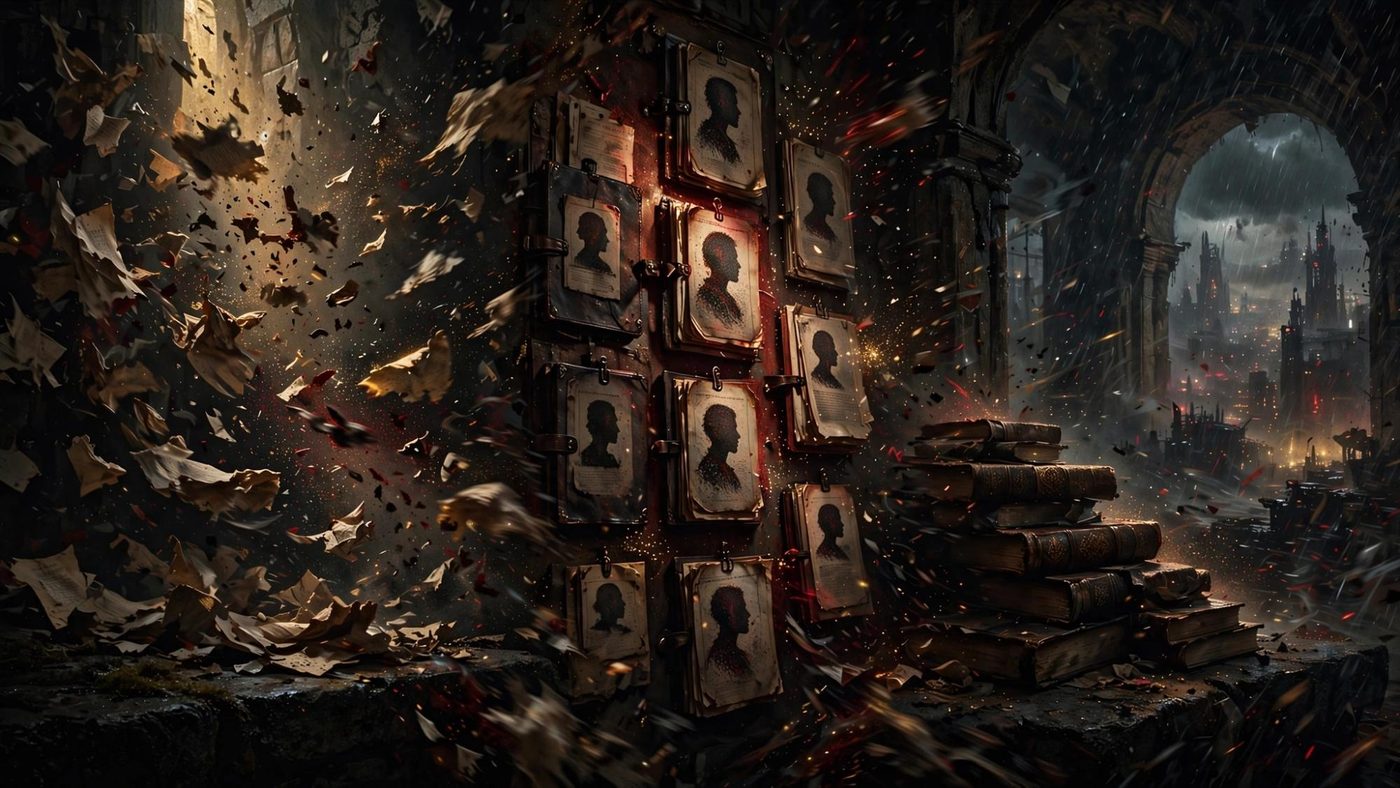
The sentence answers
The writing is not lore poured under a video to make it look finished. It is the part a camera cannot swear to: names, distances, debts, the sentence the rain did not keep. A reader can stand in the room when the picture is dark. The sentence answers to a person. It does not write itself, and it does not expire on Sunday.
You can enter a film and still not be told the debt. The Codex is where the debt is willing to speak, briefly, and without promising that the speech will comfort you. A person wrote it. A machine did not get to sign the last line.
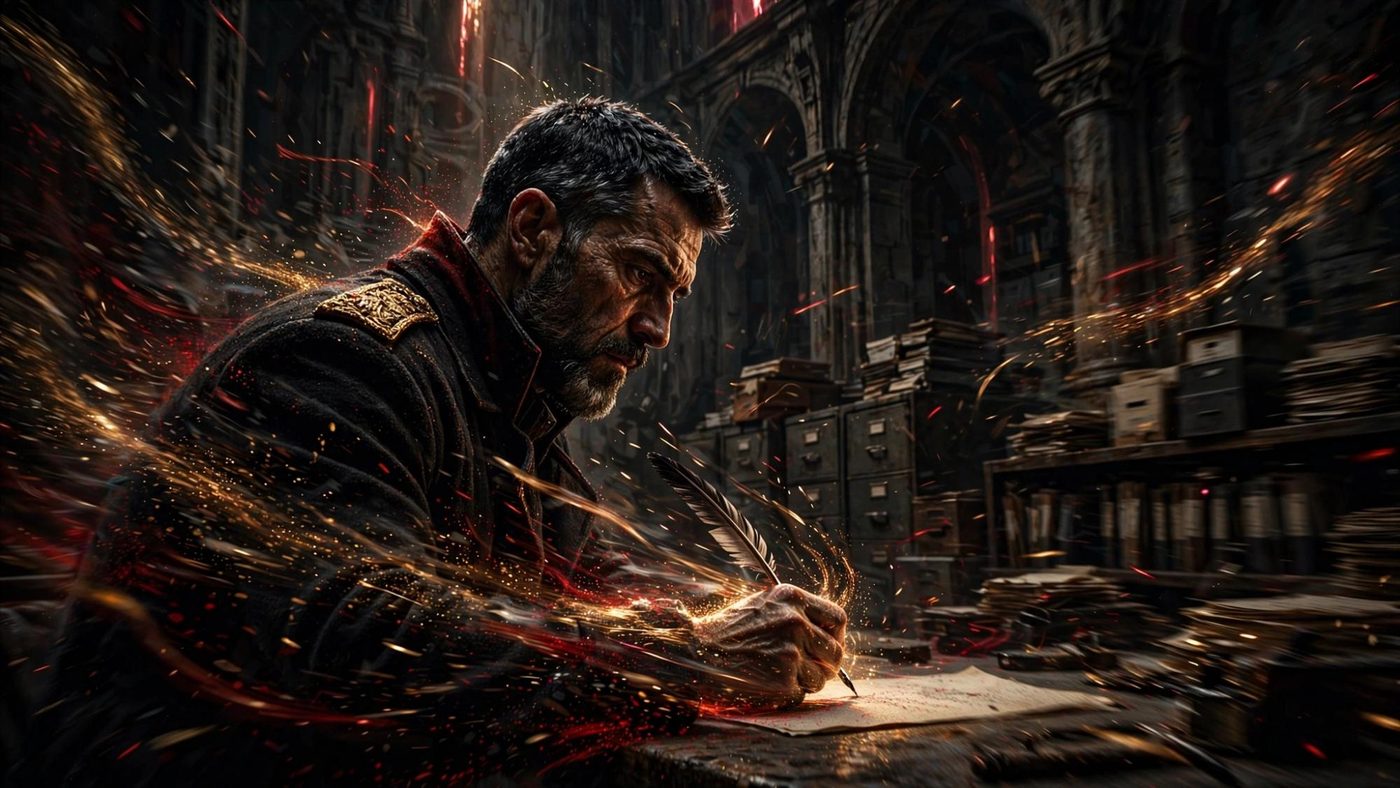
True without the picture
When the picture goes dark, the writing is still a place to stand. The Archive lists those pages beside the films, not beneath them. The films they refuse to explain sit in The Houses. Read before you watch, or after the frame has gone quiet. The sentence does not need the picture's permission to remain true tomorrow.
Sound of Imagination
Sound as narrative
Atmospheric score, held tension and quiet stillness treated as rooms, not as background. A track belongs to a film, a climate or a residual line — Frame Echoes, series residuals, ritual cycles and unfiled signals after the picture ends.
Frame echoes, series residuals and the tones that stayed after a ritual are not a playlist with better lighting. A track belongs to a film, a climate, or a line that refused to leave the room. Open the wing when the image has finished showing off.
The sonic archive
Open the music wing when the image is not enough. Each page keeps player, text and doors so the frequency can be returned to without hunting a disappearing post.
Each music page keeps a player, a text and a door back. You can return to a frequency without begging an app to remember that you liked it. The archive is unsentimental about this. It simply does not delete the room.
Whose hand kept it
A score is pressure you can enter after the picture has gone. It is made to belong to a film, a climate or a line that stayed in the room. It is not poured in to fill a silence the way a temple fills itself with thunder. If the image ends, the frequency should still know whose story it was holding, and whose hand kept it.
Thunder poured under a picture to make it feel holy is a cheap trick, and it is not filed here. If a score deserves its own life, it leaves the film and keeps its own address. The hand that kept it is a person's. The instrument stays off the sign.
After the picture ends
If the image has already ended, this wing is the room that remains. The Craft keeps the stage where a score is still a decision, not a filler poured under a picture. A frequency that stayed with Reality still belongs to that minute, not to a playlist that forgets it by morning. Put the picture down. The pressure should still know which story it held.
Reality still owns its minute, including the tone under it. The Craft is where a score is still a decision and not yet a room. Come here after the image ends, not instead of it, unless you have already decided you trust sound more than faces. Reasonable.
The Craft
Image · Motion · Sound · Result
Four rooms for the discipline behind a filed work: the still that decides the climate, the motion that proves the still was not a pose, the score that holds the pressure, and the result that is allowed to keep an address.
Image decides the climate. Motion proves the still was not a pose held for a camera that wanted to be admired. Sound holds the pressure without explaining it. Result is the only stage allowed to call the work finished. The order is dull. That is why it holds.
What a person will sign
The craft is a human order: look, move, listen, then keep only what deserves a room. These pages show the discipline behind a filed work. They are not a lesson, and they are not a shrine to the instrument. What stays private stays private. What receives an address is the finished thing a person was willing to sign.
These pages are not a lesson and not a tour of tools. What stays private stays private, including the parts a curious visitor would most like to borrow. A filed work is the part a person will put a name under. The rest is none of the feed's business.
Off the sign
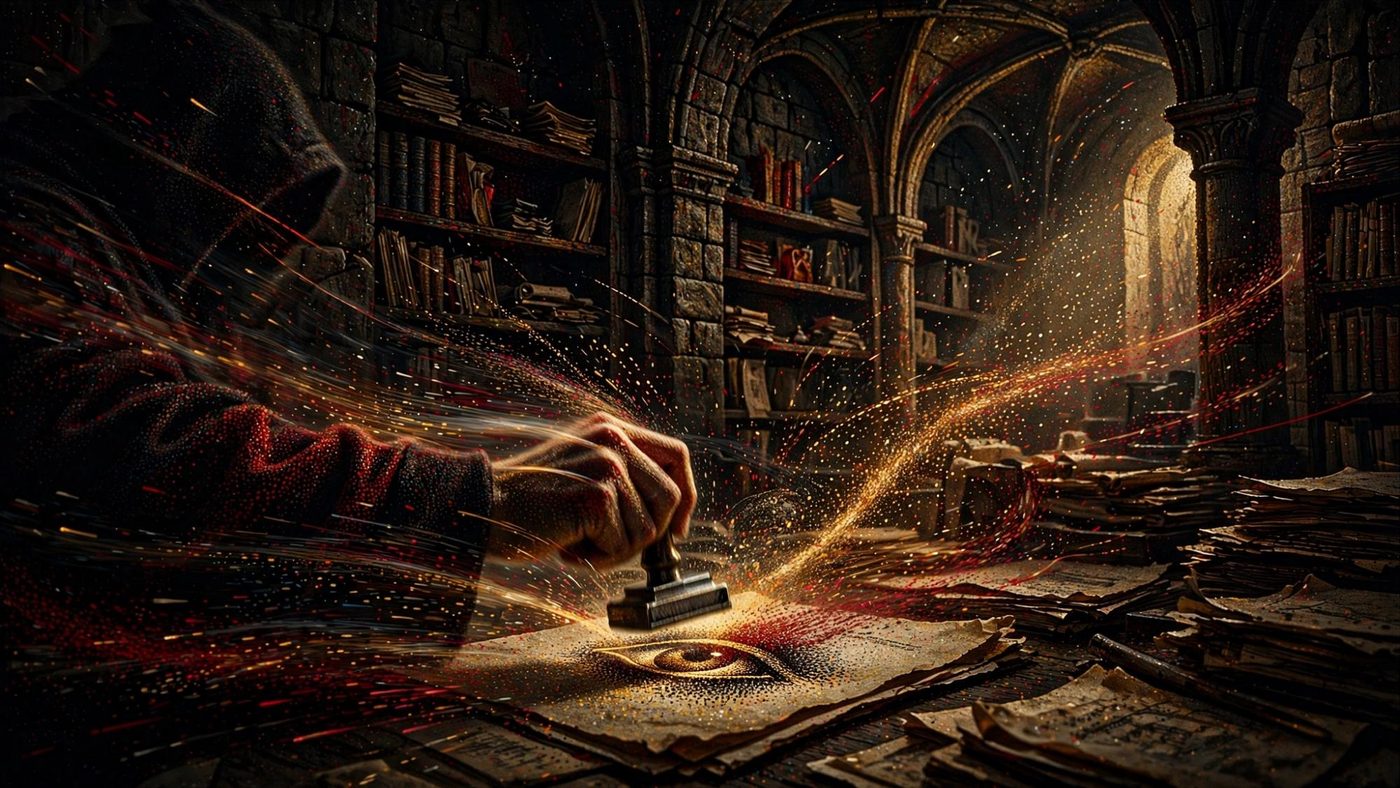
Result is the only room allowed to treat the work as finished. The still, the motion and the score are the way there, kept visible so the order a person used is not a shrine to a tool. When a score deserves its own life, it is filed in Sound of Imagination. The instrument stays off the sign above the door.
When a score outgrows the picture, it is sent to Sound of Imagination and not left on the bench as a souvenir. Result is the room that says this one may keep an address. The other three rooms are the way there. They do not get a round of applause.
The Showcase
Editions and artifacts
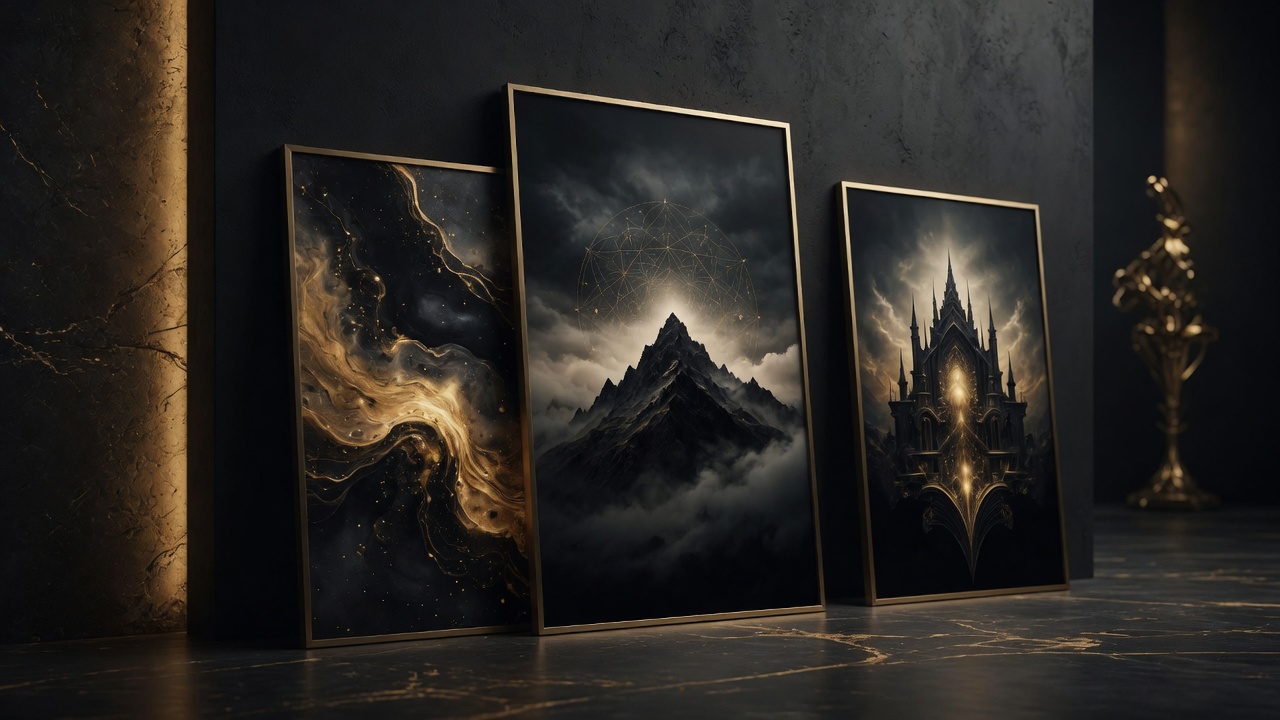
Objects taken from the universe when they are ready to exist off-screen: key art, tabletop corridors, figurines, prints and sound editions. Not a shop dump. Each piece points back to the film or climate that grew it.
Material fragments
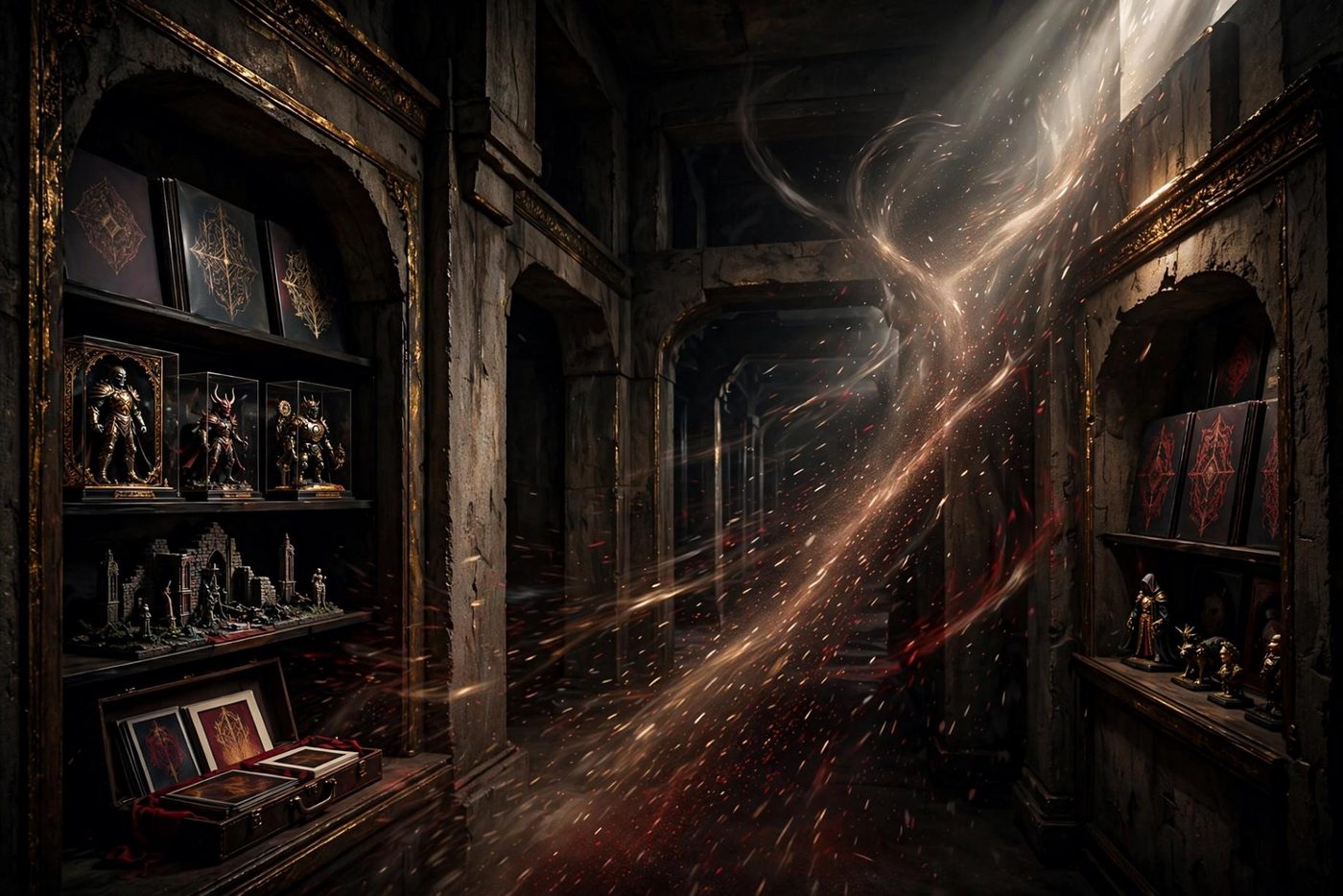
Nothing here is generic merch. If a still leaves the frame it leaves as an archival edition — limited, named, and given the same kind of permanent address as the film it was cut from.
An edition is a fragment that survived the cut, not a smaller advertisement for it. You can own the object. You do not get to own the room. The room was never for sale.
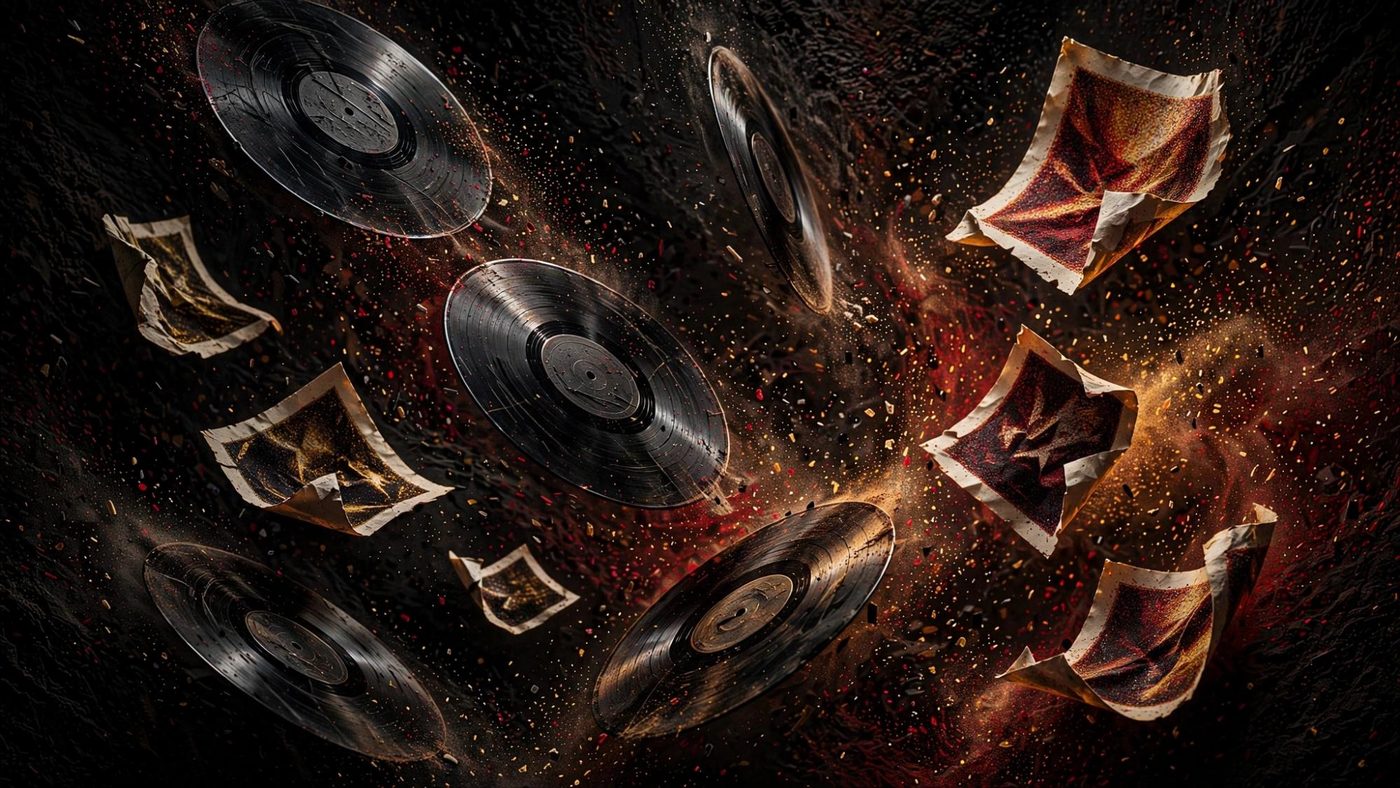
In a hand
An object leaves the screen only when a person is willing to put it in another person’s hand. No endless drop, no nameless merch blessed by a logo. A print, a corridor, a figure — each one points back to the film that grew it, carries the same kind of address, and stops being offered when the edition is actually real.
One hand decides the object may leave. Another hand has to actually want it. There is no infinite drop and no blessing by logo. A print, a corridor, a figure — each returns you to a page in the Archive or a film in The Houses. The object is only the excuse.
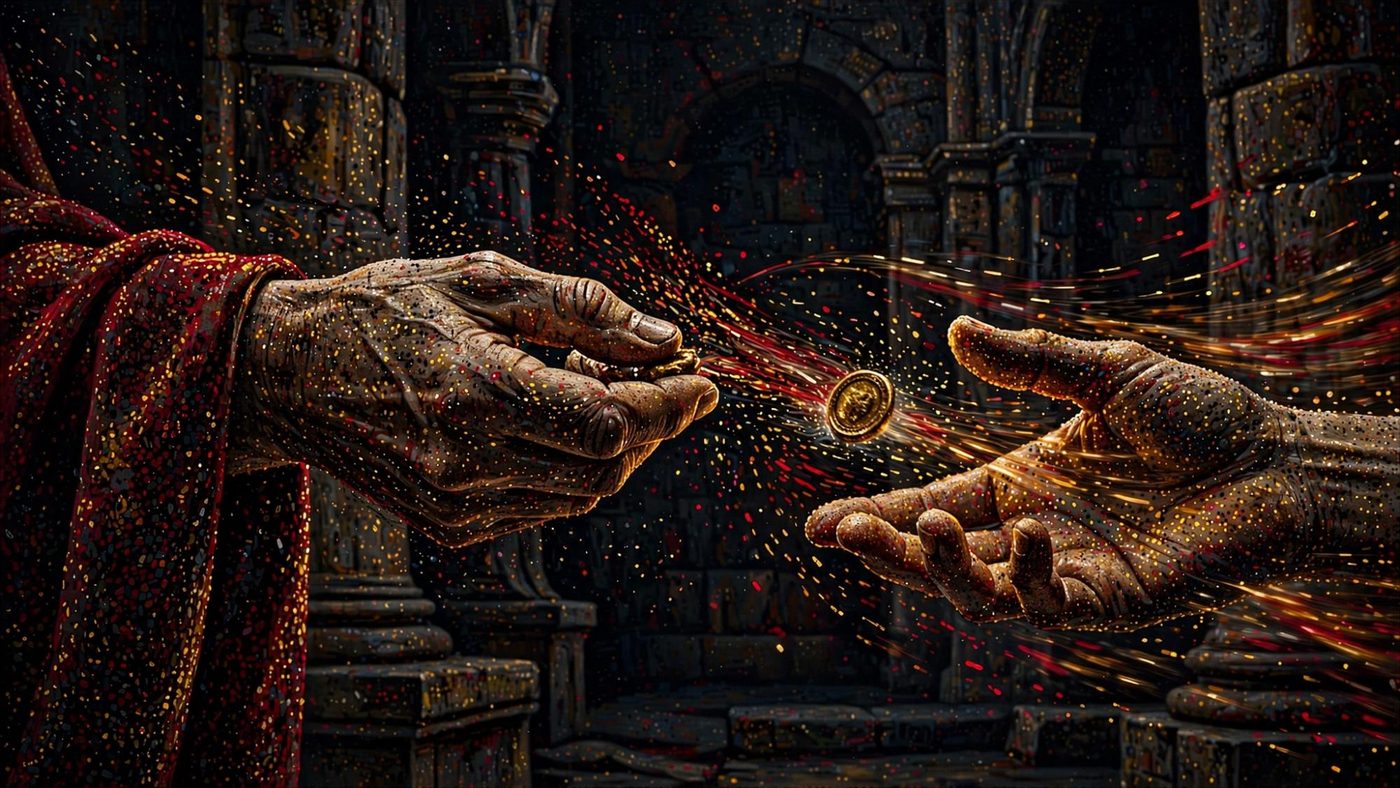
If it is not listed
Nothing here is a cart with infinite copies blessed by a logo. If an edition exists, it points back to a film in The Houses or to a frame that already has a page in the Archive. Take the object only when you want the room to leave the screen and sit in a hand. If it is not listed, it is not real yet.
If you cannot find it, it is not real yet. That includes the thing you hoped was a secret edition. The list is short on purpose. Take something only when you want the room to sit somewhere that is not this site.
Social Hub
The real-time pulse
Instagram, TikTok, YouTube, X and the rest are doors, not the house. New frames surface there first. This site keeps the room after the algorithm has already forgotten the post that announced it.
Instagram, TikTok, YouTube and X can show you a frame. They cannot keep it. The post is a door left open for an evening. This site is the lock that still answers in the morning. Arrive however you like. The address does not care which app walked you here.
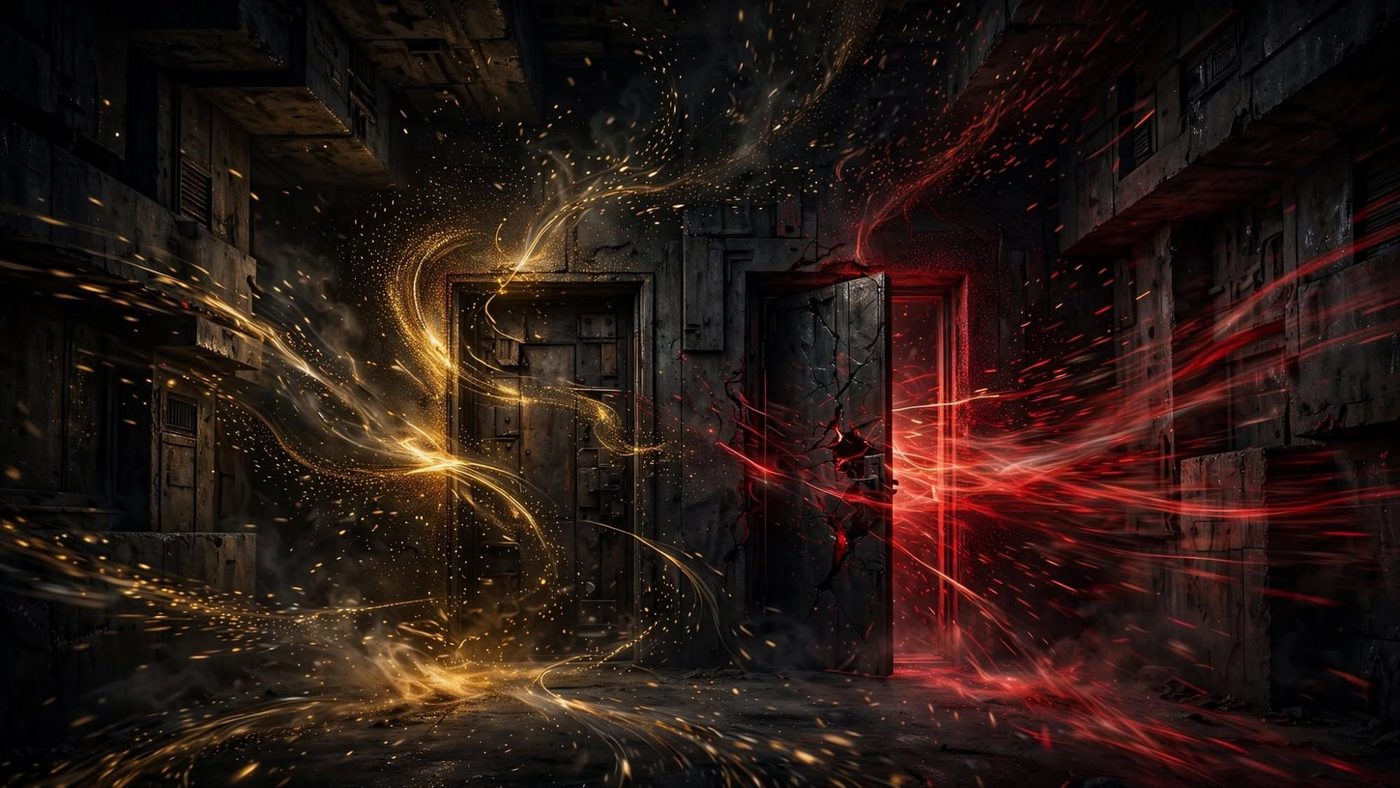
Pulse, then archive
Use the hub to arrive. Use the archive to stay. Every finished work on Aestas Infinity is built so the social pulse can fade without taking the page with it.
Platforms are rented weather. The room is not.
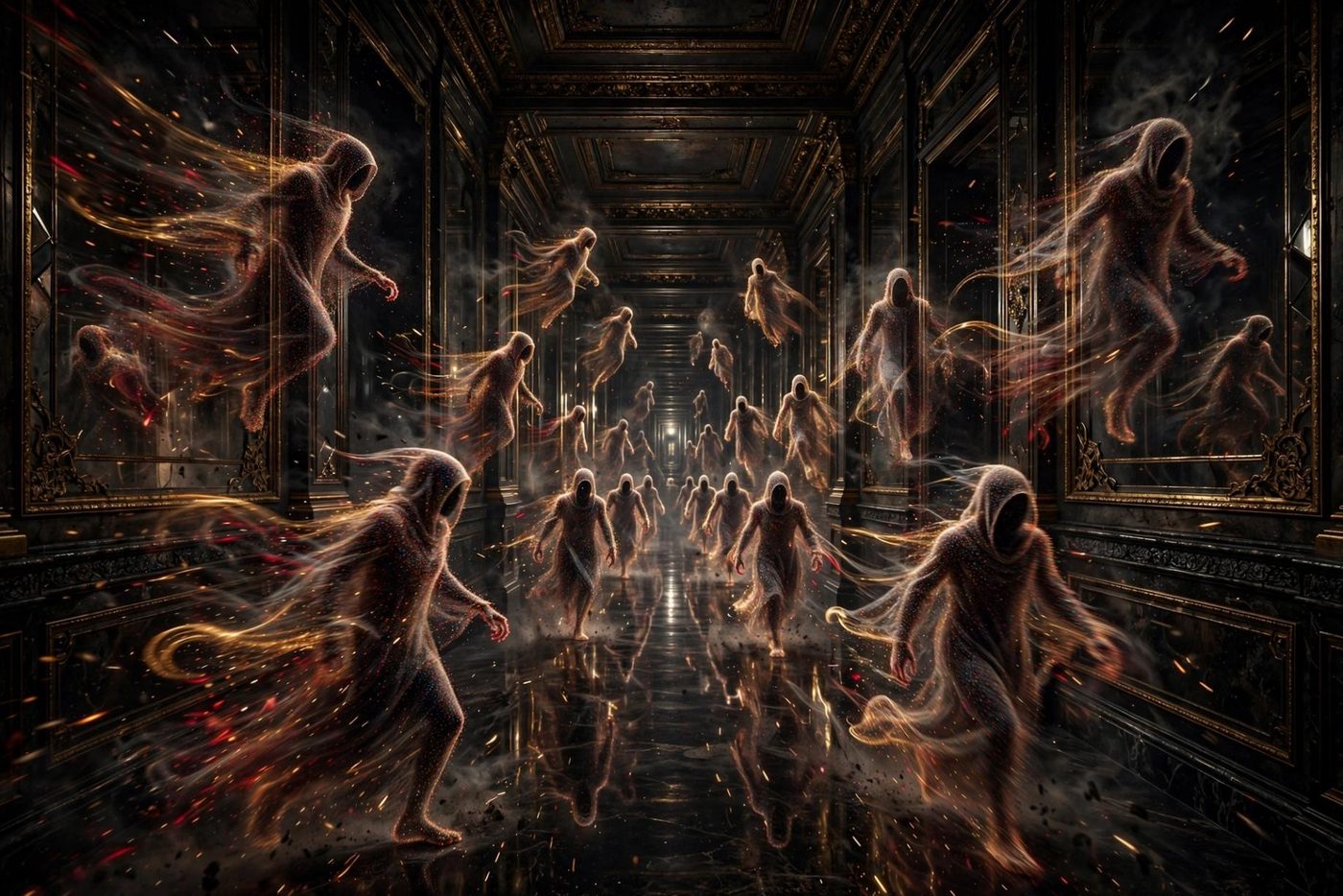
The morning still has the address
The pulse is how a person waves from the door. It is not the house, and it is not a minor god that decides what is allowed to exist. The night may find you on a channel. The morning still has the address. Algorithms forget on purpose. The page does not. Arrive from anywhere. Stay where the frame was filed.
Recently Added is where a new frame becomes a room with an address. The night is allowed to be loud. The morning is not required to remember the loudness, only the door. If an algorithm buried the post, the page did not go with it.
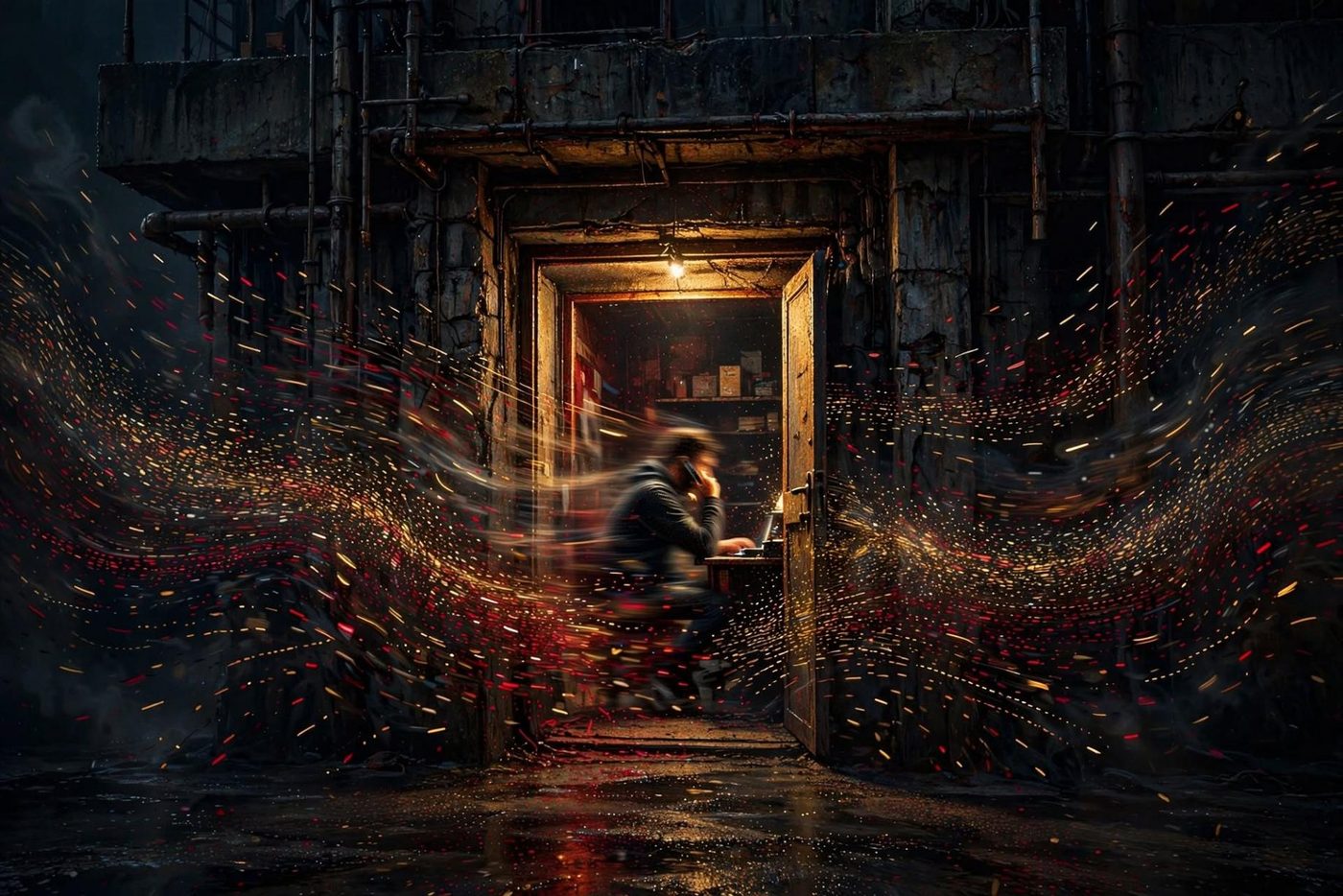
Not a place to live
Come from whatever channel the night used. Then leave it. Recently Added is where a new frame becomes a room, and Contact is where a person still answers. The hub is a doorway with a light on. It is not a place to live, and it does not get to decide which work is allowed to remain in the morning.
Contact is where a person still answers, which is a rarer service than a channel would like to admit. Leave the hub. It is a lit doorway, not a residence, and it does not get a vote on which works are allowed to last.