The Archive
Overview
Seven doors
This is the map. Seven rooms, and each one is already open. Go in through whichever dark you recognise. If you want why they share a sky, that is About the Universe.
Where they lead
The Houses are films that end. Episodes are the stories that come back. Pocket Cinema is a minute, shot tall. Sound is what remains after the picture. The Codex keeps the sentence the camera left out. The Craft shows the making. The Showcase is the object you can actually hold.
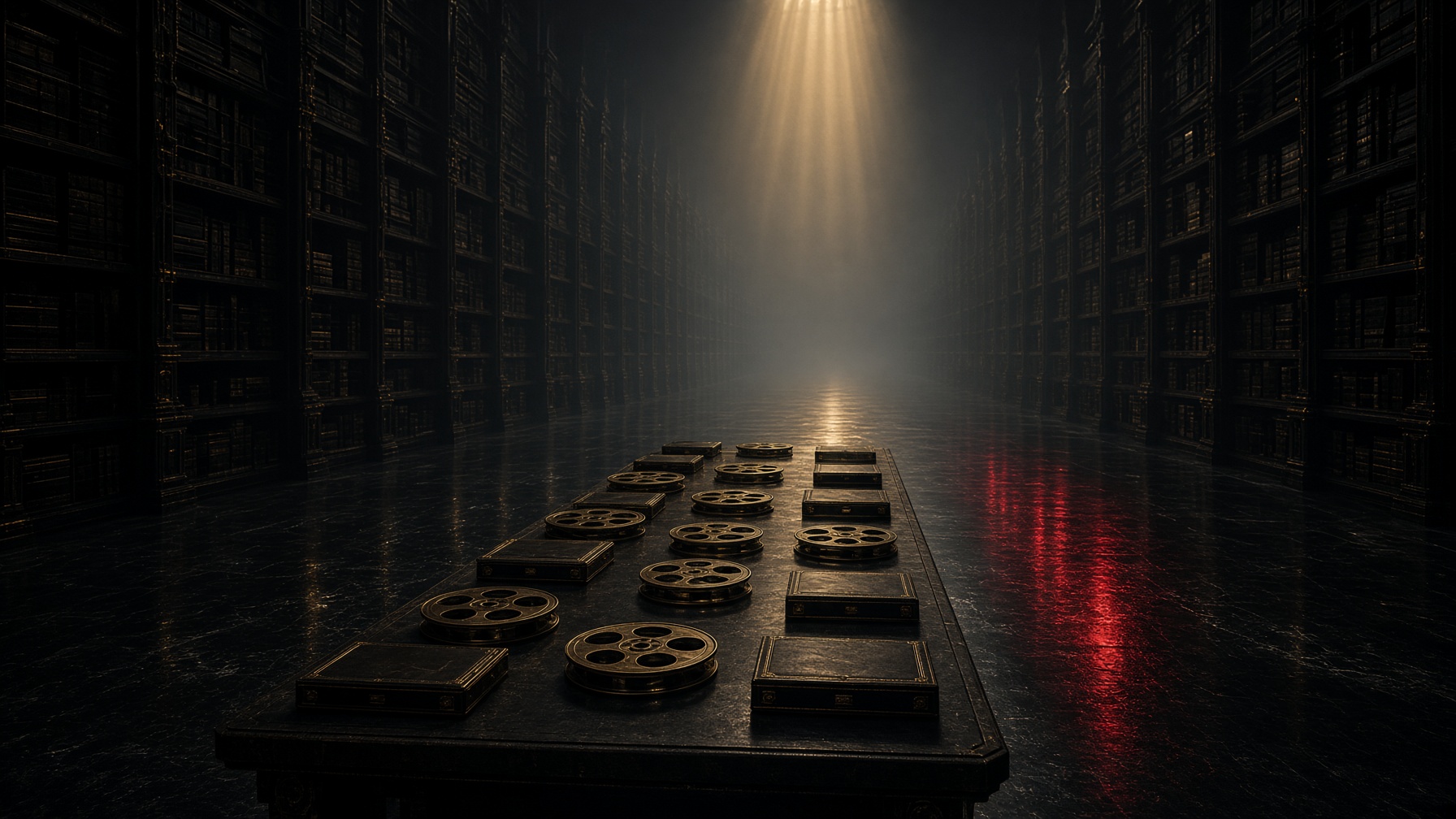
The Houses
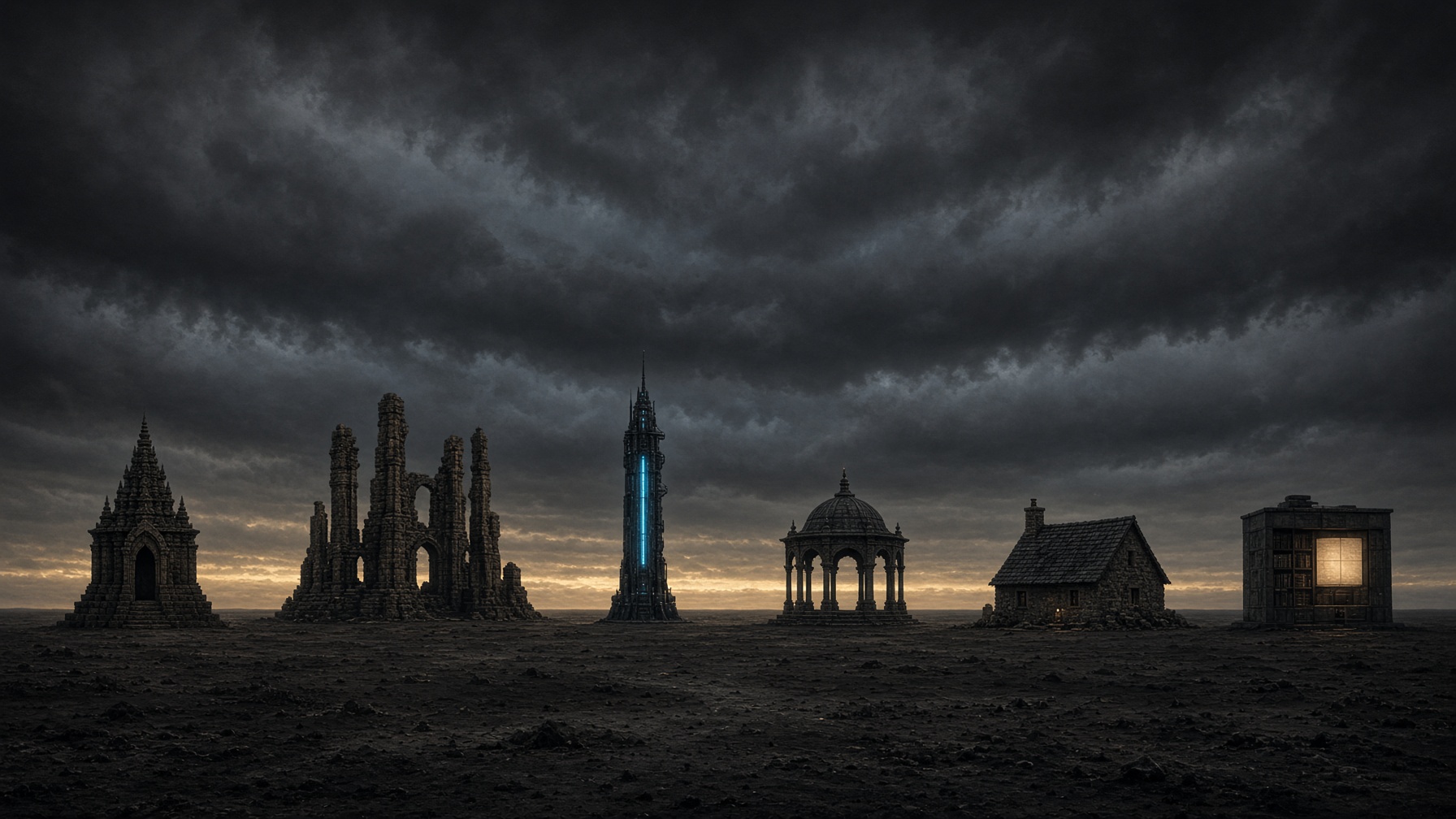
Films that end
Six houses. Thirty-six climates. Two hundred and sixteen films, each with its own page. Darkness & Psyche leaves the light off. World & Myth keeps the old stories awake. Future & Machine is the built world, still recording after the people leave. Dream & Symbol only makes sense once you are inside it. Human & Fate is what a choice costs. Archive Lines feels found, as if someone recovered the film rather than shot it.
Already on the shelf
Quiet Harvest and The Long Walk are there. The next film takes the next page in its climate. The old one stays where you left it.
Episodes
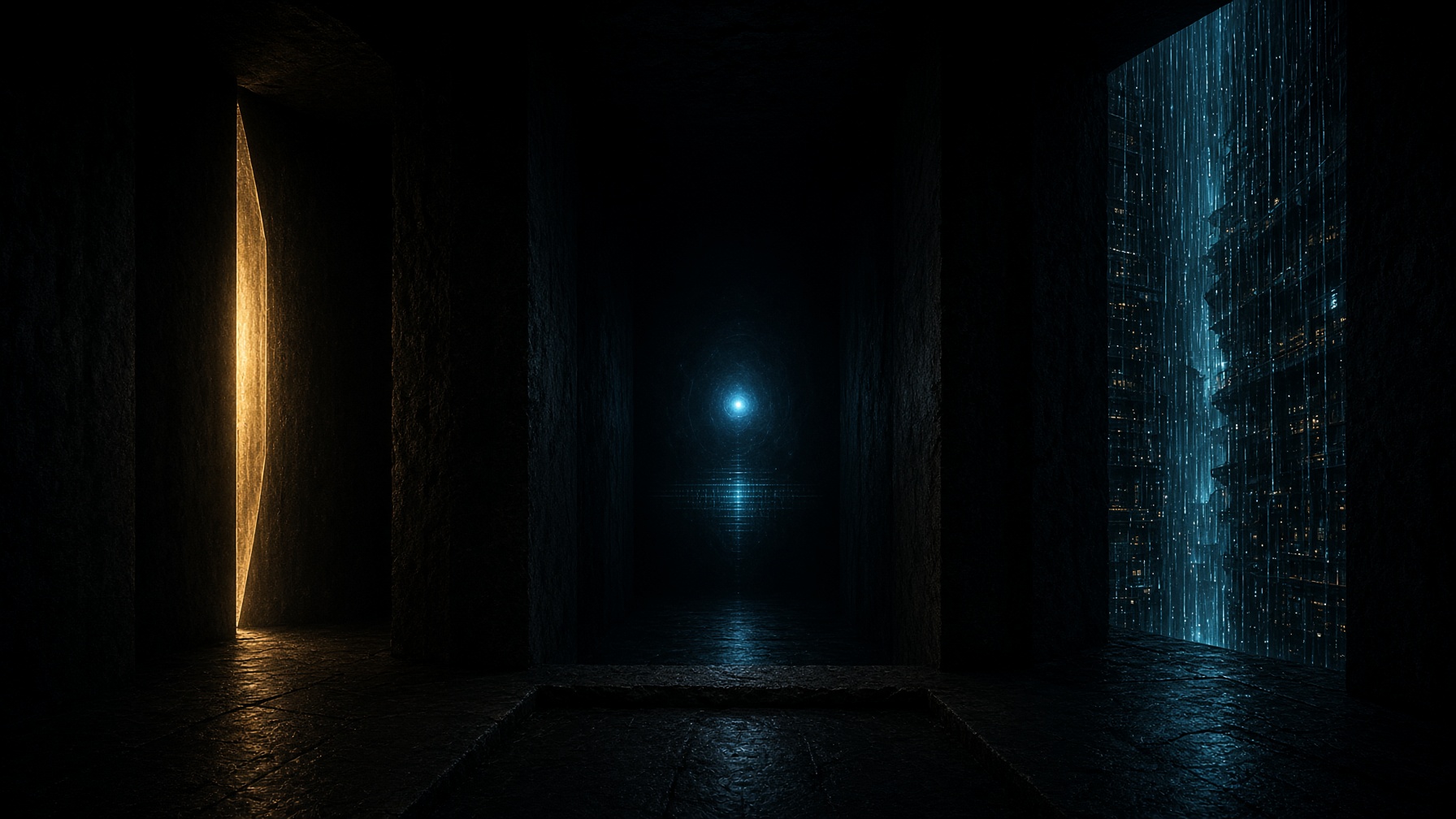
Stories that come back
Four series, each with a hub and its chapters. Don't Blink is the thing you see and cannot unsee. Signal Null is what remains when a world has gone quiet. Chrome Veins is ten cases in New Cascadia: chemical rain, and people taken off the record, down through The Stack and The Root. Fool's Gate is a lamp, a desert, a hull and a market with no one in it. The dead keep talking. Prologue, The Hold, The Market and The Wall are already up.
Pocket Cinema
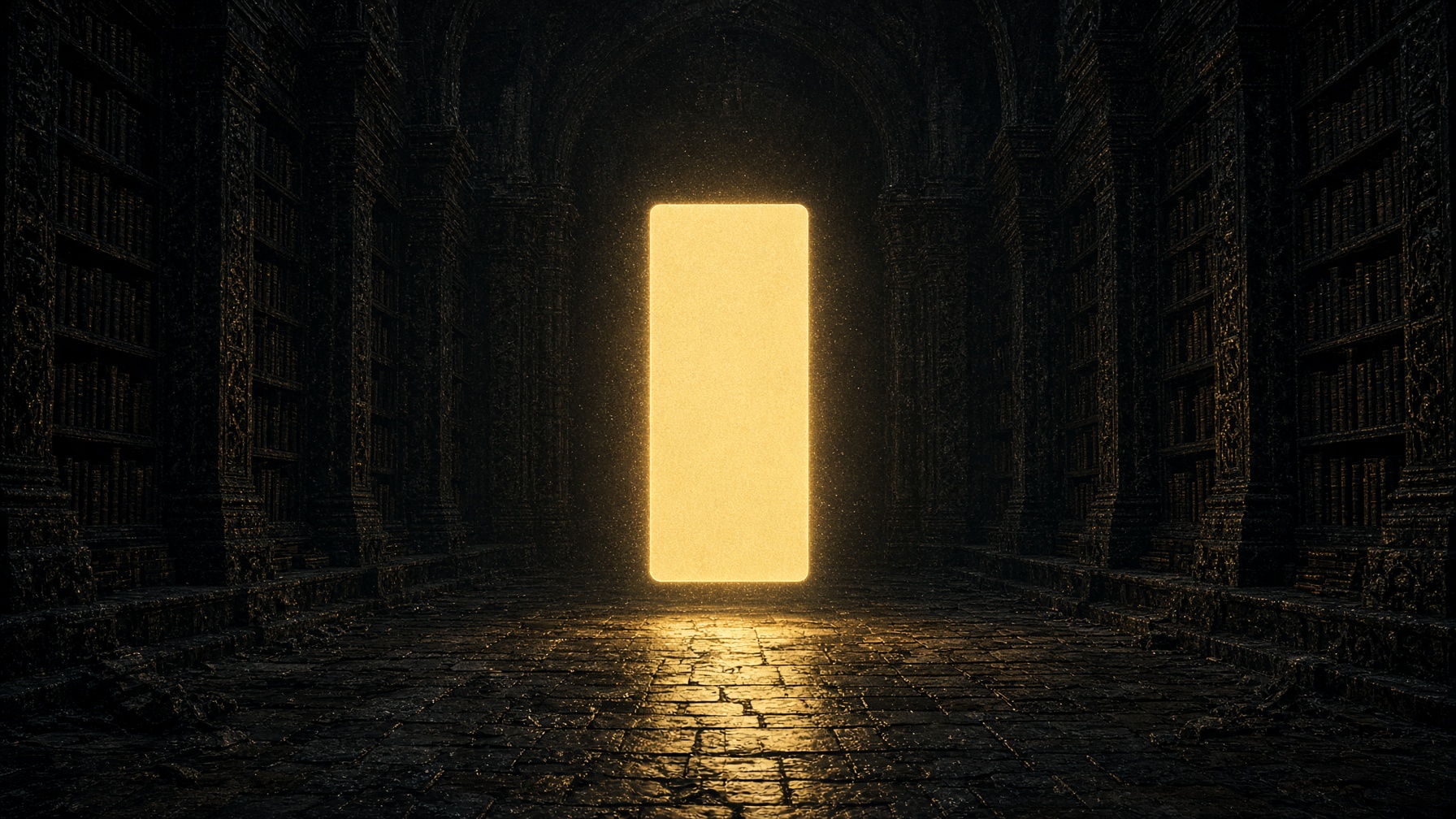
A minute, held upright
Short films, made for the tall frame. A corridor, a face, a stretch of weather, and then it ends. Some tell a whole story in one breath. Some barely move. Some are only the rhythm of the cut. Two signs can share a frame. A few still haven't found their shelf.
The doors inside are One Breath, Held Image, Pulse Cuts, Quiet Duration, Compressed Time, Two Signs and Loose Frames. The world in the minute still belongs to its house. One Breath already holds Night on the Open Prairie, Neon Rooftop, The Demon Who Eats Peaches and The Honey Witch, and the other doors have their own.
Sound of Imagination
After the picture
The scores have their own rooms. You can sit with The Long Listening and hear every tone already filed, one after another. Series Residuals stay with a story after the episode is over. House Climates follow the weather, even when no film is named on the door. Frame Echoes are the sound a single image left behind. Quiet Frequencies don't need a picture at all. Ritual Cycles come around again. Unfiled Signals are still waiting for a door.
The Codex
The sentence beside the film
Some of this world never fitted in a shot. Short stories keep a whole night. Fragments keep a margin. Scenario editions keep the script as something you can hold. World books write down the rules a film will not stop to explain. The Character Archive keeps the people. Volumes are the bound books: I through III, and the Goya and Bosch volumes.
A page appears when a film or a person needs one. It stays, and it points you back to the room where the picture still is.
The Craft
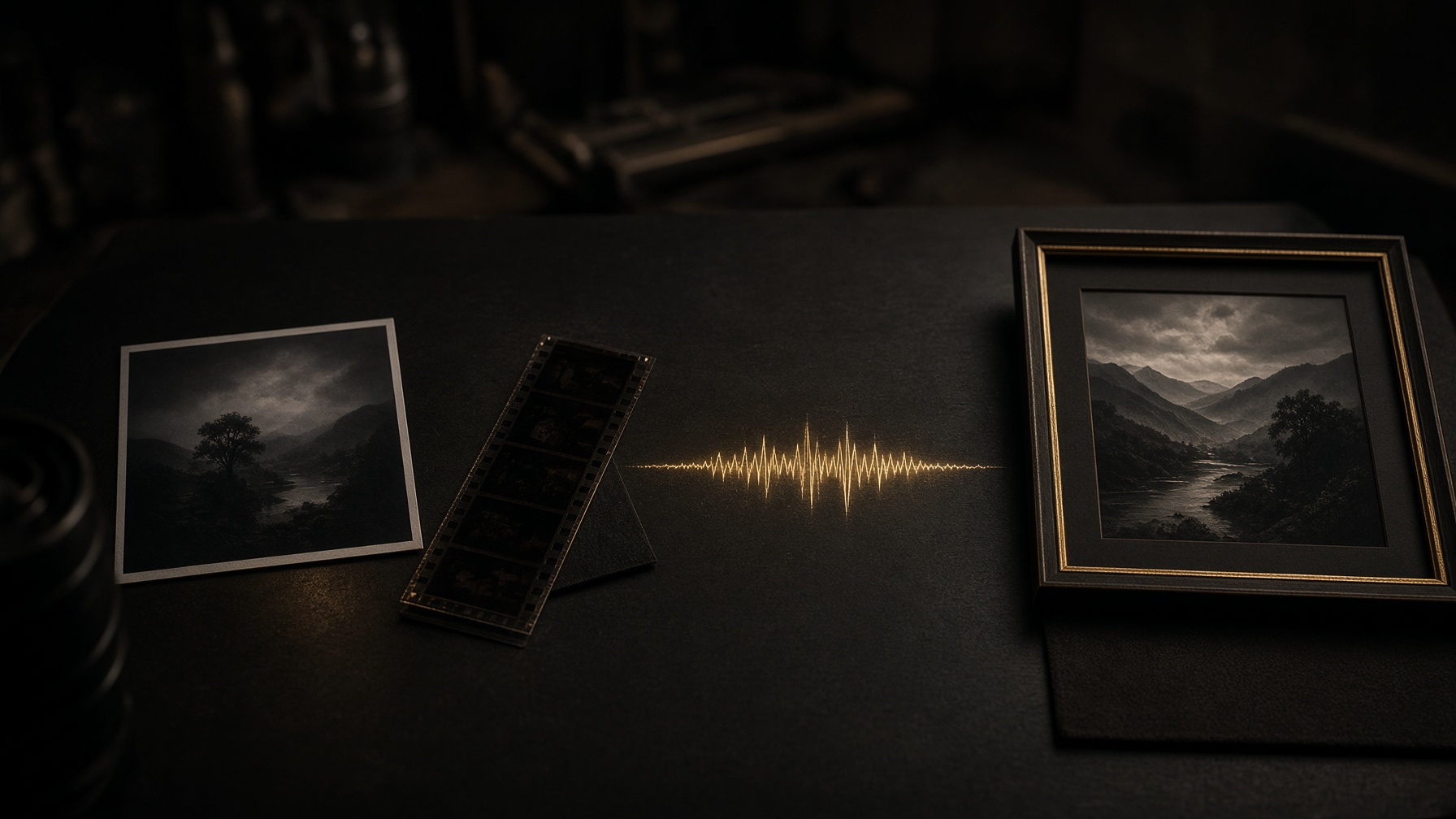
How a room was made
Four rooms, in the order the work actually happens. Image is the still, before anything moves. Motion is that still becoming a shot. Sound is the air of the scene, and you can play it on its own. The Result is the finished film, with a way back to the page it lives on.
When He Looked Away is one of them: a finished film in Psychological Horror, the still and the shot kept beside it.
The Showcase
Something you can hold
Prints, digital editions, figures, tabletop pieces, and sound you can keep. They come from the same films. If a thing is not made yet, it is not sitting here pretending to be for sale. What is here looks like the world it came from.