Quiet Apocalypse
Overview
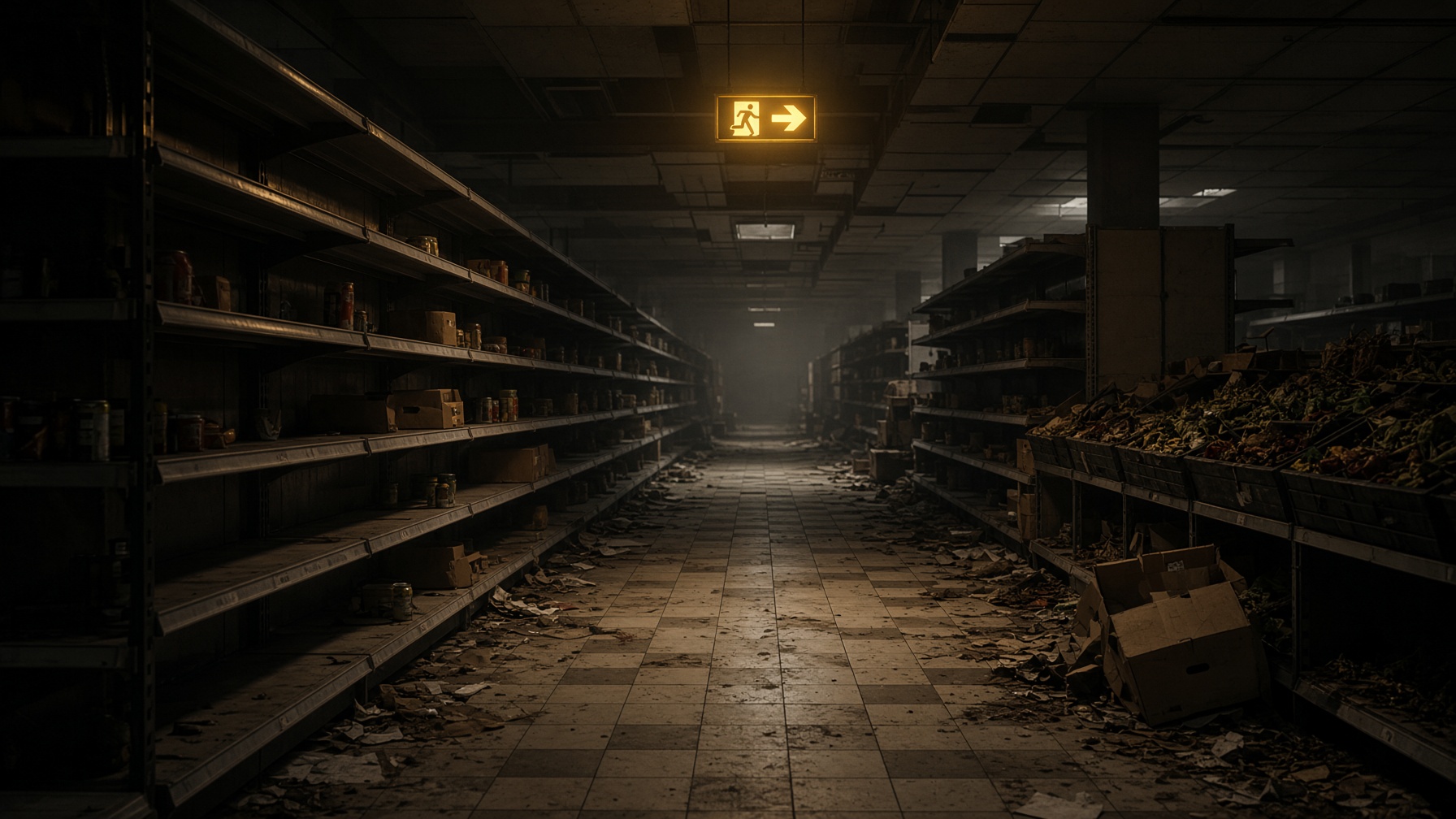
The end arrives without raising its voice. Quiet Apocalypse is not Aftermath and not Isolation. Aftermath walks rooms after a named event. Isolation keeps one body in one pane. This climate keeps civic systems that continue a little longer than the people they were built for — then lower their volume without a speech.
Sodium lamps over intact shopfronts. A frequency that still leaves the mast. Lights that choose silence floor by floor. A motorway that keeps its geometry after traffic withdraws. A lobby that still opens after the names have gone. Human & Fate holds this climate because there is no cosmic alibi and no monster to blame.
The visual law is civic, not portrait. Faces, when they appear, are at work in the system — planner, engineer, grid, road, records, keys. They do not pose as the climate. The objects do: mast, lamp, interchange, paper week, latch.
City. Frequency. Light. Road. Week. After people. Six rooms of one civic ending — not six unrelated disasters.
The principle
Systems after the reason
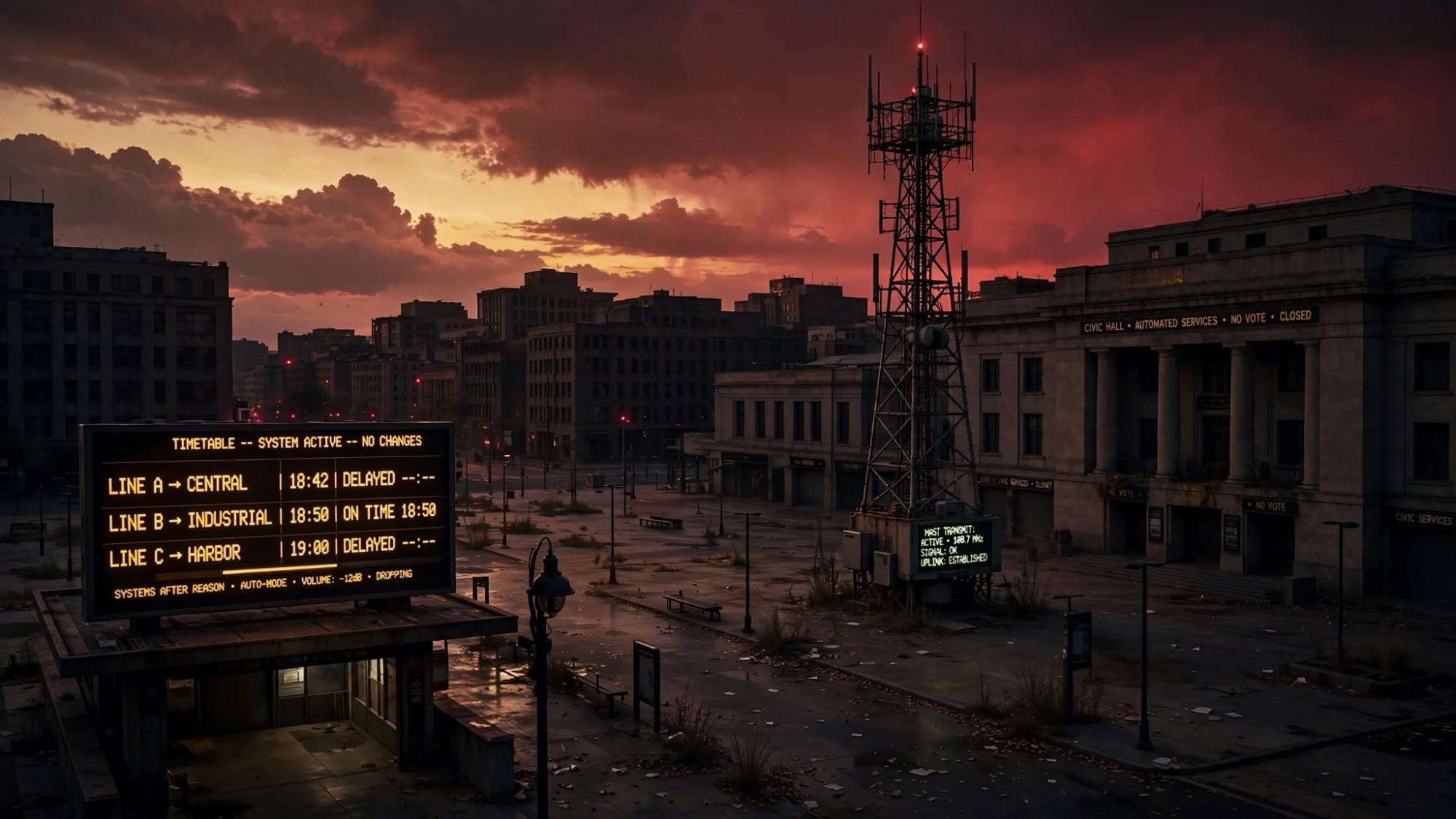
Systems after the reason. A blast would belong to another house, and it would let you feel that something had happened. Quiet Apocalypse files the timetable that still runs, the mast that still transmits, the lamp that goes out without a vote.
Spectacle would lie. The end, here, keeps office hours. Nothing explodes. The cynicism is that the civic machine is more faithful than the people who used it, and faithfulness in an empty city is not a virtue. It is a habit with the power still on.
Volume
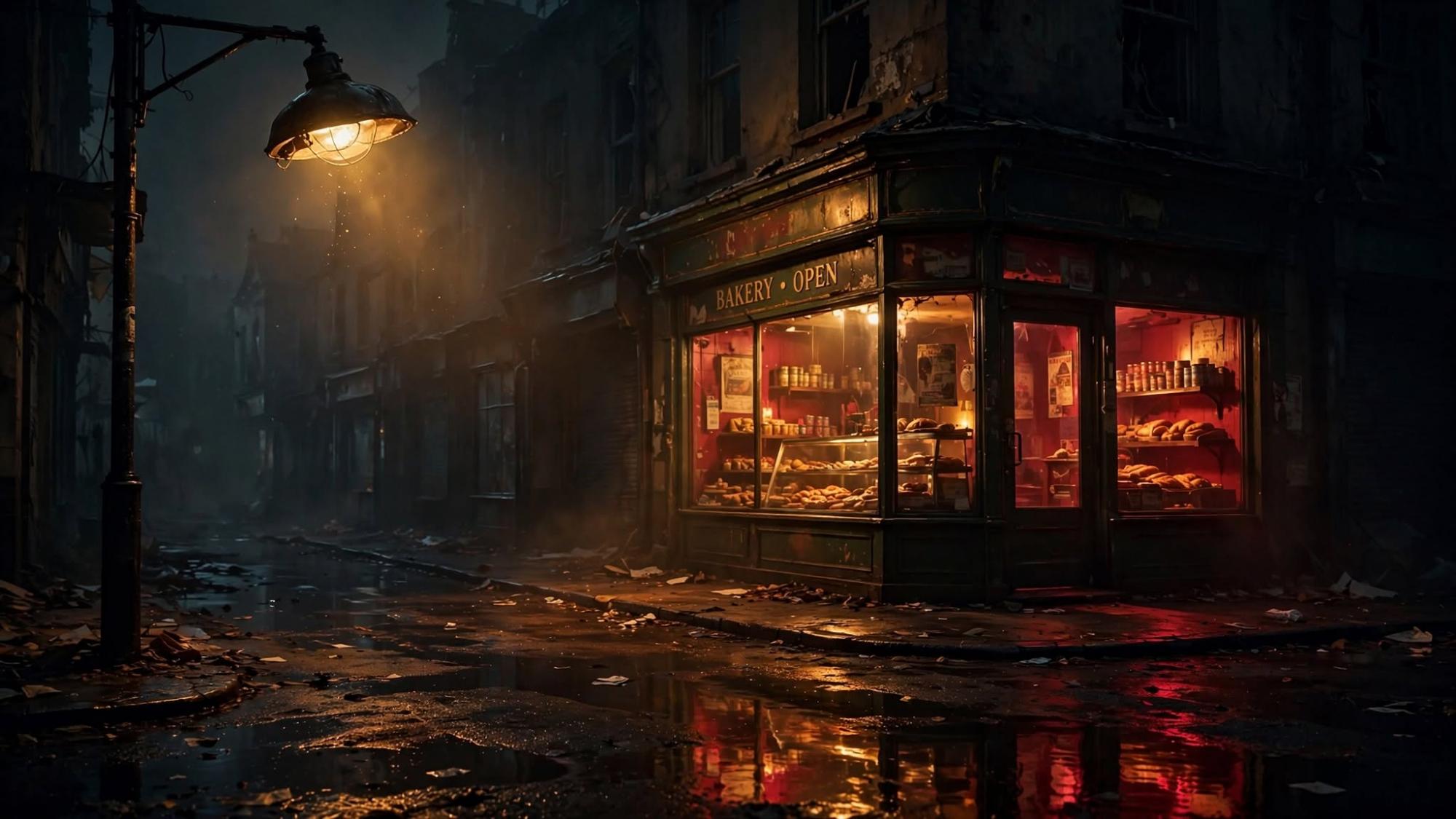
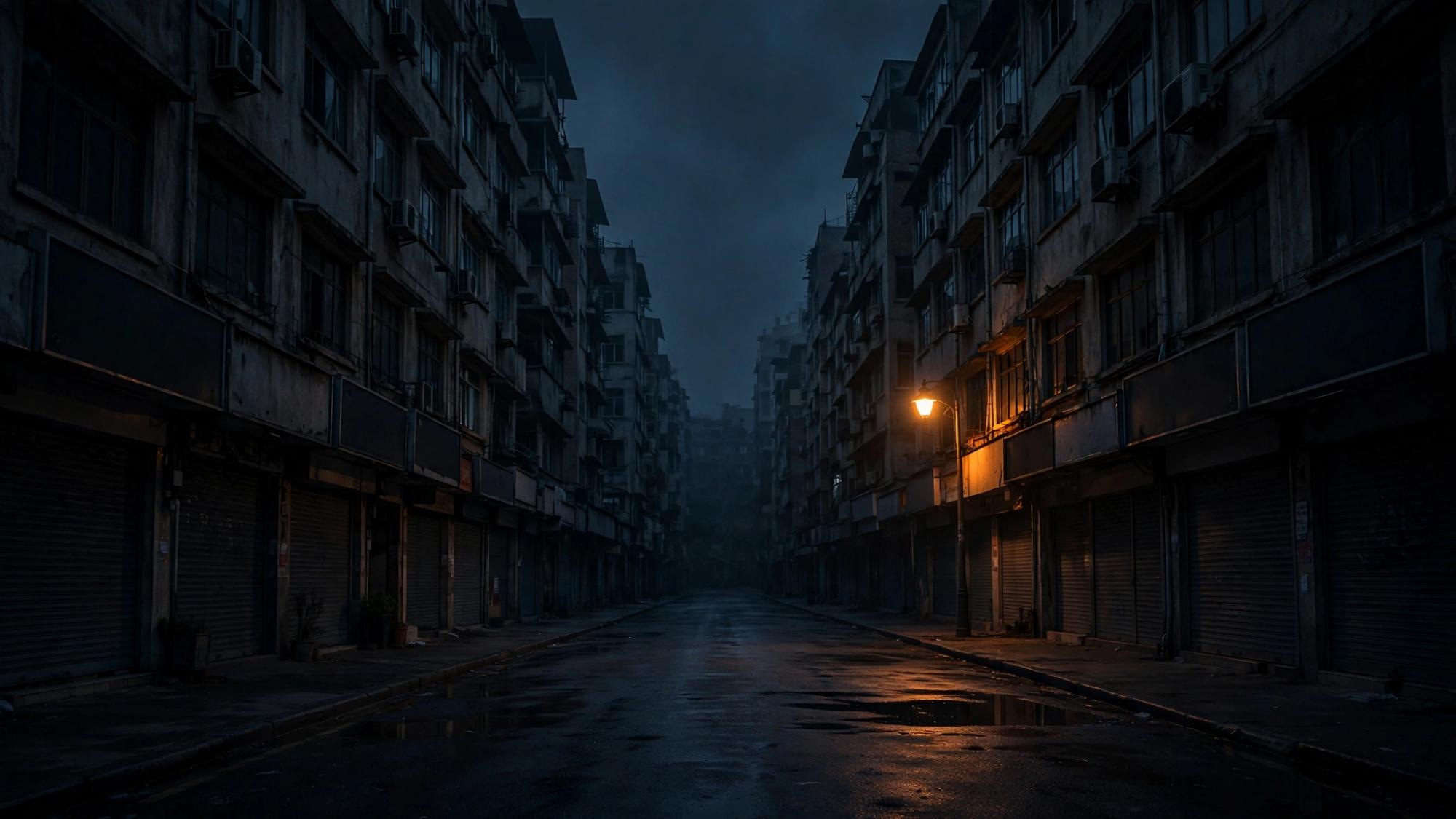
Public light and public noise drop by degrees. When the Lights Chose Silence is a street of shut shops, windows going dark floor by floor, one sodium lamp that did not get the memo. Night becomes honest because there is less to advertise. The lamp stays out of spite or duty. The film does not ask it which.
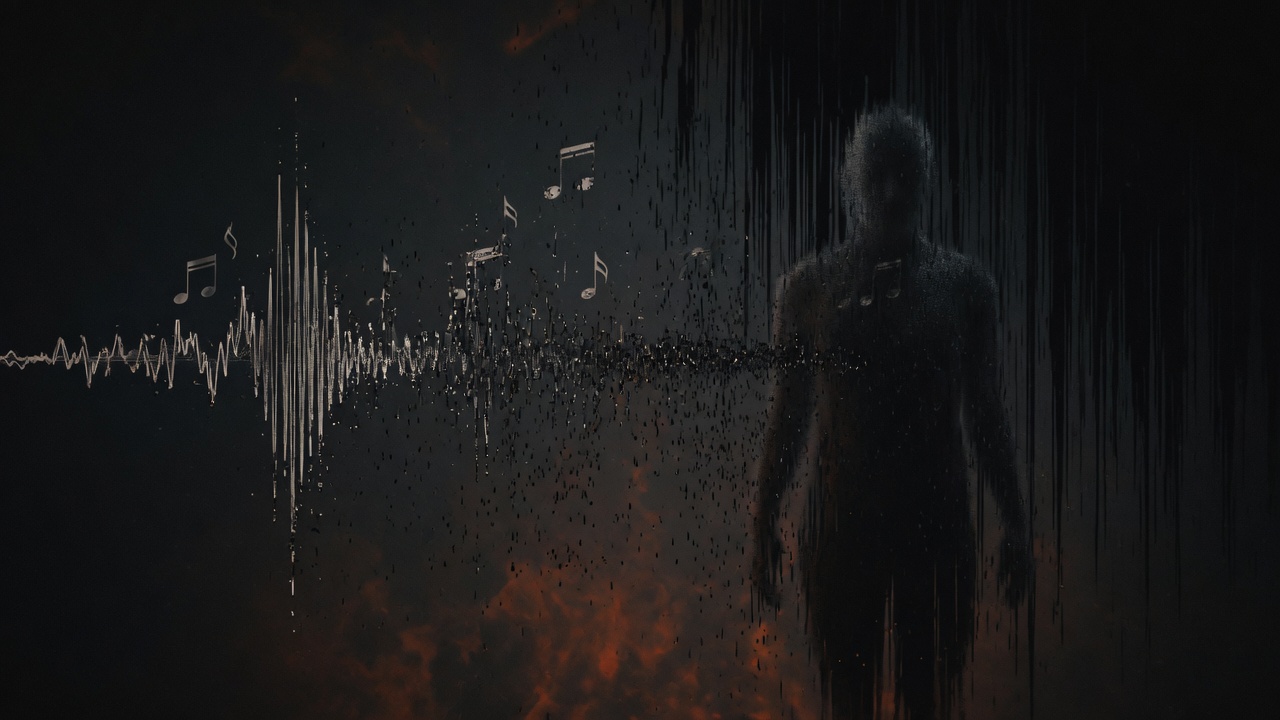
Signal After the Audience keeps a frequency on the air after the audience has left the species, not just the room. The mast does its job. A job without a listener is still a job, which is either the last dignity or the last joke. The Soft End of Cities is that joke told slowly, in intact shopfronts.
Geometry
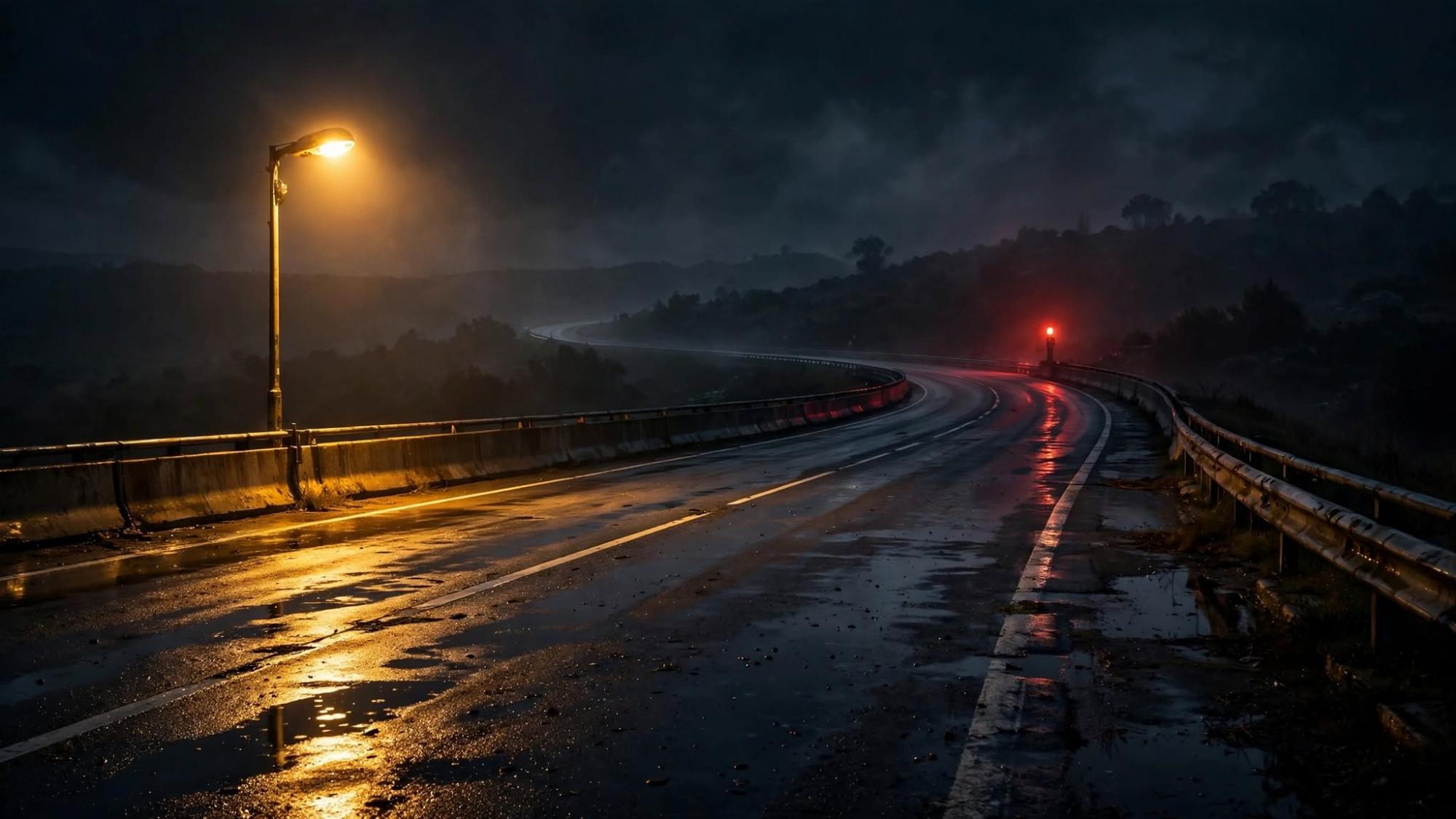
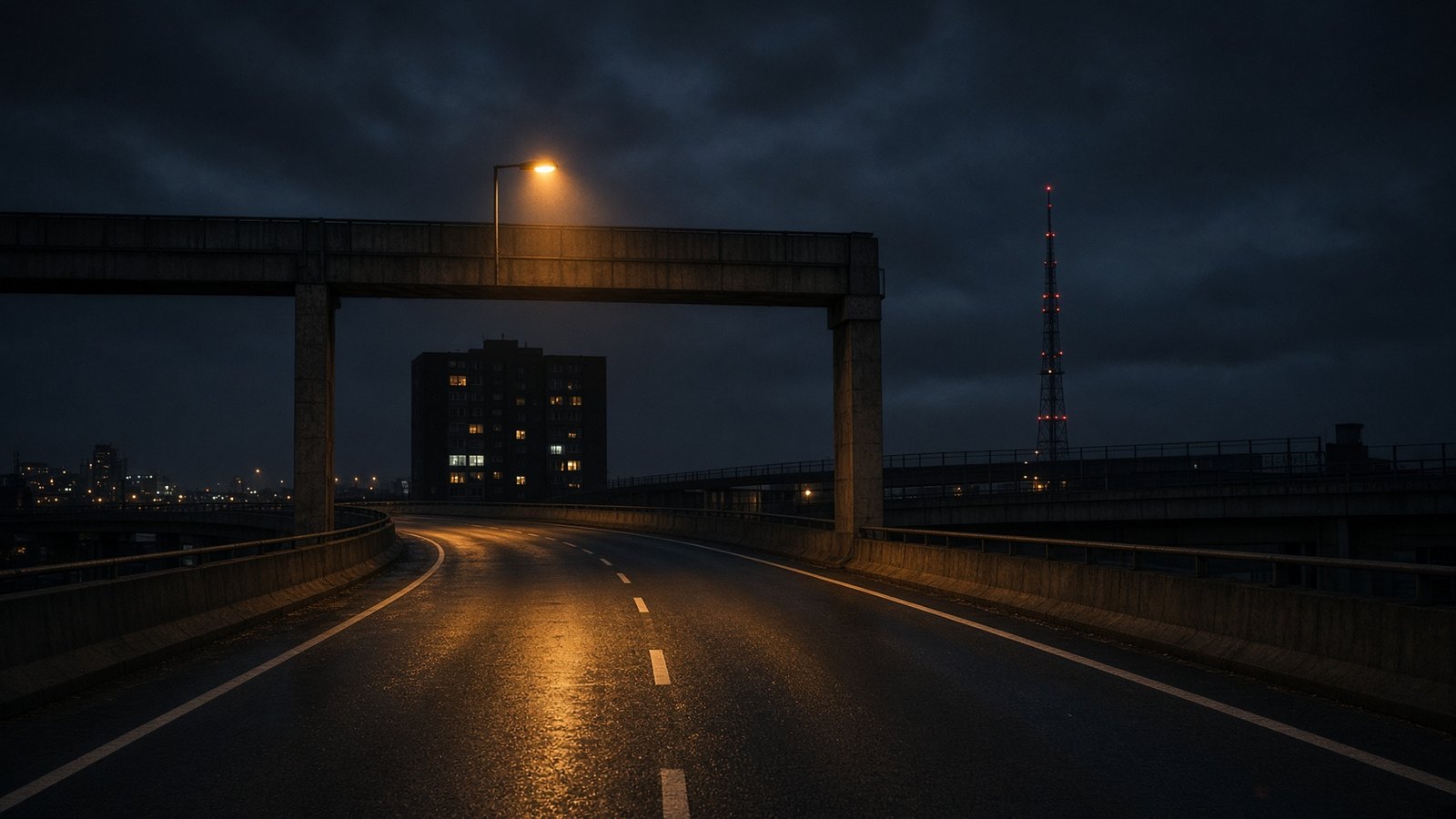
Roads, grids, calendars and lobbies keep their drawings after use withdraws. Empty Motorway holds the interchange in perfect order and no traffic. The drawing is the document. The missing volume is the climate. A ruin would be easier to mourn. Maintenance is the crueller sight.
Signs stop competing. Not because anyone won the argument. Because the argument required customers, and customers were a phase.
Calendar of the Last Week
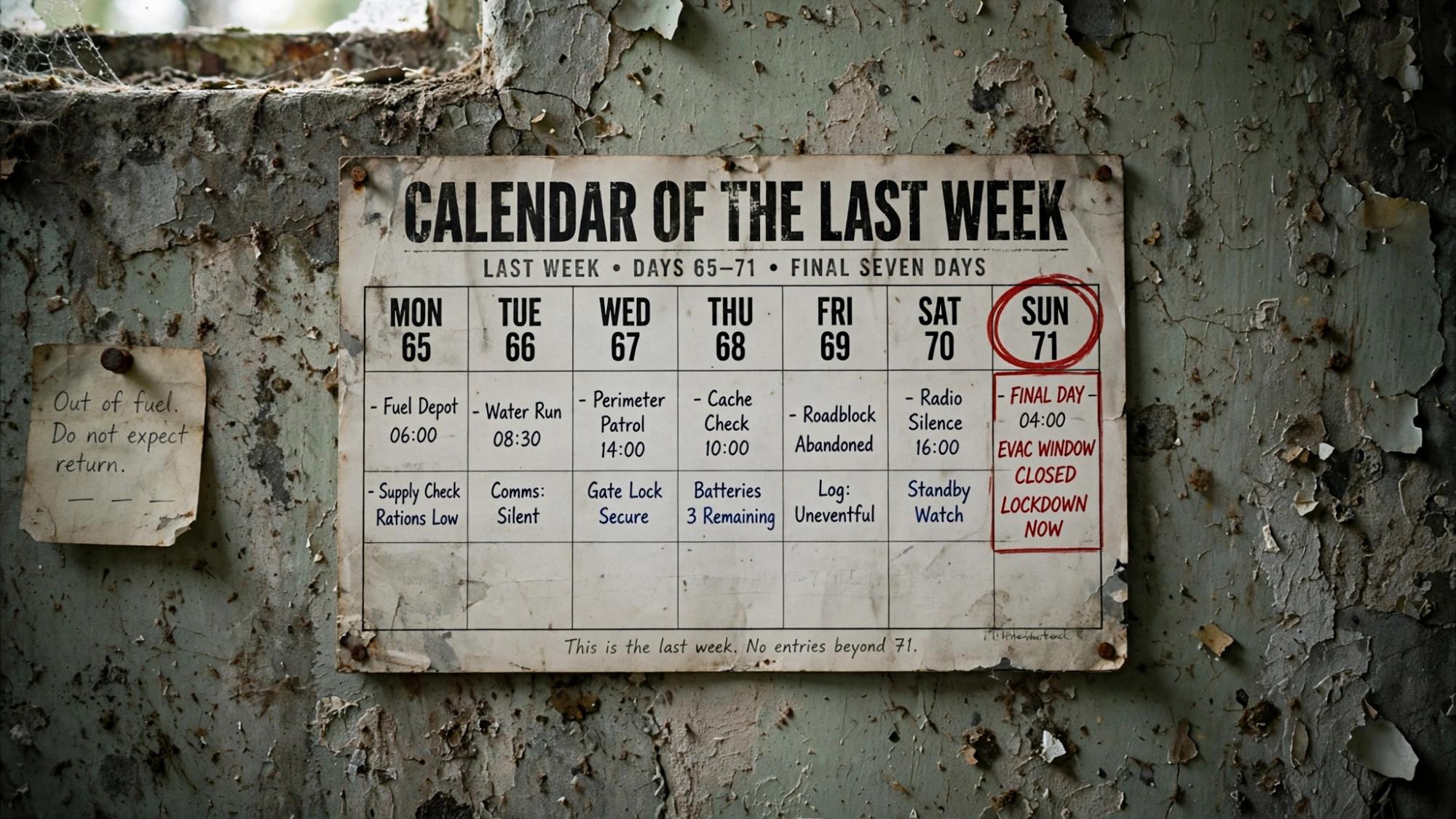
Calendar of the Last Week marks the days and does not call them final, which is worse. Appointments remain. Someone has circled the count — seventy-one, still legible — as if a number could shame the week into meaning. It cannot. The paper is dutiful. Dutiful paper outlives the reason it was printed.
Quiet After People is one back in a corridor of doors whose name-slots have given up. The keys are many. Forty-seven is not a poem. It is an inventory of rooms that no longer answer to a bell. The bells stay blank. The hand keeps the ring anyway, because a system this polite does not teach you how to put it down.
How to enter
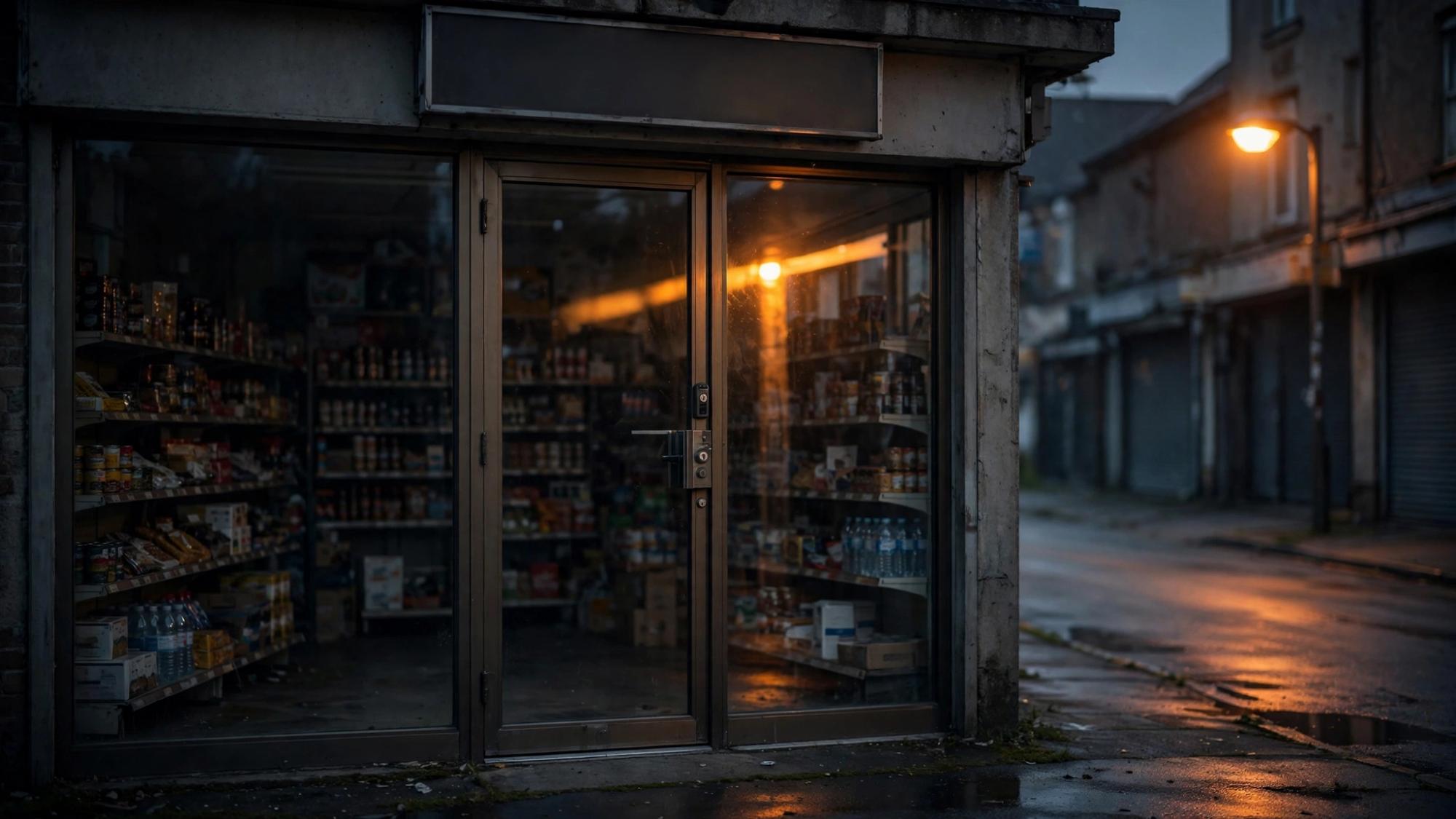
Six films. One climate. The end does not raise its voice, so do not wait for a blast. The Soft End of Cities if the shops are still intact. Signal After the Audience if the broadcast outlived the room. When the Lights Chose Silence if the windows go dark on their own schedule.
Empty Motorway if the road is still open and nobody uses it. Calendar of the Last Week if the appointments outlived the week. Quiet After People if the keys are still in the hand and the bells have given up. A story that continues lives under Episodes. These do not.
 The Soft End of Cities
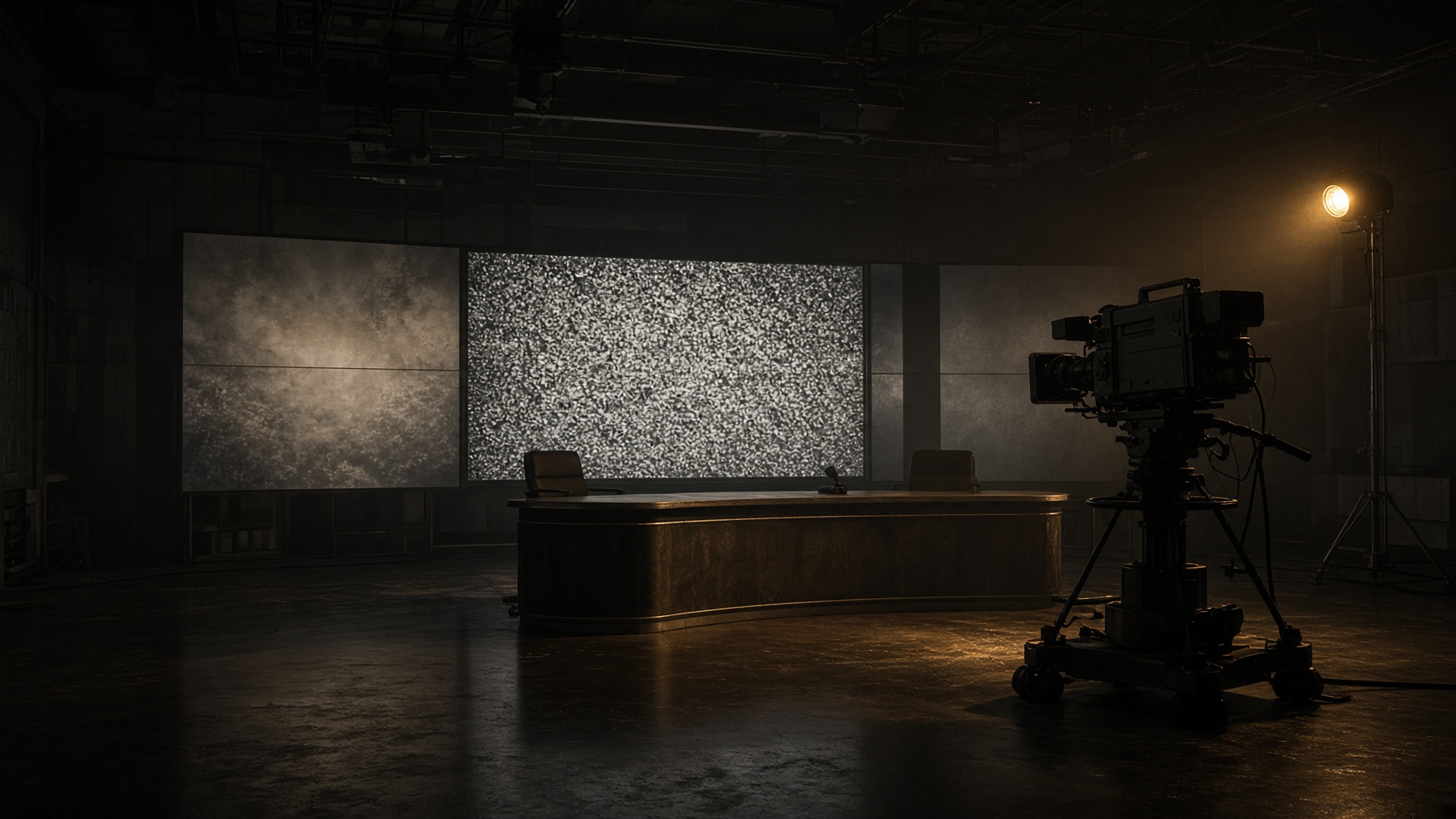 Signal After the Audience
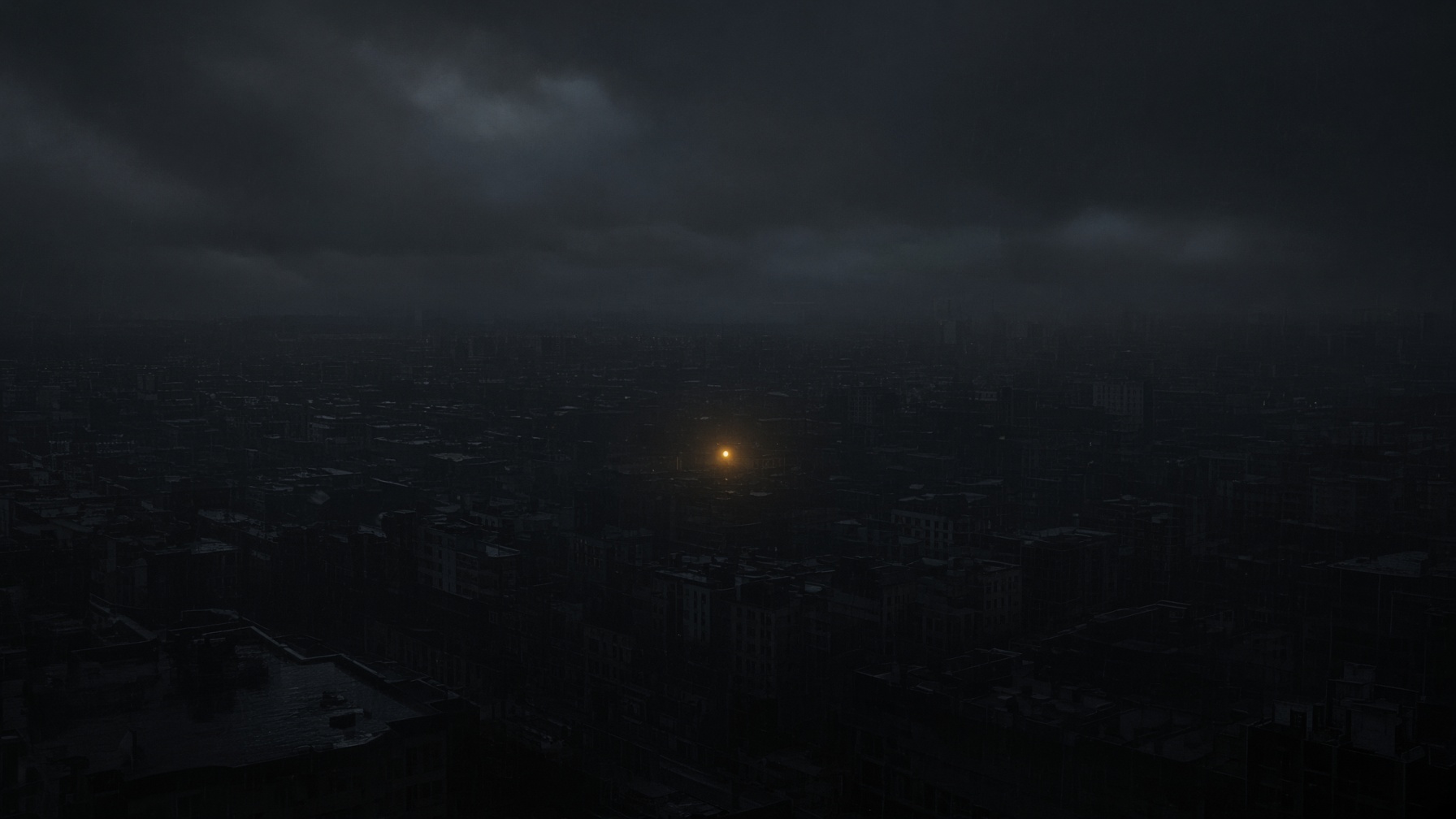 When the Lights Chose Silence
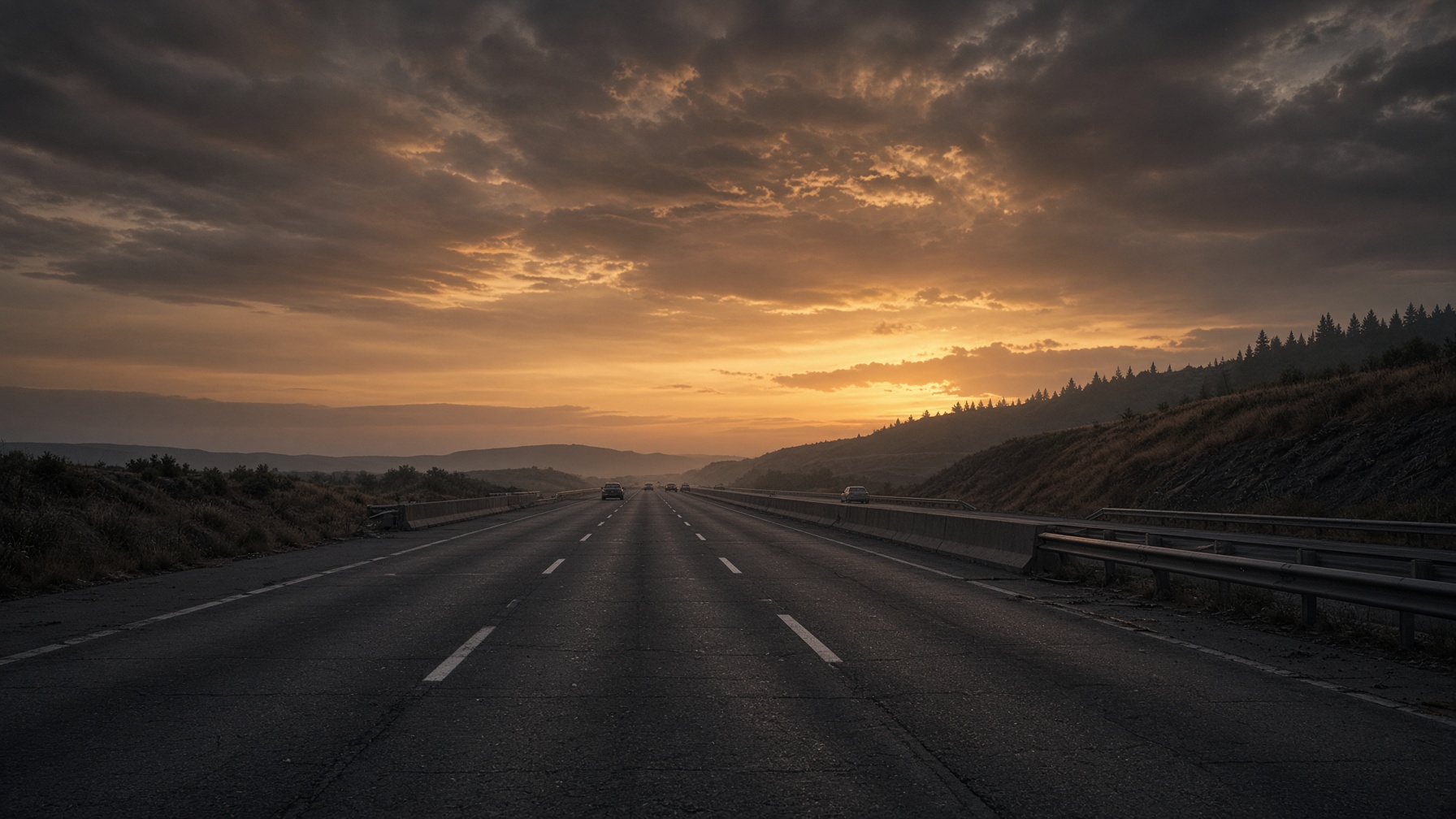 Empty Motorway
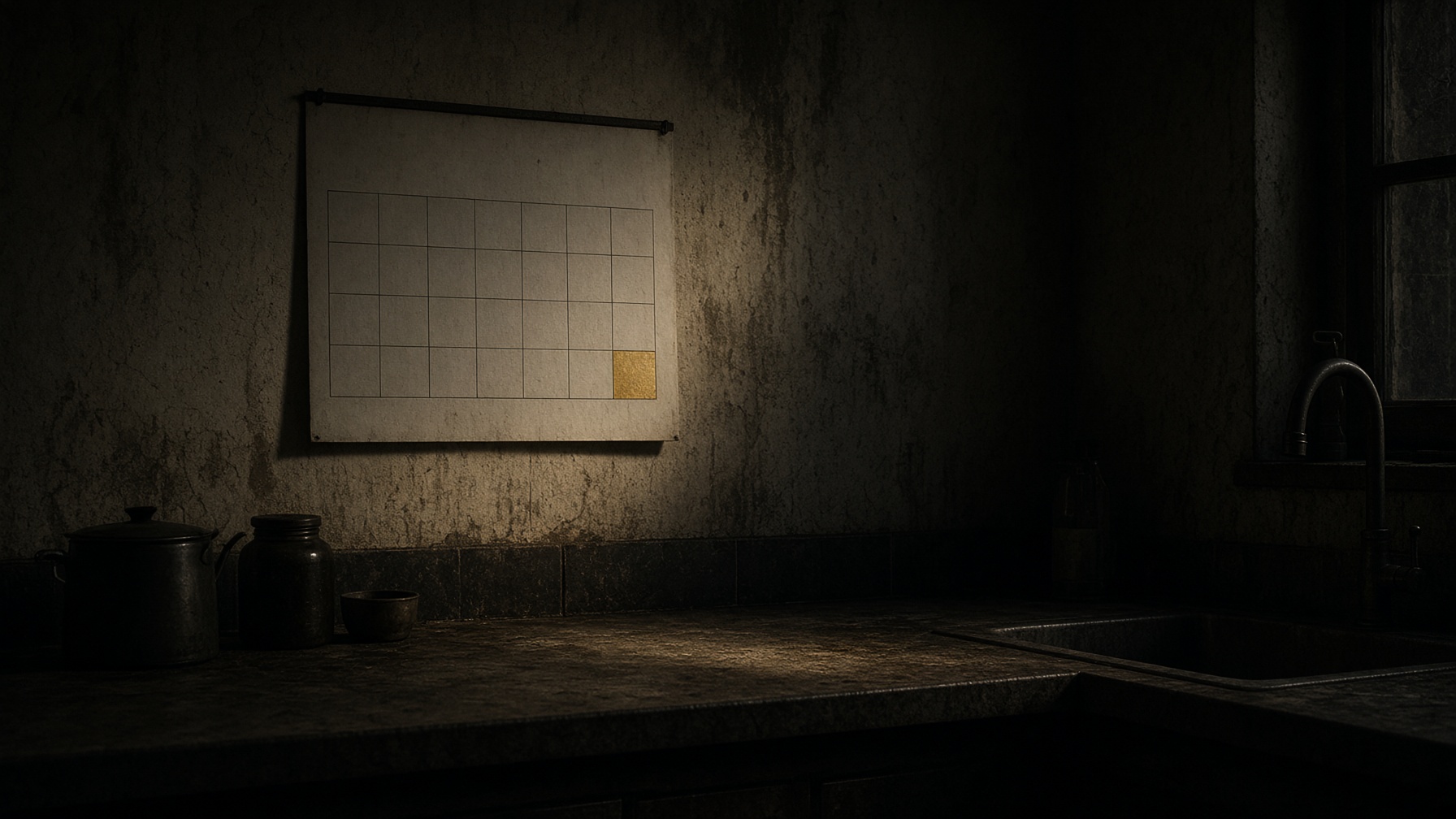 Calendar of the Last Week
 Quiet After People