What Can Be Bound
Key art
The share
Volume I is the archive’s book. It is not finished, and it is not this film’s private object. Debt Floor has a share in it, and the share is small on purpose. A volume that tried to contain the screening would only be a cheaper screen.
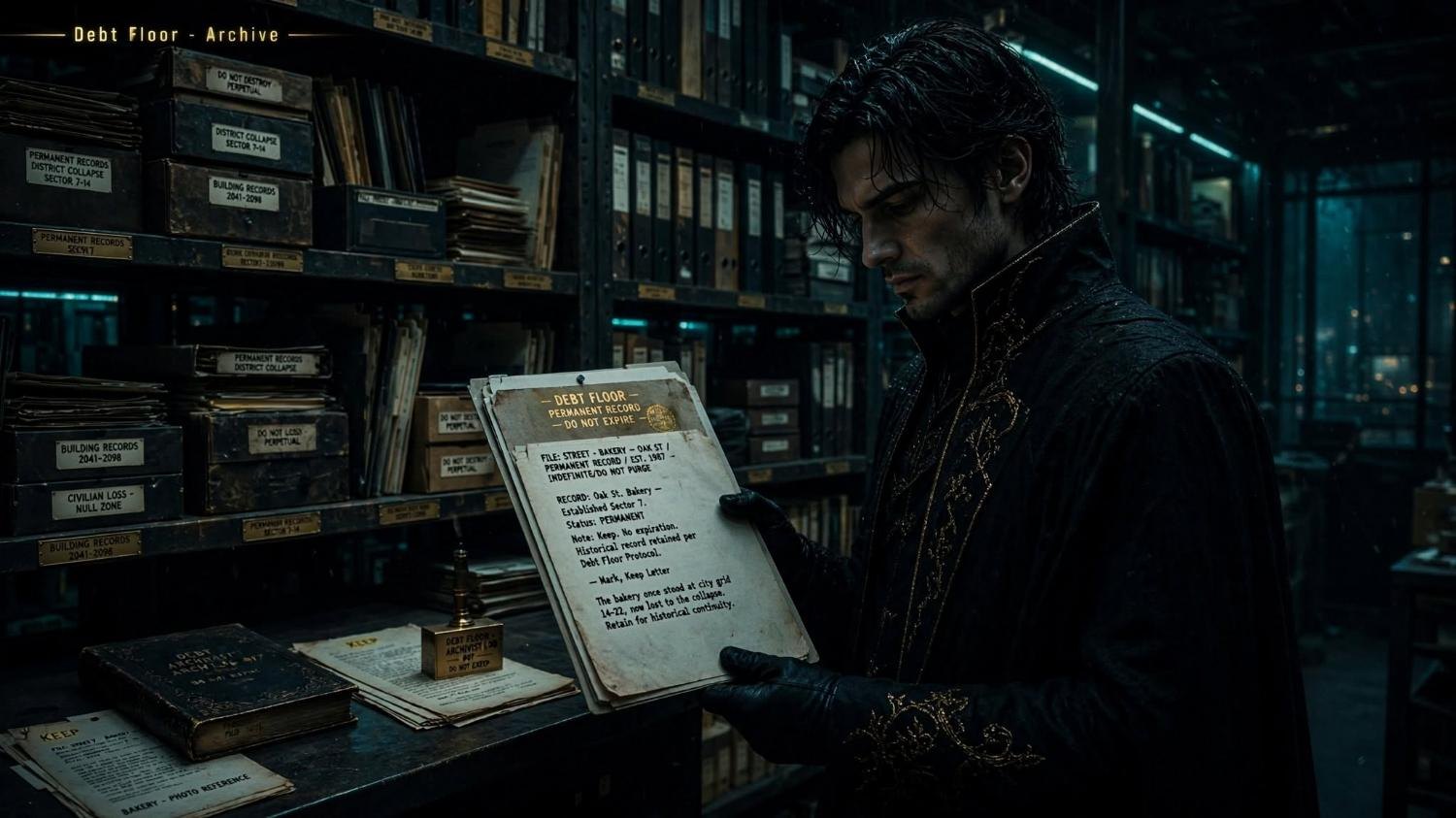
Four things from this room can be bound. The view from the top, before the edit. The cracked plate and the sentence on it. The story of the bakery, which is longer than the film will sit. The street as it is kept after the district has gone, which is a record and not a map.
What stays out
No instructions. No second ending. No gallery of faces turned into a cast. The dossier already refuses that. The fragment is one page, not a chapter that explains itself. The story enters whole or not at all.
Until the book exists, these pages stay where they are, readable, unbound. Binding them early would be a kind of merchandise. The film remains Debt Floor, which does not need a cover.
Weight
A volume should feel like the steel model feels: heavier than the picture, silent, one warm point and a great deal of dark. If it feels like a catalogue, it has failed.
The making
When the share is actually bound, the order inside it is the order of the night, not the order of a contents page written by a shop. View. Plate. Story. The kept street. No introduction by a voice that was not in the room. No photograph of a person who has a name the dossier withheld.
Cloth or board, it should close with weight. A thin binding would confess that the book was embarrassed to be an object. Debt Floor is not embarrassed. It is only unwilling to become a stack of explanations.