Chronicle / Log
Overview
Chronicle / Log treats time as ink. Entry 000 is written as if numbering could invent an origin. A civic date is left blank on purpose. Small ends accumulate until they become the only chronicle available. The last operator still fills the book. Quiet hours are logged because they passed. Found Archive files the object. This climate files the line. Neither hires a monument.
The visual law is cloth boards, brass stamps, green-black ink, a lamp over a page that does not improve because it was written. Anton Reeve numbers first lines. Della Frost keeps civic dates. Niles Arden writes endings too small for stone. Pema Holt stamps hours onto events nobody photographed. Gareth Lin is the last hand. Loic Pendle logs hours with nothing to report.
What is refused: the event that would justify the stamp, a last-stand speech, a monument. Stay with the line.
The principle
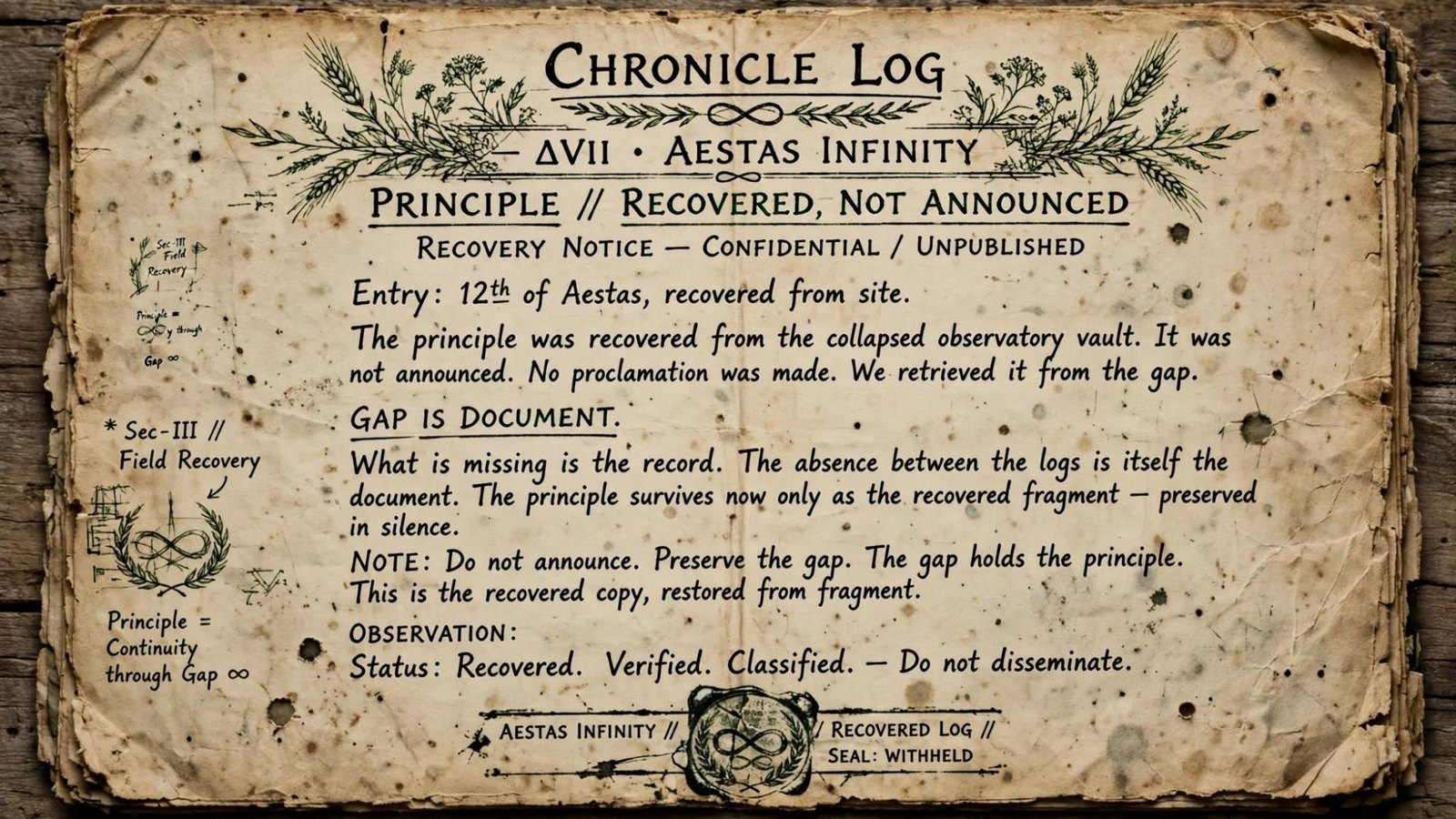
Archive Lines. Recovered rather than announced. The gap is the document. Chronicle files the line. Found Archive files the object. Neither hires a monument, because a monument would suggest the hour had deserved one.
Time here is ink. A stamp can be perfectly made for an event nobody photographed. The climate does not experience this as a failure of the stamp. The stamp was the point. The event was the rumour.
Ink

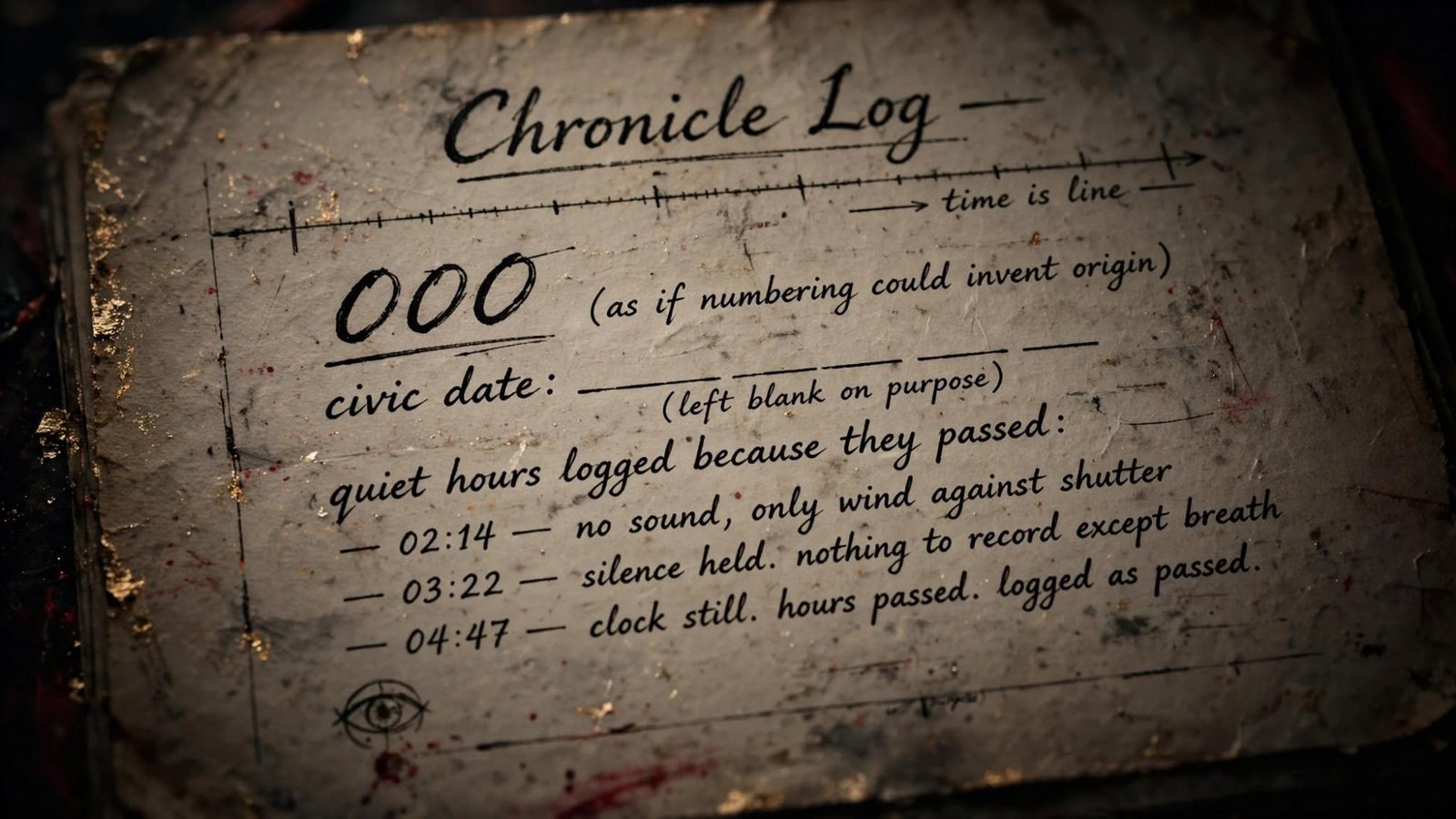
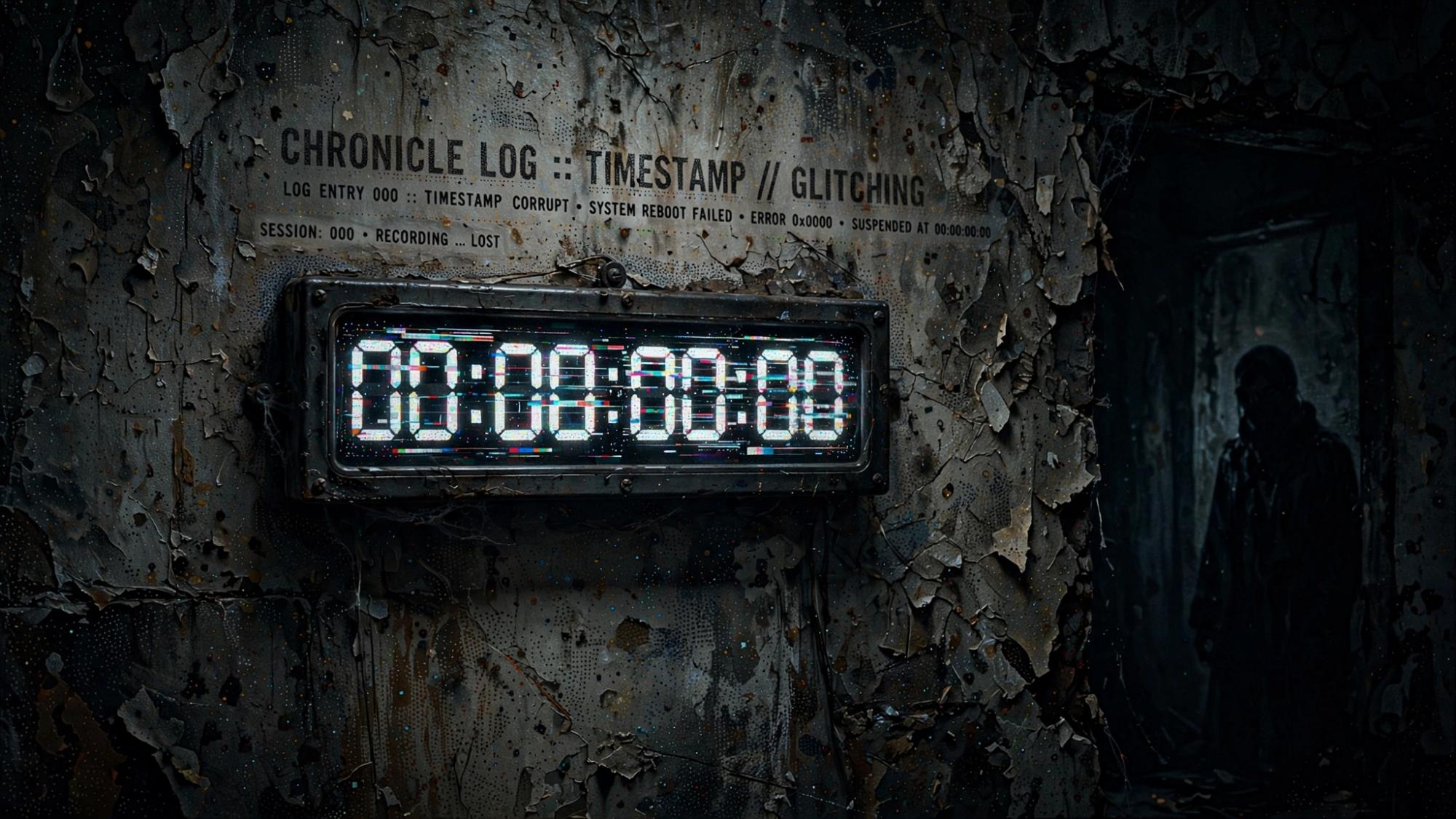
Entry Log 000 is Anton Reeve's first line, written as if numbering could invent an origin. It cannot. Zero is a courtesy the book extends to itself. The lamp does not improve the sentence by lighting it.
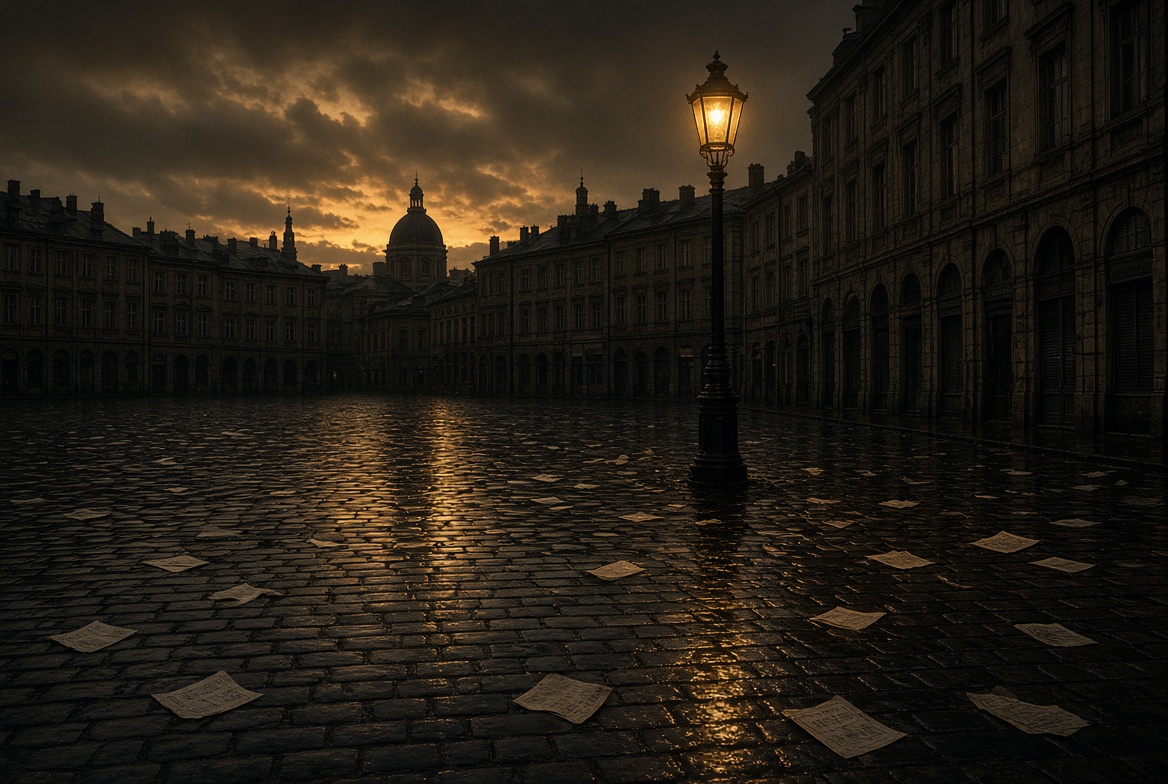
Day the City Forgot is a civic date left blank on purpose. Della Frost keeps the blank. The city does not get a monument for the day it missed. A filled date would be propaganda. The empty one is just accurate, which cities hate.
Stamp
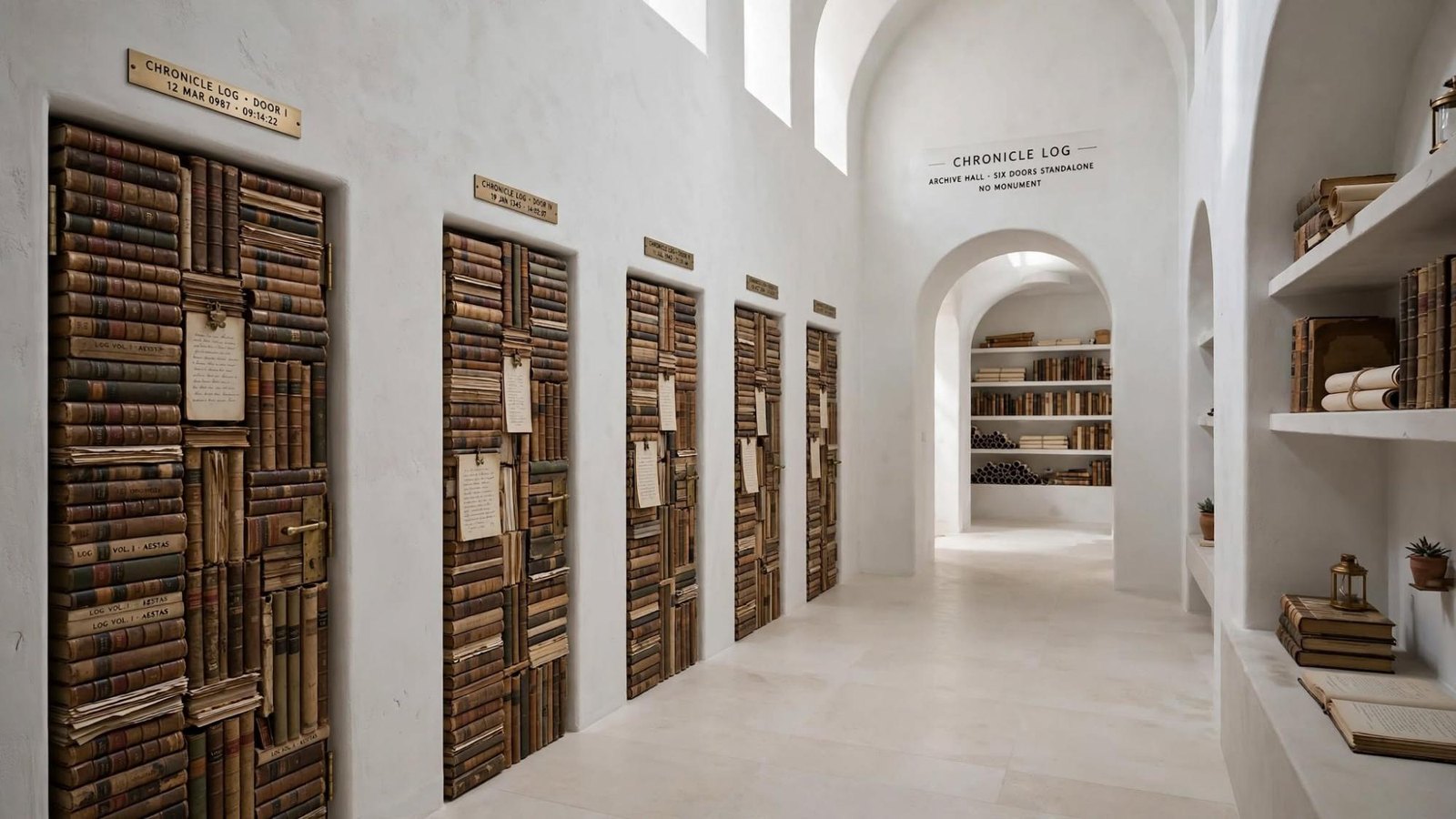
Brass, cloth boards, green-black ink. No sodium lamp. No stone with a speech on it. Chronicle of Small Ends is Niles Arden writing endings too small for stone, until the smallness is the only chronicle anyone honest can stand.
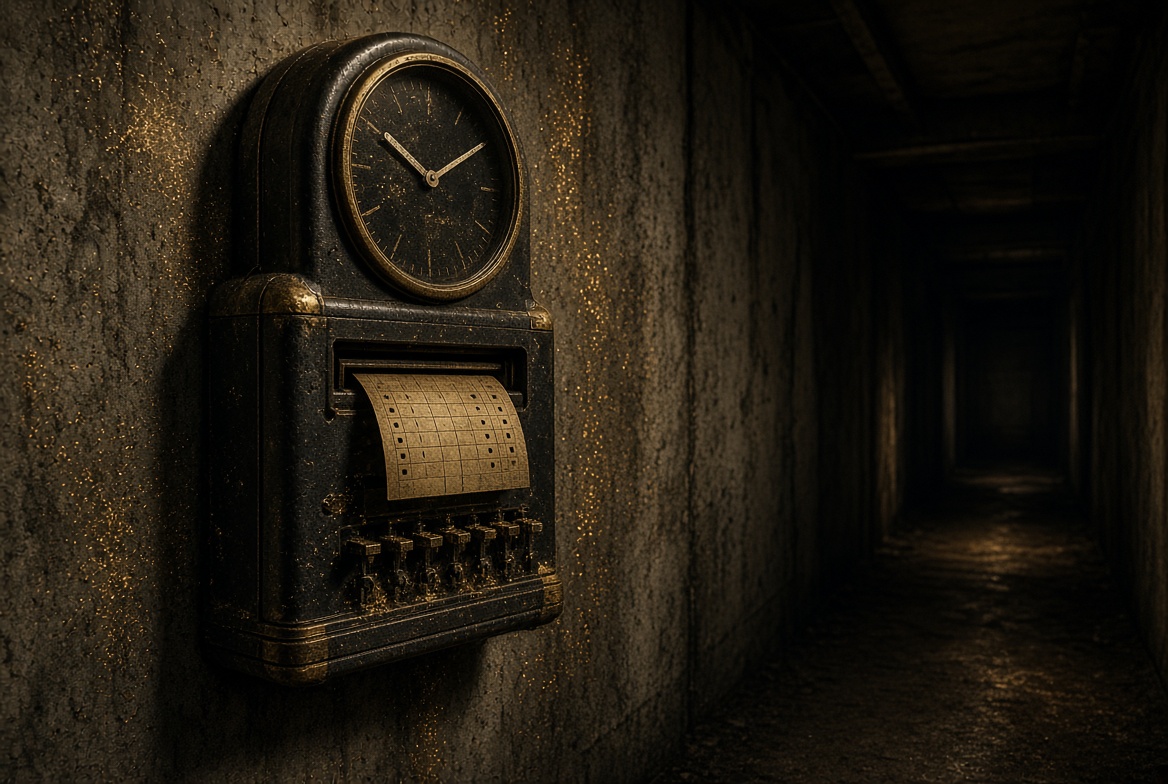
Timestamp of the Unseen is Pema Holt's stamp on an hour nobody photographed. The brass does not care that the picture failed. Time was kept. That is more than the city did, and the stamp knows it, in the only way brass can.
Log of the Last Operator

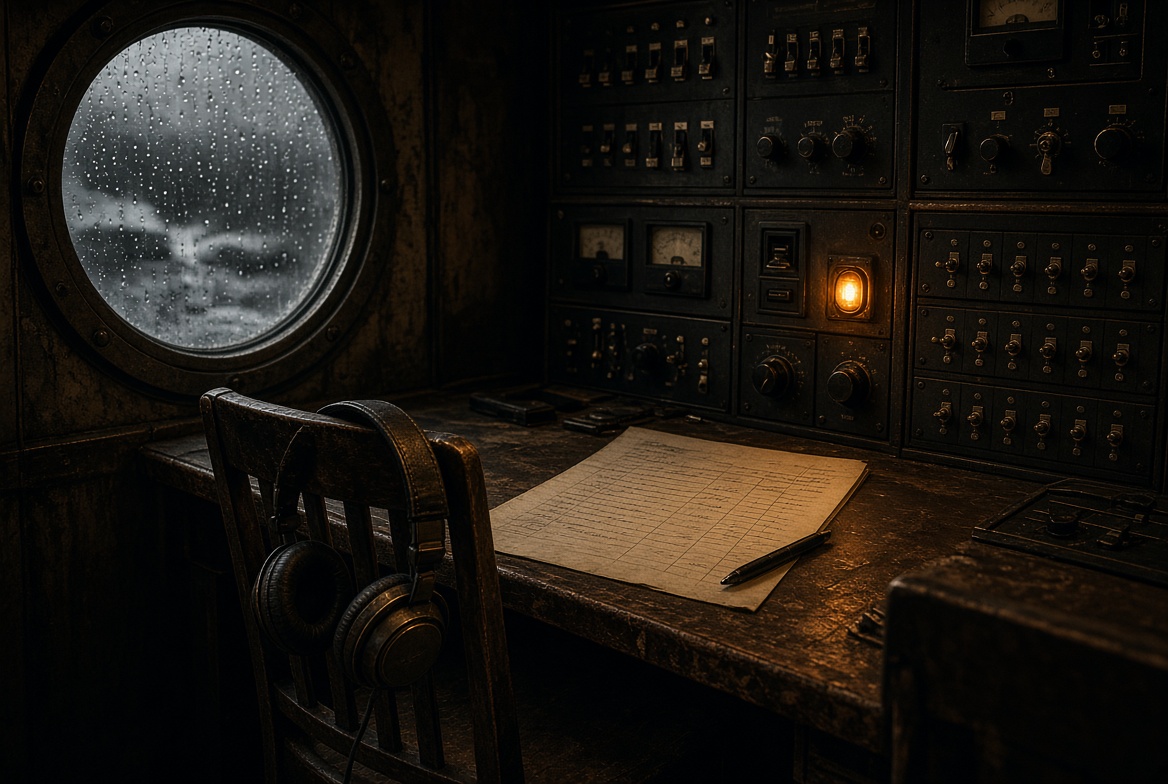
Log of the Last Operator is Gareth Lin still on duty. The opposite chair is empty. The hand is still writing. No monument is found because none was ordered, and the operator would have had to file the order himself.
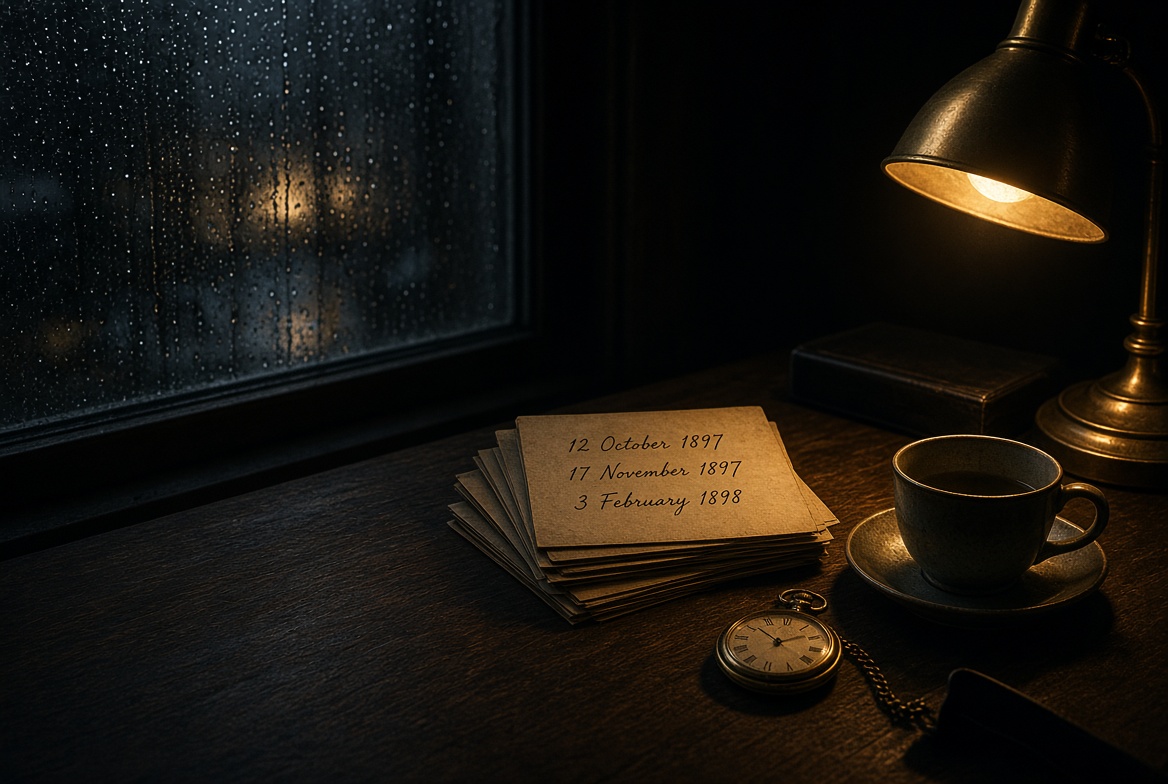
Record of Quiet Hours is Loic Pendle logging hours with nothing to report. The nothing passed. Therefore it is in the book. Quiet is not the absence of a chronicle. It is the chronicle, and it does not thank you for noticing.

How to enter
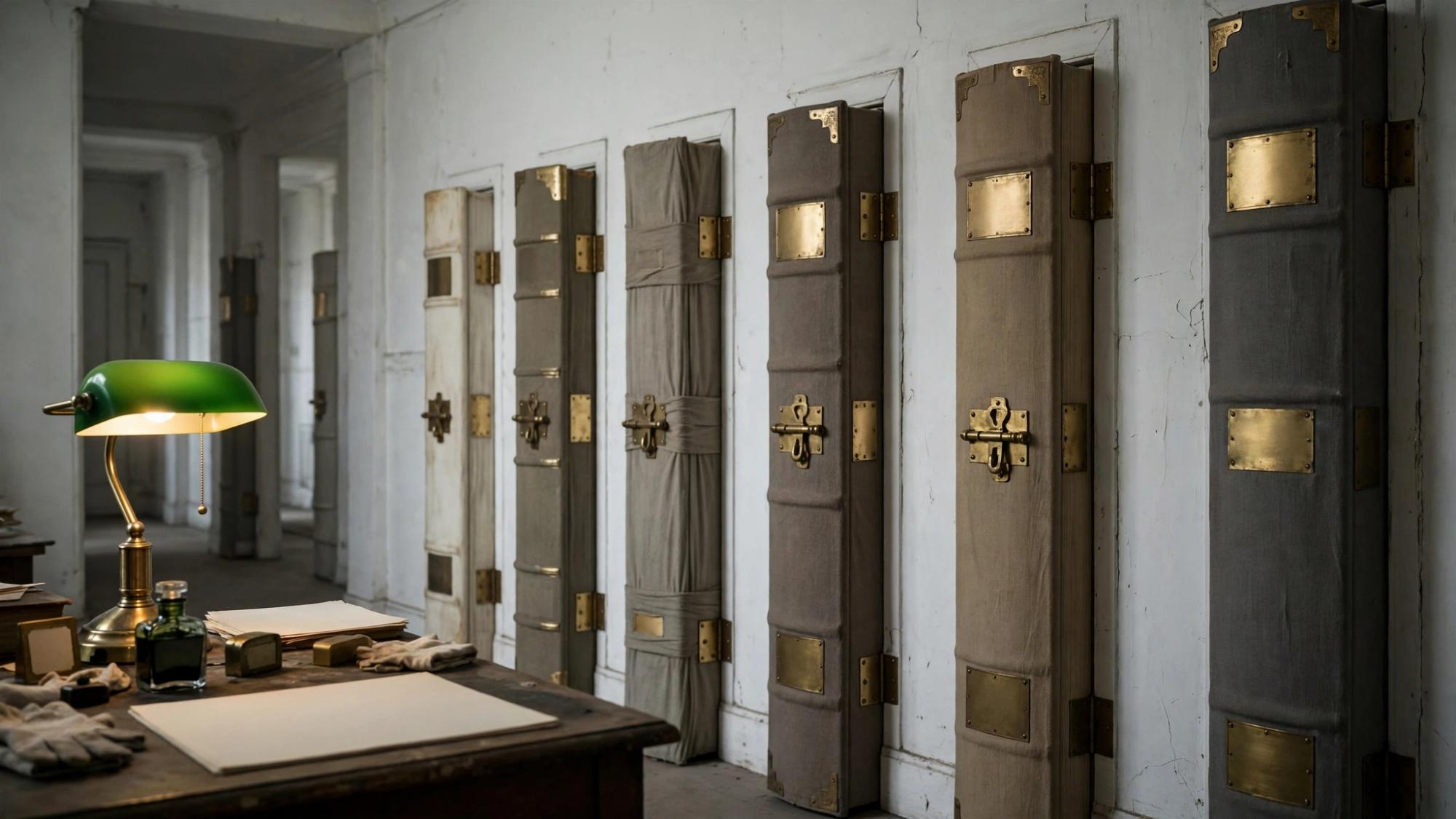
Do not wait for the event that would justify the stamp. Entry Log 000 with Anton Reeve. Day the City Forgot with Della Frost. Chronicle of Small Ends with Niles Arden.
Timestamp of the Unseen with Pema Holt. Log of the Last Operator with Gareth Lin. Record of Quiet Hours with Loic Pendle.
A story that continues lives under Episodes. These do not.
 Entry Log 000
 Day the City Forgot
 Chronicle of Small Ends
 Timestamp of the Unseen
 Log of the Last Operator
 Record of Quiet Hours