The Sale Ended
The rooms
The sale ended. The rooms did not.
Thirteen paintings left a wall for a number. Some of the numbers were hammered in a room full of people. Some were reported later, and the report is the only public fact. These frames are not those paintings. Each one is below, once.
The thirteen
The line under a picture names the painting and the figure printed for it. Where the sale was private, the figure is a report, not a line in a catalog.
01 The hand and the sphere
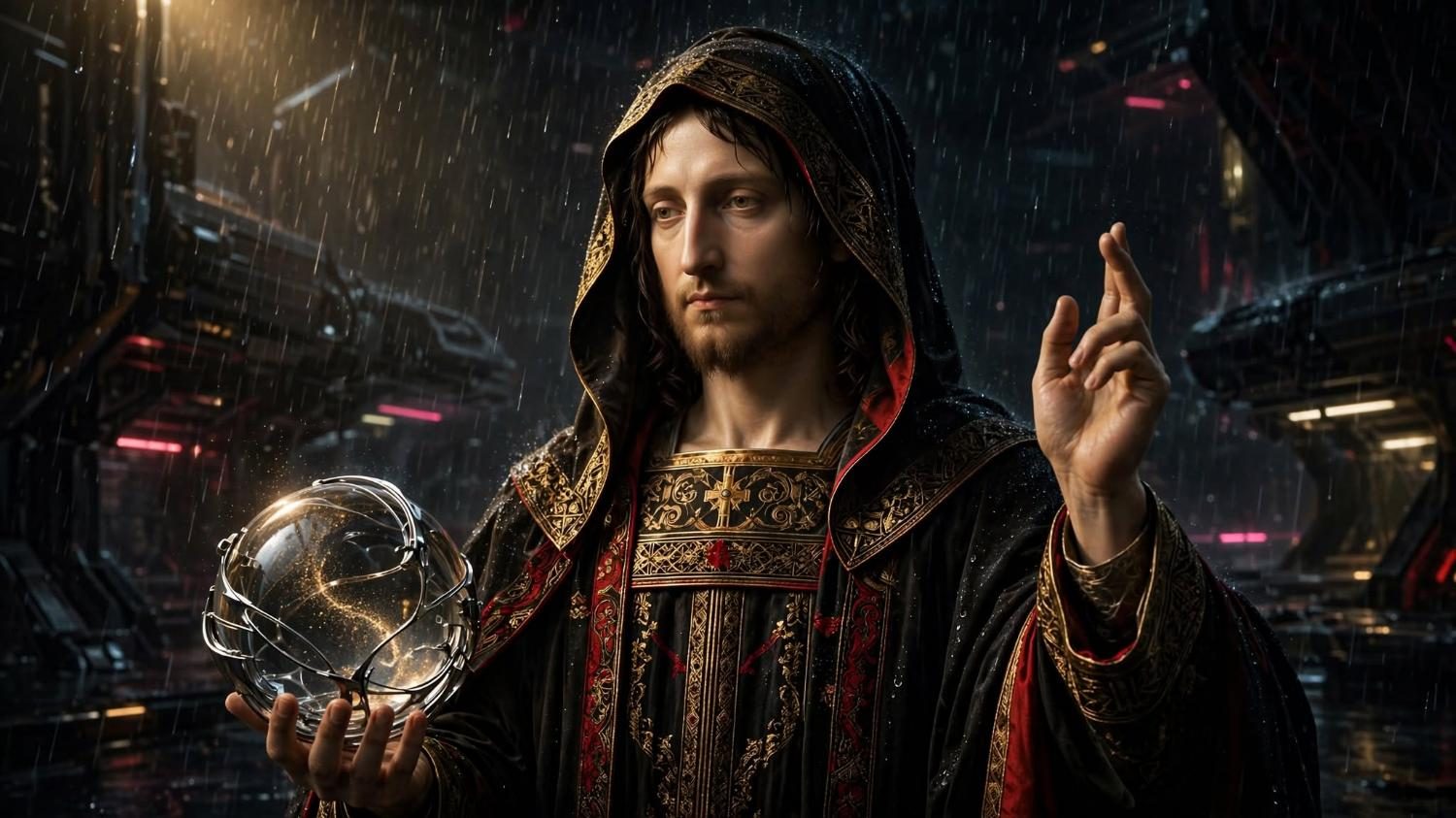
A raised hand, a sphere of glass and wire, rain on a street that is not a Renaissance room. The painting that set the auction record is a blessing and a crystal globe. This frame keeps both, and it says the doubt out loud. A price that large did not settle the hand that painted it.
02 The crossing
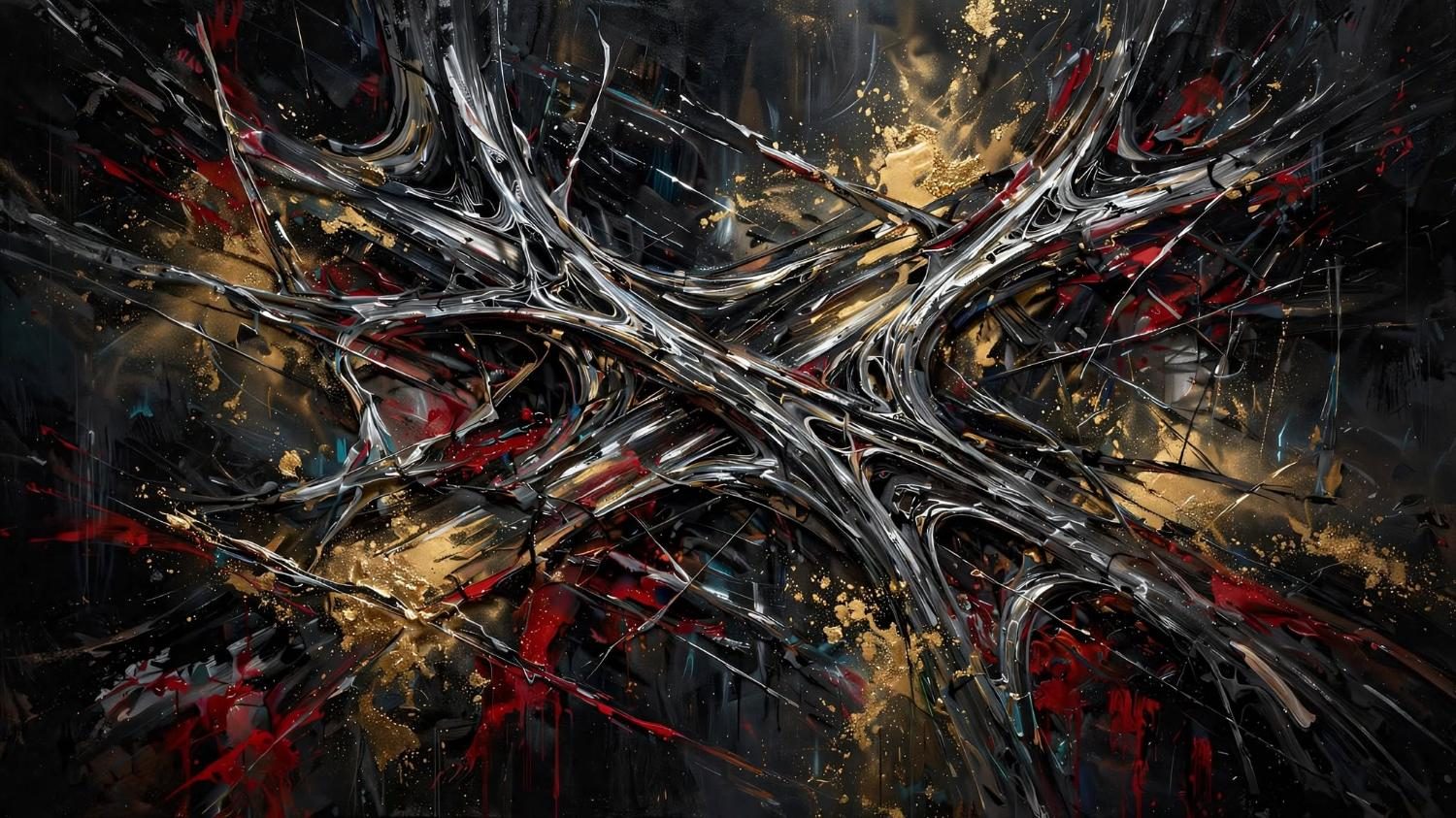
Metal crossing metal, red dragged through black, no figure willing to stand still. The sale was not public. The number is a report. The canvas moved from one private wall to another. This frame keeps the crossing and does not pretend a museum received it.
03 The table
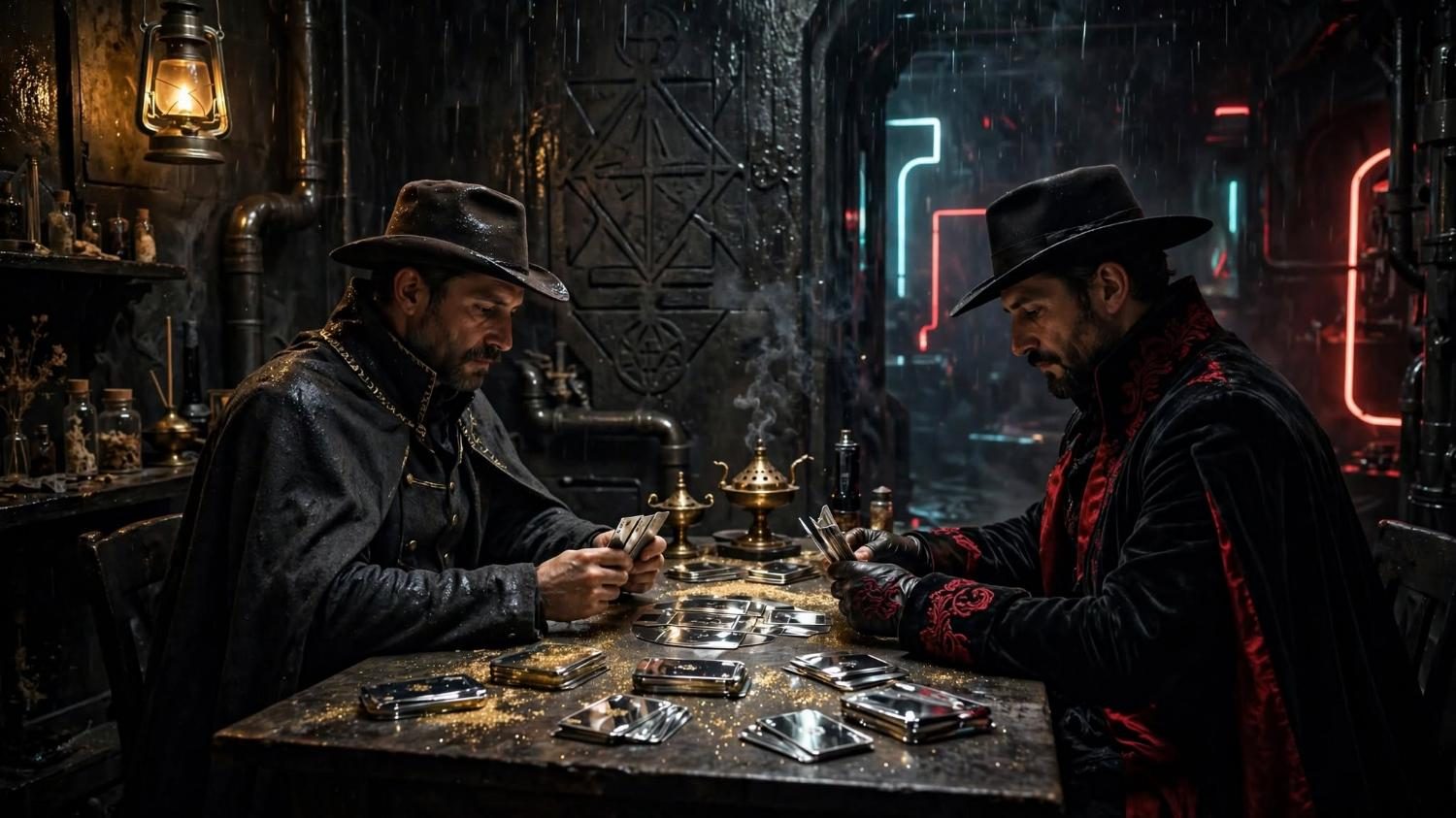
Two men, hats low, cards in the hands and more cards laid out like small ingots. Cézanne painted card players more than once. The version tied to that figure left a private collection. This room keeps the table and the attention between the two. The Provençal wall is not here.
04 The question

Two women by black water, one in white, one in red, flowers and a boat instead of the Tahitian bank. The title is a question. An earlier report priced the sale near $300 million. A later case put the figure near $210 million. The question in the picture was never about a price. This frame keeps the two and the water.
05 Three fields
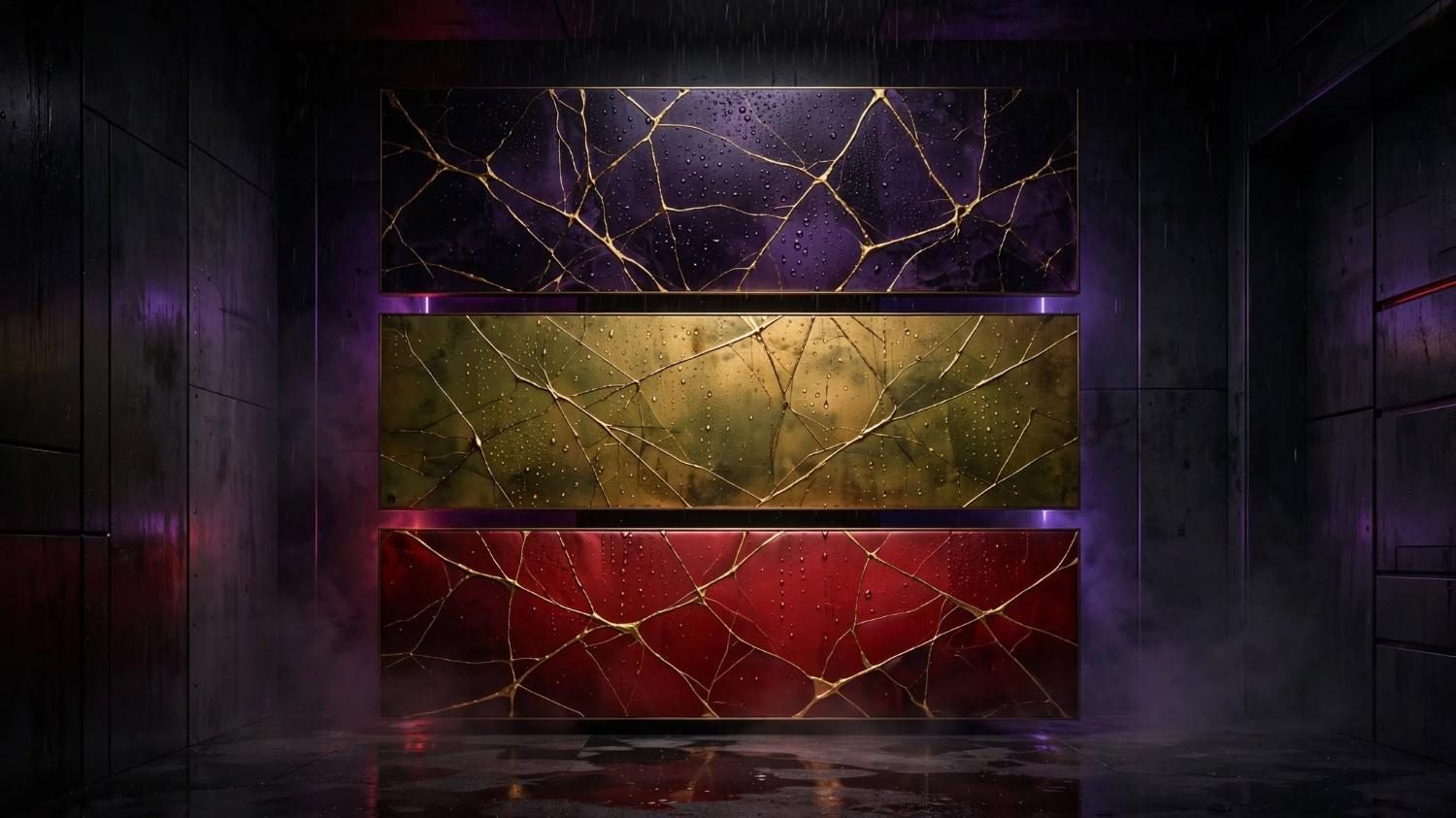
Violet, green, red, stacked, the color cracked with gold as if it had been asked to survive being moved. Rothko held color in a rectangle. This room keeps the three rectangles and lets the rain sit on them. It is not the oil on canvas.
06 The company
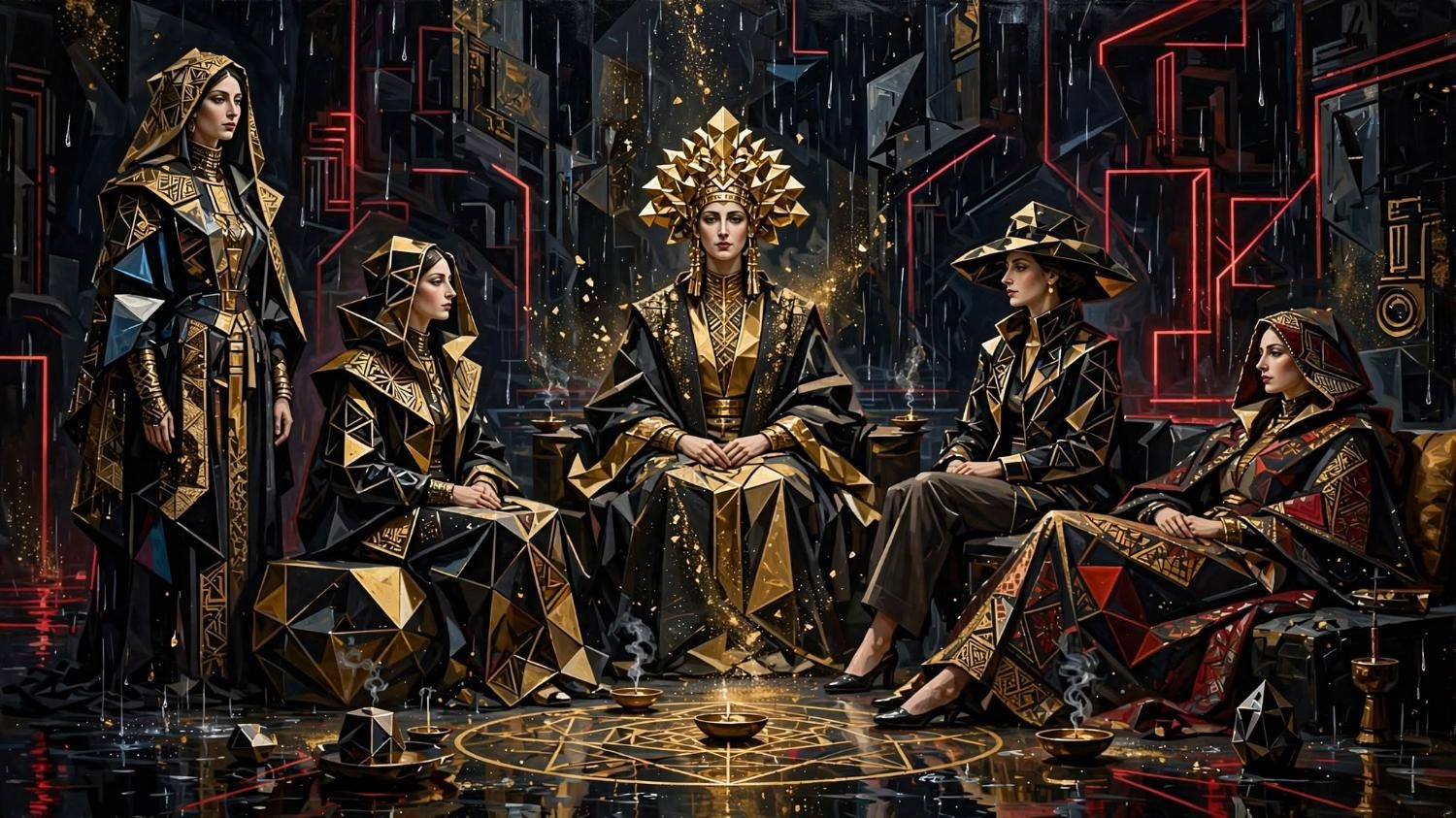
Five women in gold and black, arranged around a circle on the floor. Version O is the last of the series Picasso made after Delacroix. The sale was public. This frame keeps the company and the fact that they are composed. It does not keep the studio.
07 The length of the sofa
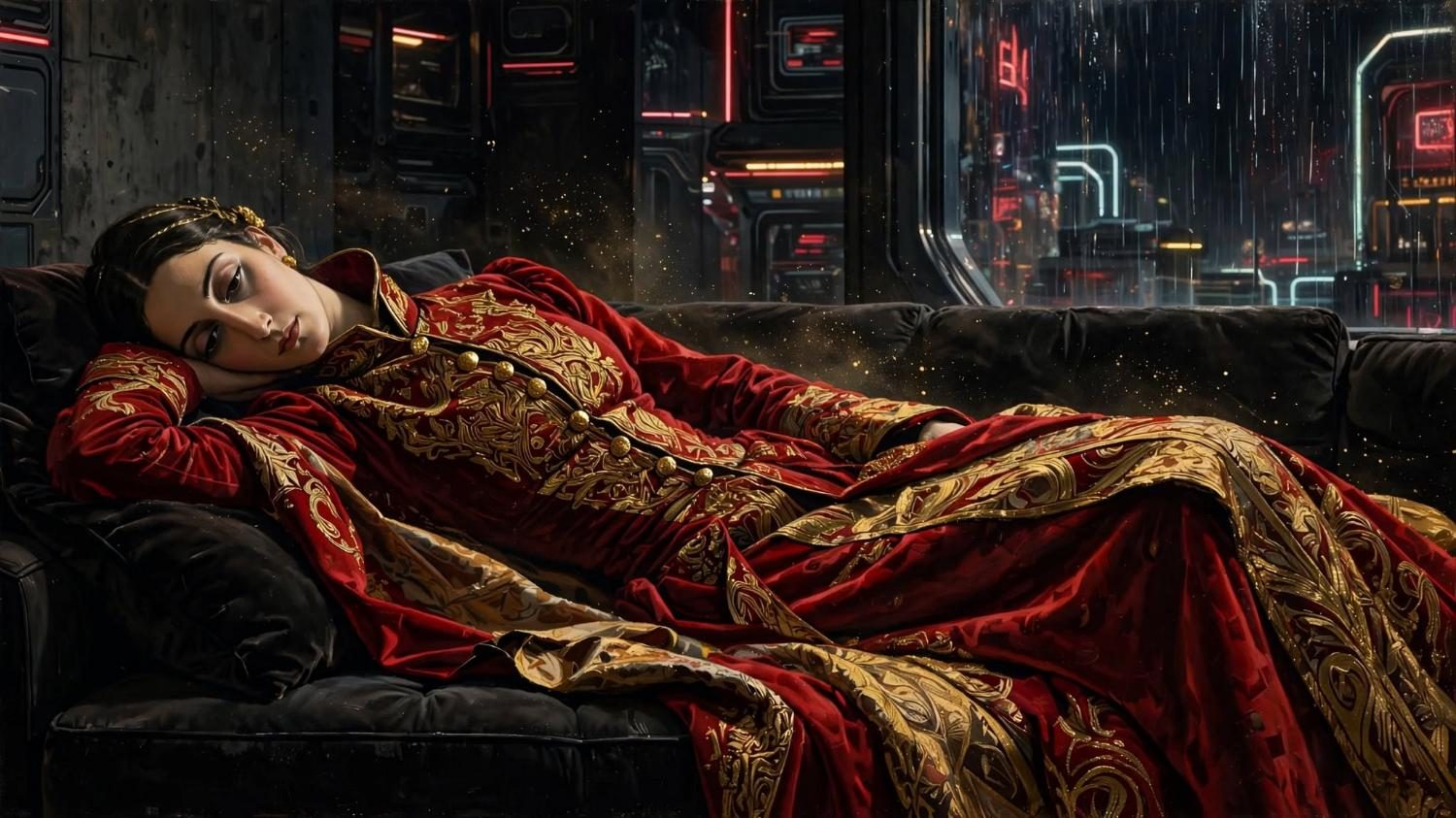
The painting is a nude, a long body, a face like a mask. This frame keeps the length and the sofa and covers the body in red and gold. A second Modigliani nude sold in 2018 and is a different picture. The one named here is the 2015 sale. The window behind her is a city, not the Paris room.
08 The sleep and the snakes
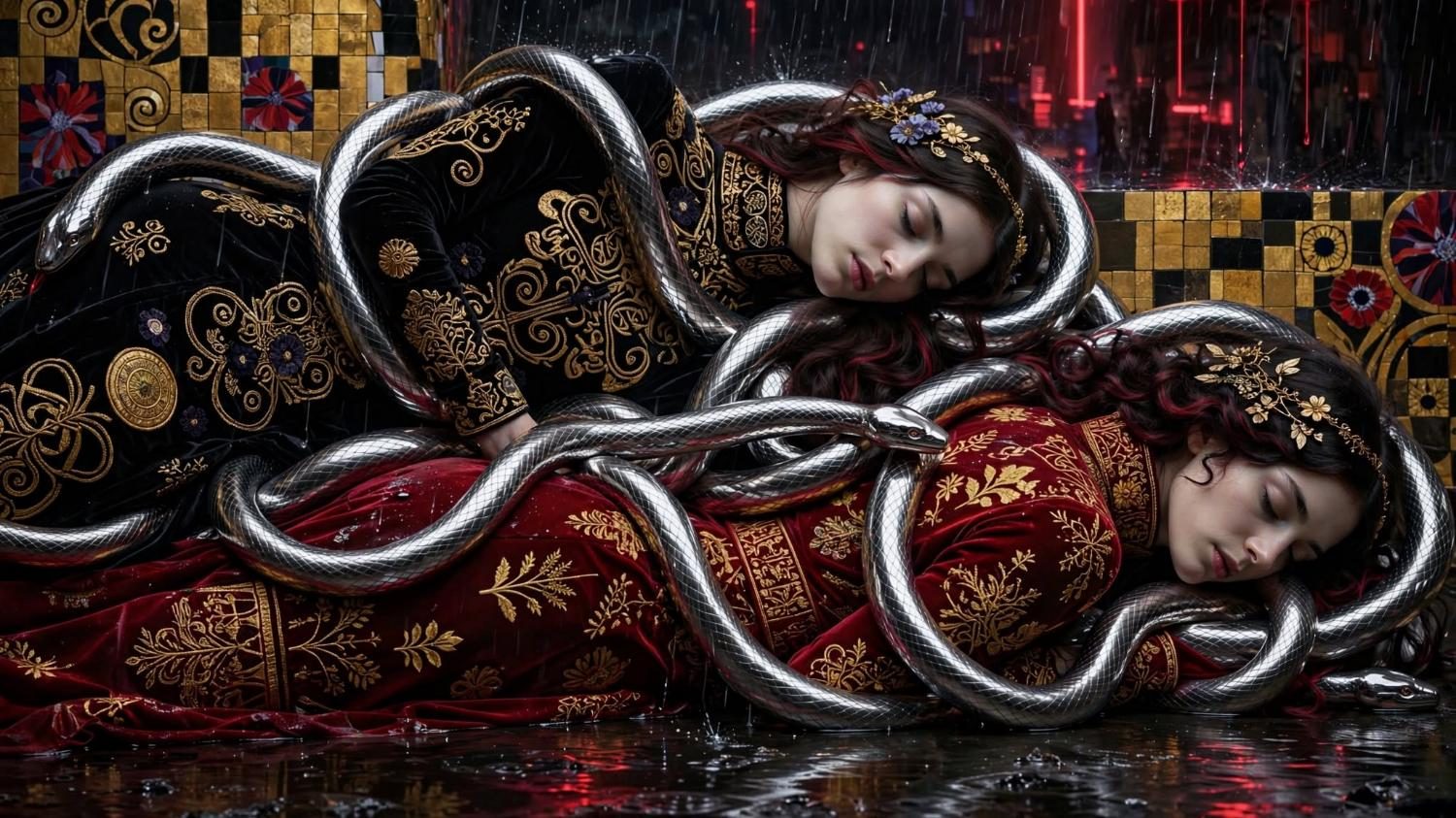
Two women asleep, silver serpents, a gold mosaic, water at the lower edge. The figure usually printed for this panel is $183.8 million, from a private trade. Later reporting has given other numbers for a later sale. A private price can be more than one number, depending on who is speaking. This frame keeps the sleep, the gold, and the snakes.
09 The later portrait

A woman faced front, gold worked until it behaves like a circuit, a black hat wide enough to stand in for a halo. This is not the gold portrait of 1907. That one has a room in New York. This is the later picture, and the sale was private. The frame keeps the face and the pattern.
10 The dream
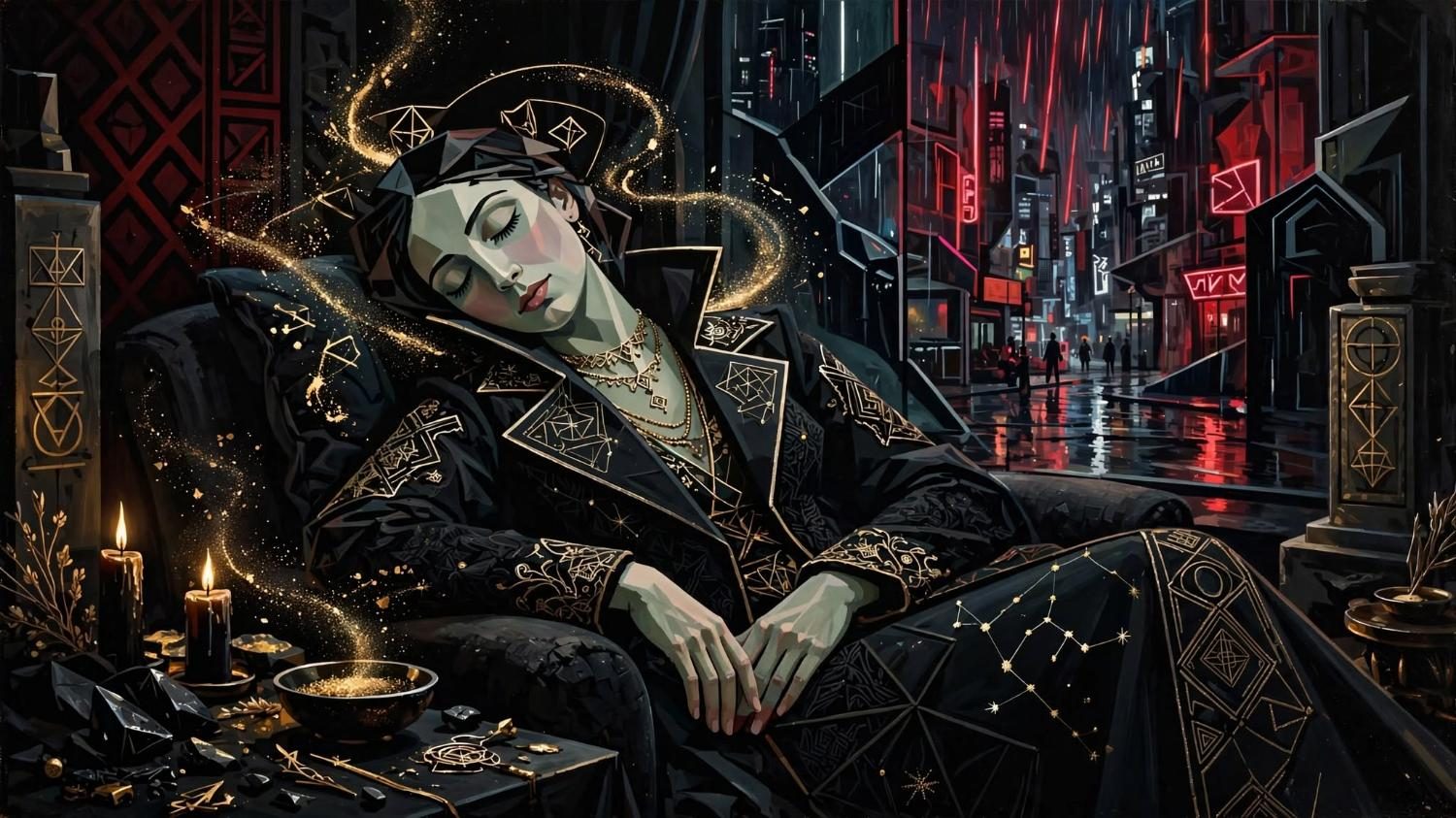
A woman asleep in a chair, a neon street behind her, constellations drawn on the skirt. The sitter is Marie-Thérèse Walter. The sale was private. This frame keeps the sleep and a dream drawn on the clothes. The armchair in the 1932 picture is not this chair.
11 The pour
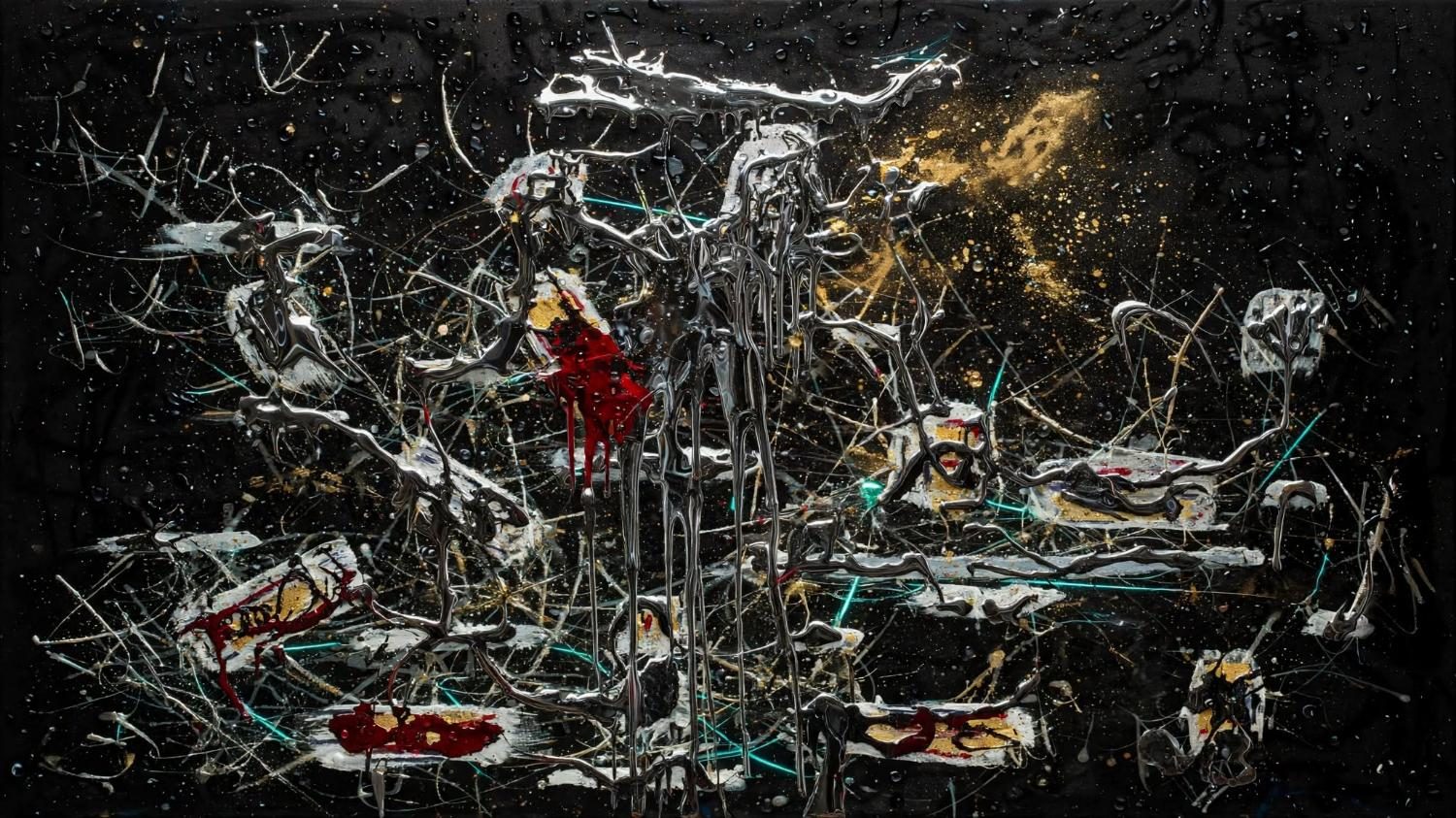
Black ground, poured metal, red that fell and was not wiped. The picture is a pour, not a scene. The sale was reported, not staged for a crowd. This frame keeps the pour and the drip. It is not the board.
12 The woman who will not settle
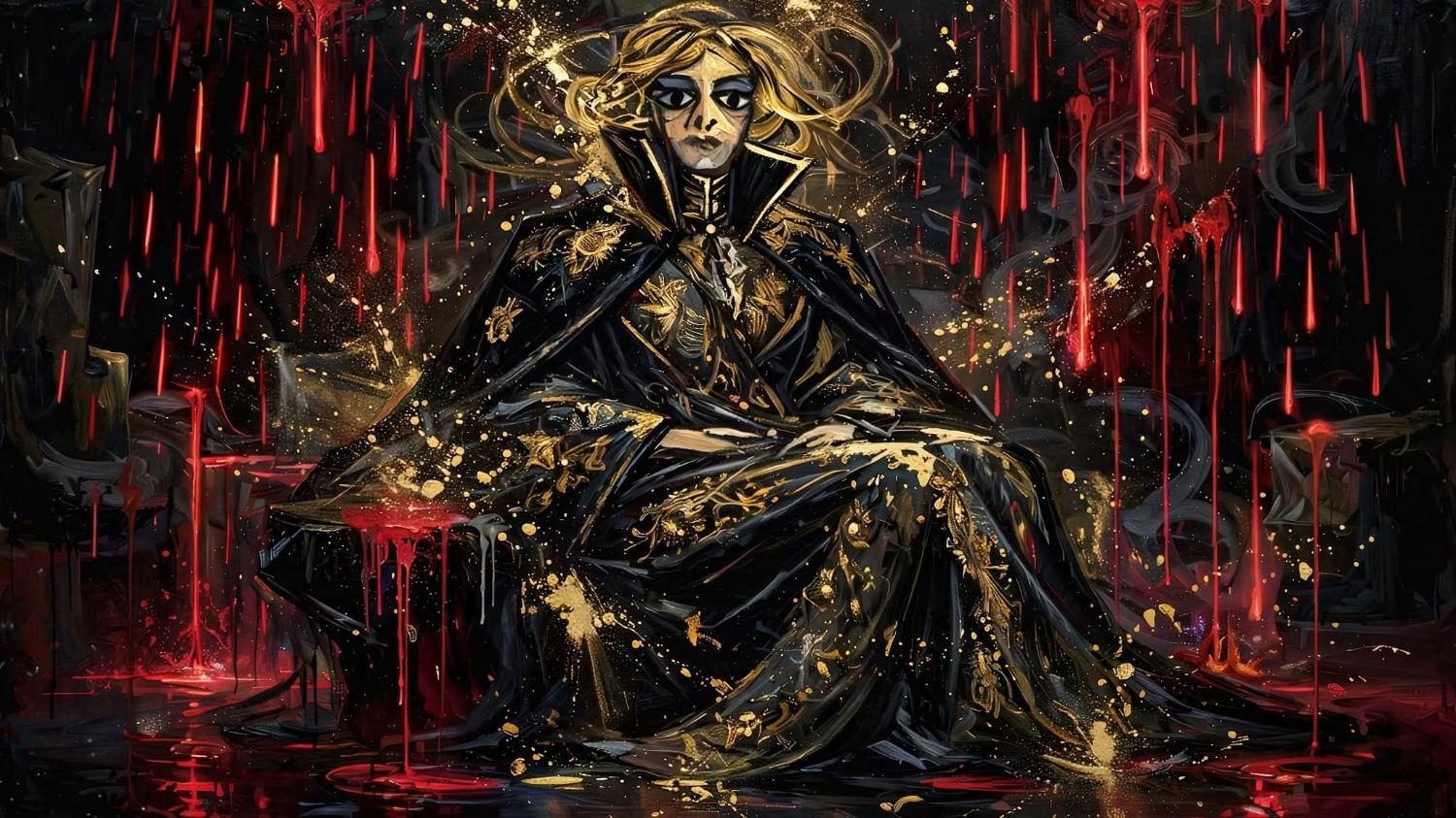
A woman seated, the face built out of strokes that refuse a single outline, red running down the dark. The women of these years were not made to be polite. The sale was private, and the figure is the one that was reported. This frame keeps the sitting and the unsettled face.
13 The doctor
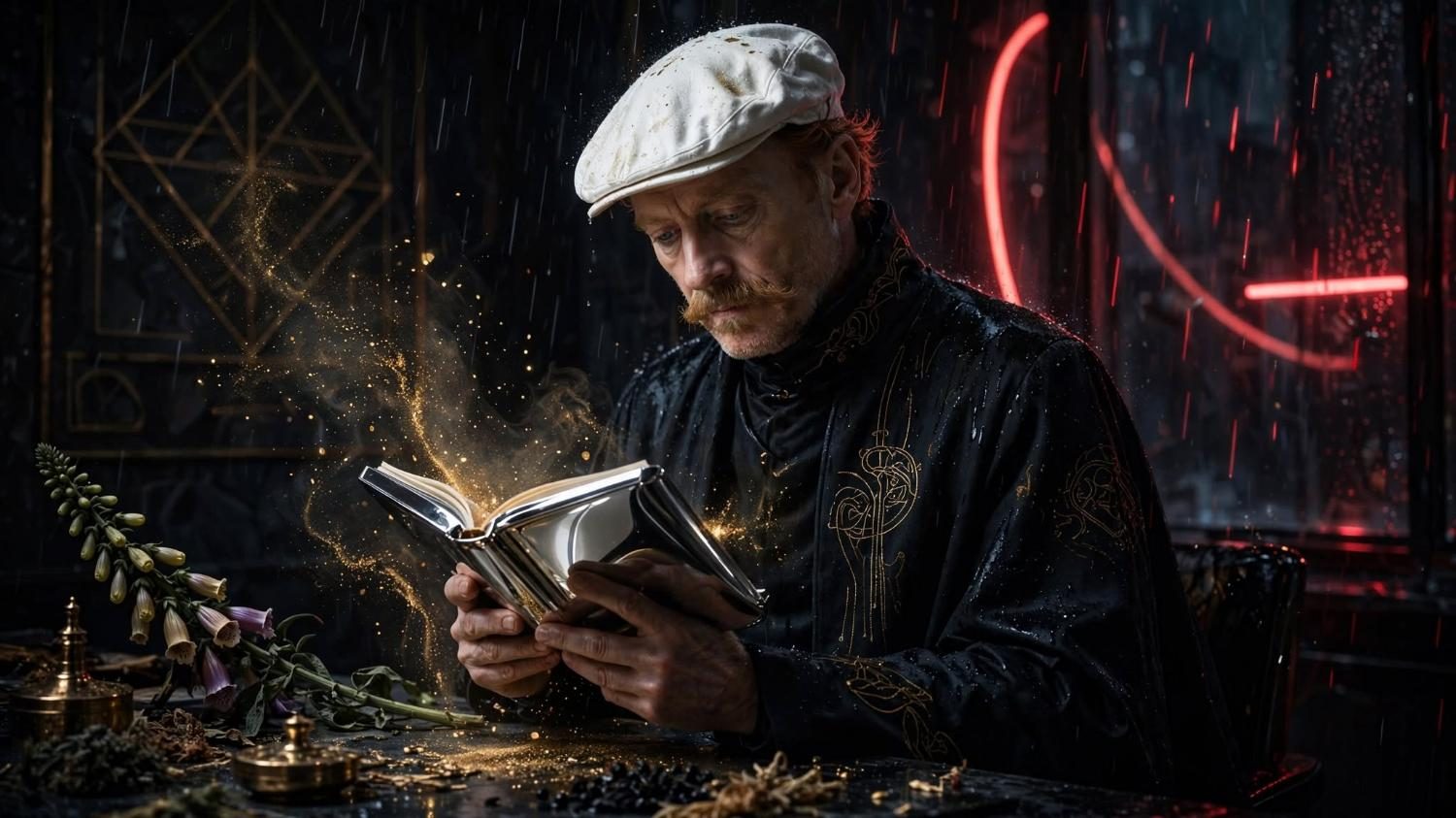
A man in a pale cap, foxglove on the table, a book that throws light. Van Gogh painted Paul Gachet at Auvers in June 1890 and put foxglove in the picture because the doctor treated the heart. The portrait has hardly been seen in public since the sale. This frame keeps the sitter and the flower. The book is this room’s object. The garden at Auvers is not in it.