What Remains After
Key art
Filed beside the screening
The picture is What Remains After.
Scenario
2:57 · 16:9
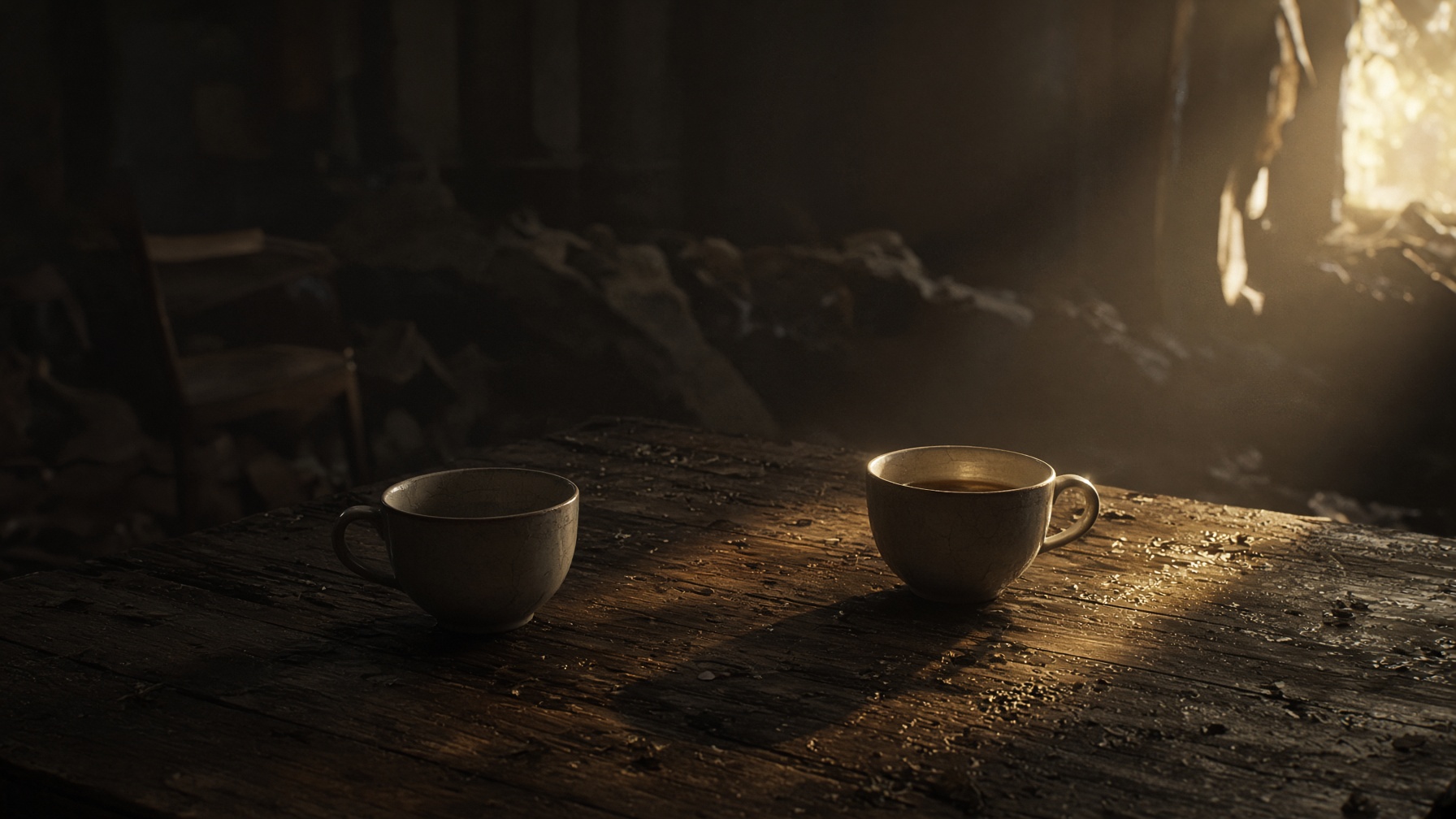
Isolde March sits at a table with a stack of program notes for pieces that have already been played. She can end a paragraph. She writes the last sentence of one note, a clean stop, and sets the pen down. The stop is visible: the sentence ends, and the rest of the page is blank. Around her the life that used those notes has already ended: empty chairs in a shallow arc, a closed piano, a stand with no music on it. Dust sits at the edges of the chairs. She does not look for a new tenant in the silence, and she does not make a speech that would turn the remainder into wisdom.
She reads the paragraph once, hears that it is finished, and does not know what to do with a room that will not take a similar ending. Her hand goes to the window because that is the last available gesture. She opens it. The sash sticks and then gives. Air comes in, ordinary, a little cold, moving the page. The finished paragraph lifts, turns, and settles against the sill instead of flying out into a symbol. She lets it stay there. She does not chase it and does not pin it. A smaller breath lifts the page again and settles it lower, one corner over the sill's edge, still not leaving. That second settling follows the first and does not make an exit.
The piano remains closed. The chairs remain in their arc, slightly dusty at the edges. A little of the dust shifts when the air moves and then resettles in the same arc. Isolde keeps her place at the table with her hands quiet. The notes for things already played are still a stack. One page is at the window, and that is as much ending as the room receives. The pen stays where she set it down. The stand stays empty. The cold air continues and does not grow into a reason to close the sash.
The window stays open. The page rests against the sill, and the empty chairs do not rearrange themselves into an audience. The last sentence stays the last sentence, half on the sill, half held by a corner that will not fly. The stack on the table keeps the notes that were not taken by the air.
Isolde does not stand to retrieve the page and does not close the window to keep the rest of the stack from following it. The stack does not follow. Cold air moves the top sheet a finger's width and that is all. The closed piano gives back no sound when a board in the room ticks. The empty stand holds no music and does not fall. Dust on the chairs, resettled, marks the arc as clearly as the chairs do. Her hands stay quiet on the table beside the pen. The finished paragraph on the sill does not blow the rest of the way out and does not creep back to the stack. The room receives the open window and the one escaped page and refuses any larger ending than that.