The Unlit Escalator
Key art
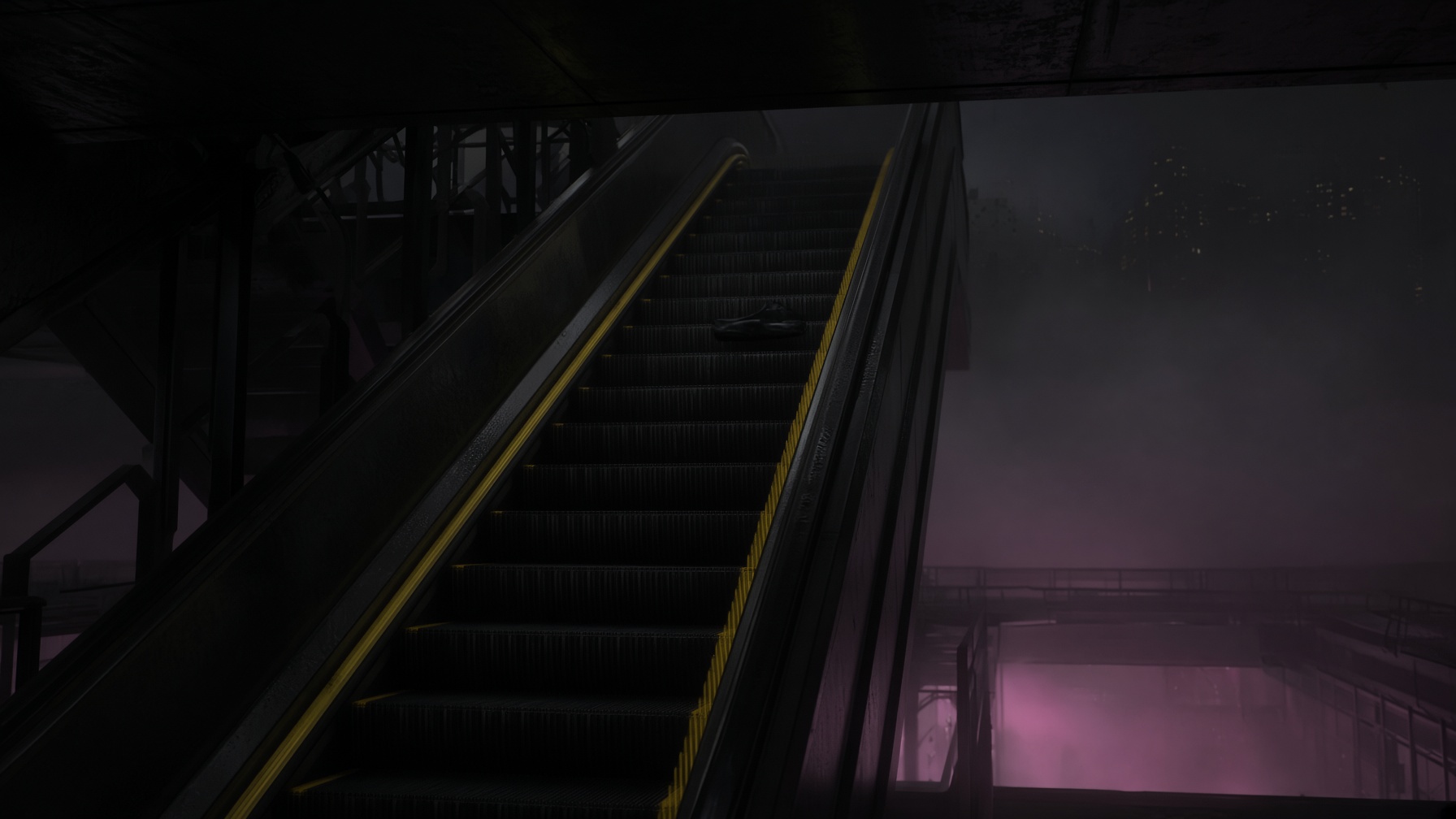
Filed beside the screening
The picture is The Unlit Escalator.
Scenario
2:57 · 16:9
A mechanical stair runs in almost no light between two levels that do not share a use. The motor hums. Steps rattle. A man rides because the fixed stairs are farther and because habit still trusts the machine. A woman two steps above him holds the rubber rail. Neither speaks. The rise goes on longer than the building's outside would allow. Landings fail to appear. Only the soft knock of step against step marks the climb. A joint in the rail passes under the woman's hand and is gone. Numbers painted on the side wall repeat and do not count a floor. The same number comes again, then again, pale in the small light the machine itself allows.
A third rider steps on below, a worker with a closed toolbox, and accepts the dark the way the others have. The toolbox knocks once against a riser and then is quiet. The man's hand finds a joint in the rail and loses it. The climb continues. Their spacing stays even. No one moves up a step by their own effort. The motor's hum does not change pitch to admit that the building should have ended.
Then the escalator stops. The motor drops to a tick. The three of them stand on stalled metal in the black between levels. A step settles a finger lower with a single knock and then holds, the change that follows the stop and does not become a landing. The woman tests a step upward on her own feet. The stair does not help, and the next tread is higher than a normal step in the dark. She returns to her original tread. The worker sets the toolbox down on the step ahead and does not open it. The toolbox stays shut. No one climbs off into the shaft. The rubber rail creeps an inch and stops under the man's hand.
The tick of the cooling motor goes on. The three riders remain spaced as the machine left them, and the stair does not start again. The repeated number on the wall does not become a floor. The toolbox stays closed on the tread above the worker. The woman's hand stays on the rail. The man's hand stays where the rail stopped creeping. Between two levels that do not share a use, the dark keeps them at the distances the machine chose.
No landing appears above the woman or below the worker. The hum does not return. The tick of the cooling motor spaces itself a little wider and then holds that wider space. The step that settled a finger lower does not settle farther. Numbers on the wall repeat their refusal to count a floor. The man's coat does not brush the woman's coat. The worker's hand stays off the toolbox latch. Habit has nowhere to ride. The black between the levels stays black, and the stalled treads stay the only floor they have.