The Sixth Candle
Key art
Filed beside the screening
The picture is The Sixth Candle.
Scenario
2:57 · 16:9
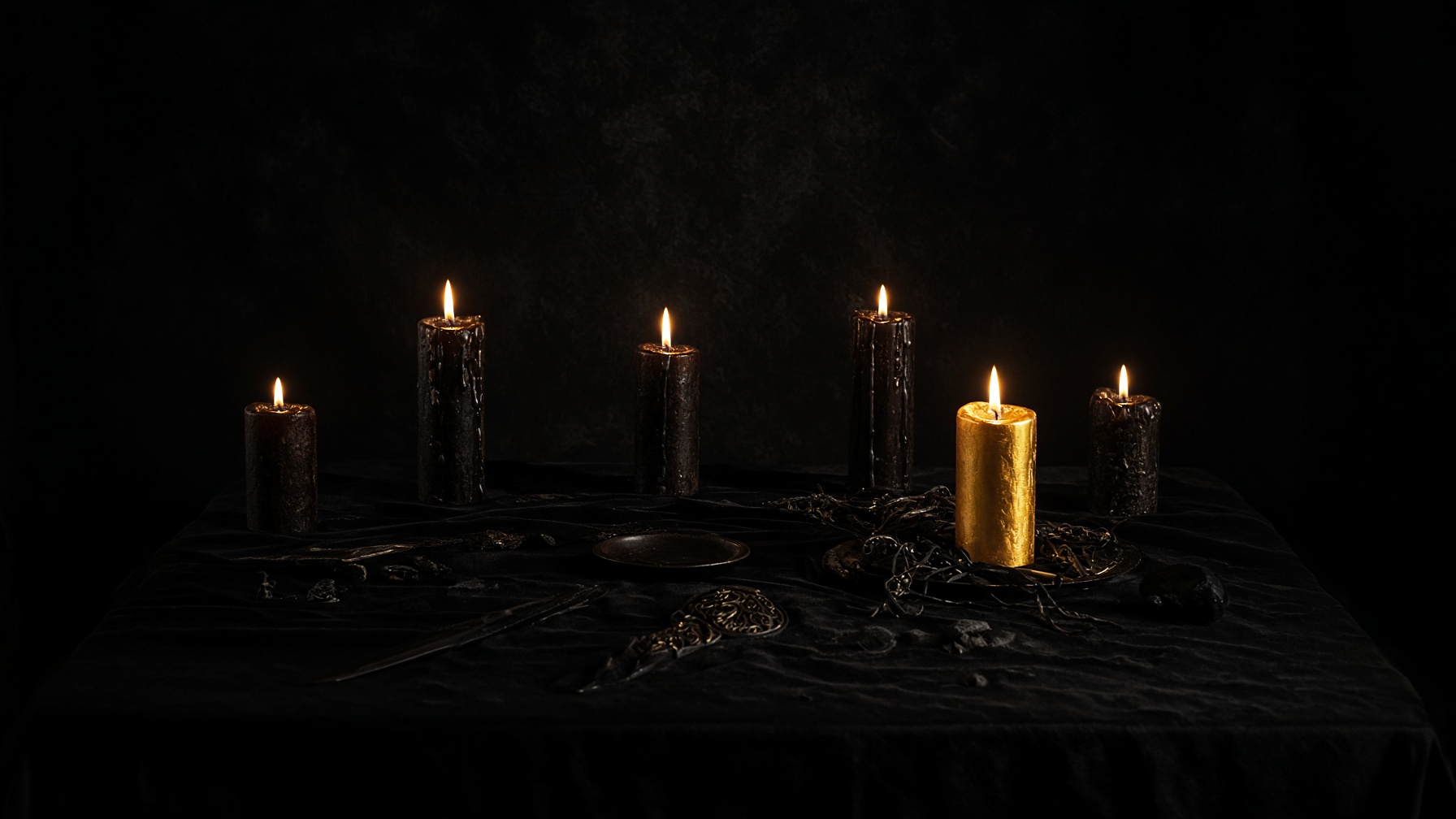
Five candles burn on a black table in a room otherwise dark. A sixth stands unlit at the centre, wick pale. Wax has already pooled and hardened around the five, and the sixth has no pool. Three adults move around the table as if the seconds they use are borrowed. A woman raises a taper and the lift takes too long. The taper's small flame bobs and does not hurry her arm. A man across from her has already finished a bow she has not started. He is upright again while her taper is still rising. Their coats are plain wool. Their faces are lined and tired, none of them young. A jug of water sits by the man's hand. A chair is drawn out for the third.
She touches the taper to the sixth wick.
The five flames bend toward the new fire at once. The air between them draws tight. Smoke from the five leans with the flames and does not rise straight. The man pouring water from a jug stops with the jug tilted, and the stream hangs in the air before it falls. The fallen water strikes the cup and is ordinary again. The third person, halfway down into a chair, stays halfway. The coat hangs as a coat hangs when a body has stopped between sitting and standing. The woman who lit the candle keeps her hand near the wick, and then that hand stops too.
The taper in the woman's other hand has gone out, though no breath touched it. A thread of smoke leaves that dead taper and stops. Wax stands in peaks on the black wood. A second drop gathers at the jug's lip and hangs without falling, the change that follows the first hanging stream. It does not lengthen. It does not let go. The sixth flame grows a fraction taller. The five lean a fraction farther and do not recover.
No breath enters the room to straighten the five flames or to finish the bow, the sitting, the reach. The black table holds the wax peaks where they formed. The hung drop at the jug's lip stays the size it chose after the stream had already fallen. The cup holds only the water that was allowed to land. The third adult remains between standing and sitting, coat still, face lined, not young, the chair only half accepted. The woman's near hand stays by the sixth wick. The dead taper stays dead. The sixth flame does not lean toward the five that lean toward it. Borrowed seconds do not resume. The pale wick of the sixth candle is no longer pale, and the five older pools of wax do not melt further under the lean.
The sixth flame stands straight and tall. The other five lean and do not recover. The three unfinished motions remain around the table, held where the new light found them.