The Single Door
Key art
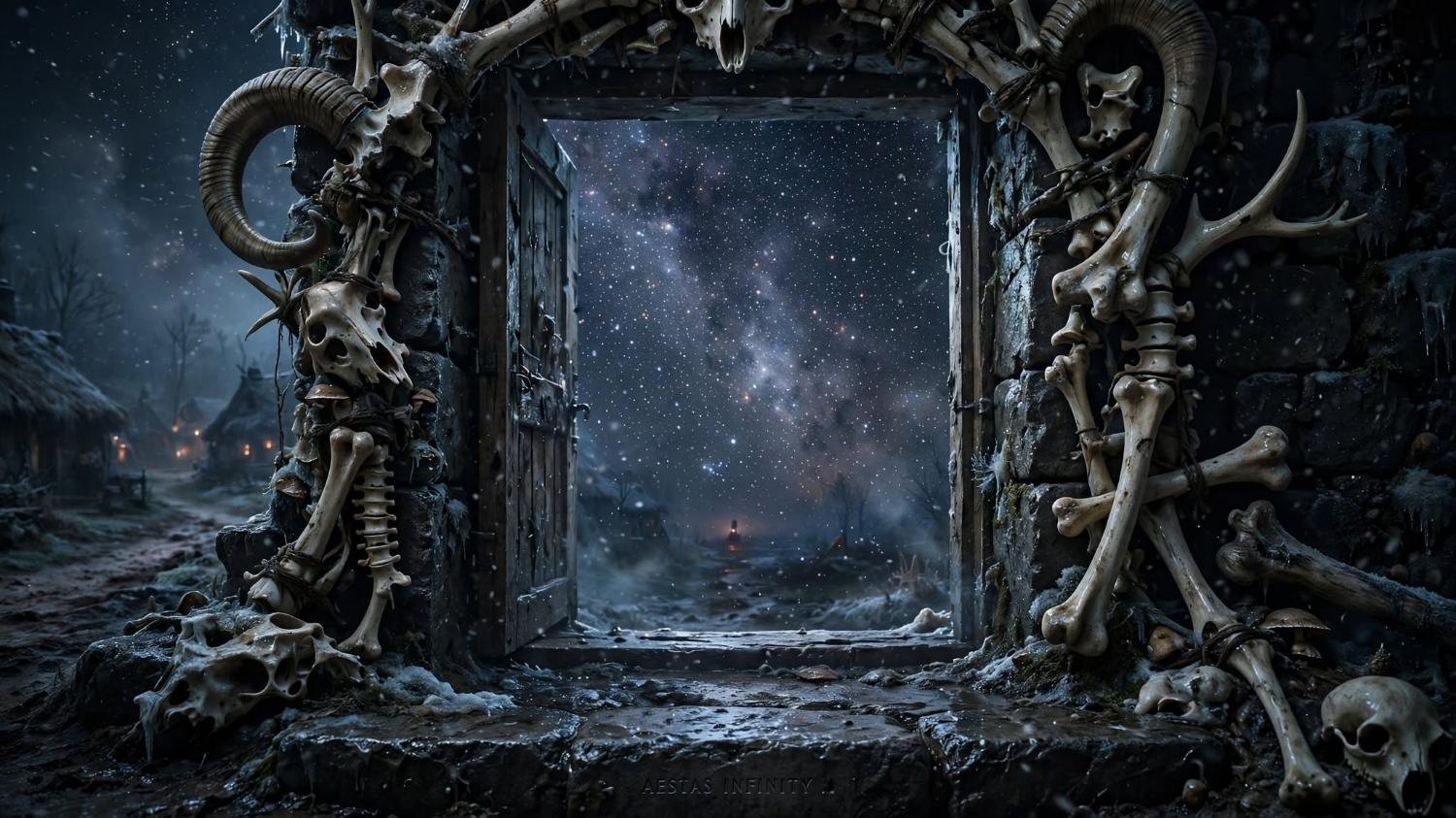
Filed beside the screening
The picture is The Single Door.
Scenario
2:57 · 16:9
A door of bone and horn stands on the village path, open, and past the threshold there are only stars. The bone is fitted, not a ruin, and the horn makes a dark curve along the lintel. Rain falls on the village side of the sill and stops there. It does not cross. Drops strike the near stone and do not strike the star side. A horned skull is fixed in the stone beside the jamb. The bone around the doorway is wet, and the wet does not dry. Lights in the village windows burn their ordinary yellow farther down the path. Nothing in those windows changes because the door is there. A shutter stays as it was. A yellow square stays a yellow square.
A figure stands with their back to the houses, cloak torn at the hem. One foot is already through the doorway. On the star side the torn cloth is full of small lights. On the rain side the same cloth is only wet wool. The division is exact at the plane of the door. Rain beads on the wool and does not bead on the lit half. The figure draws the foot back onto the path. Stars shake off the boot and go dark on the wet stone. The dark they leave is a print the rain does not wet, a small dry shape in the wet, and that dryness follows the withdrawal without inviting the rain across the sill.
They set the foot through again. The boot takes stars at the toe. The torn hem on the star side gains a few more points of light and does not mend. The path at their heel does not follow them over. Rain keeps strictly to its own half. They stay in the doorway, divided at the ankle. The bone glistens and does not dry. The skull faces the road. The yellow windows do not brighten and do not go out. The dry print of the first withdrawal remains on the village stone, unwet, while new rain avoids it.
The figure does not bring the second foot across and does not plant both feet back on the path. Division at the ankle is the place they keep. Stars on the far half of the torn hem do not leak onto the wet wool. Rain on the near half does not spark. The horned skull stays fixed beside the jamb, facing the road, and the road's rain ends at the sill in the same strict line. Yellow windows farther down the path burn as they burned before the door was stood there. The dry print of shaken stars remains a small unwet shape on the village stone. The bone of the doorway glistens. The horn along the lintel stays dark. No shutter changes because of any of it.
The bone glistens and does not dry. The village windows keep their old light, and the skull faces the road that will not cross.