The Night That Stayed
Key art
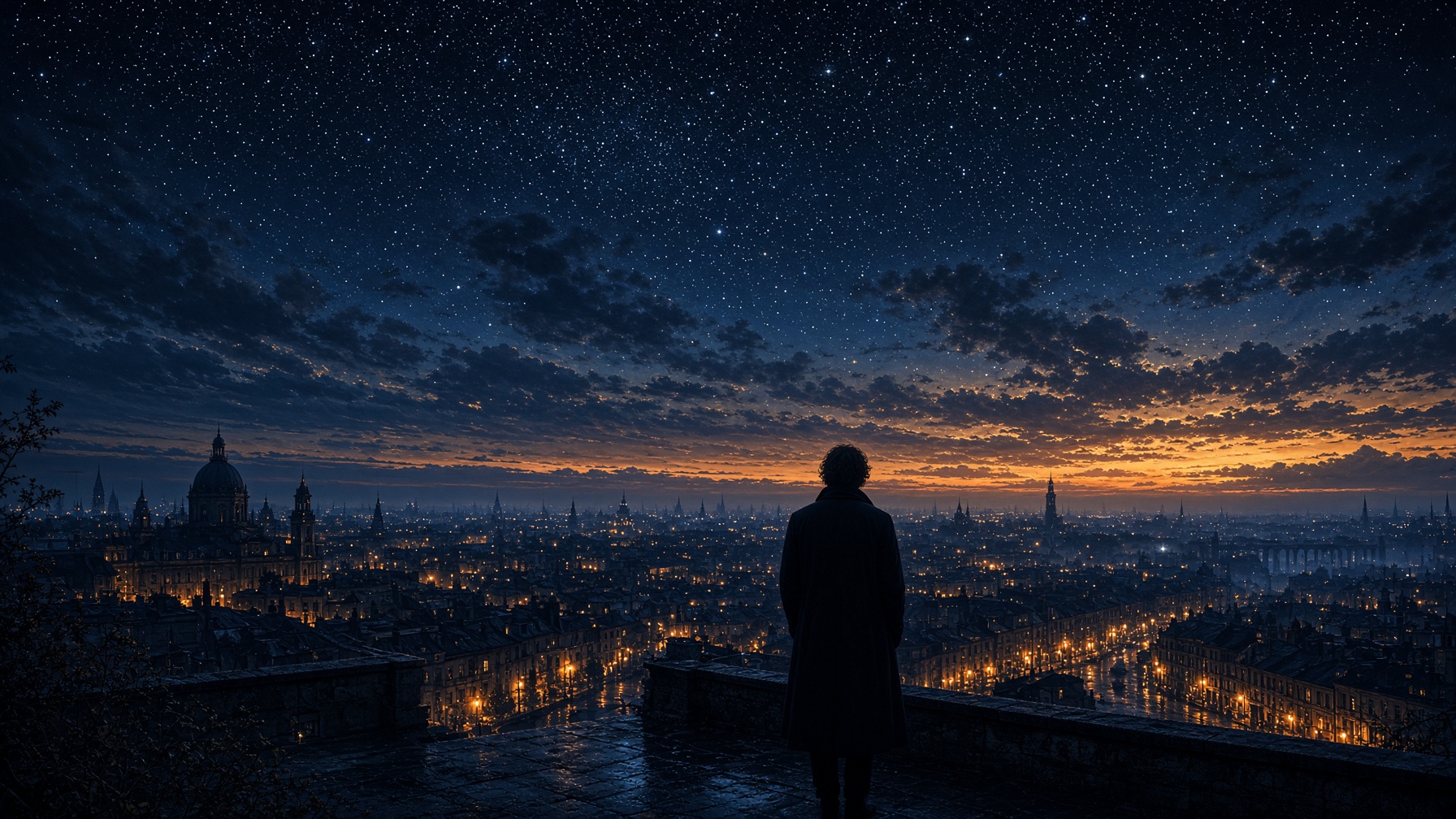
Filed beside the screening
The picture is The Night That Stayed.
Scenario
2:57 · 16:9
The clock on the wall passes the hour when morning should thin the window, and the glass stays black. The minute hand keeps its ordinary travel. The sky outside does not answer it. A man at the table turns a lamp down, expecting the room to be replaced by day. The dark does not give way. The bulb shrinks to a red point and still the window is night. He turns the lamp up again. The bulb is a small country. Outside, no bird begins, no cart answers the street. Night has simply remained. He sits with that fact while the clock takes another minute and the glass refuses it.
He sets a second cup on the table, an old hospitality, and then understands that no one is coming with the dawn to use it. The second cup is clean. He turns it once so the handle faces the door. No step arrives on the path. He puts the cup back in the cupboard. The gesture is plain, not tender for long. The shelf takes the cup among others that are also clean. He shuts the cupboard. The latch clicks and stays shut.
He opens the door to the yard. The air is cold and starless, the same full black as an hour ago, and the hour before that. Cold comes in across the sill and moves the edge of a paper on the table, then leaves the paper where it falls. A neighbor's window, usually lit at breakfast, stays a rectangle of nothing. He waits in the open door long enough for his breath to show and vanish. No light comes on in that rectangle. He shuts the door. The cold stays in the room after the door is shut, a second fact that follows the first: night did not leave, and now the kitchen holds a piece of it.
He sits. The lamp hums. He lays both hands around his own cup and does not empty it in a way that would finish a story. The tea, if it is tea, darkens nothing further. He only waits, and the waiting changes from a pause into the condition of the room. When he checks the clock, it has traveled into a morning the sky refuses. The minute hand passes a mark that should have been daylight and does not brighten the glass by doing so. The cupboard stays shut on the unused cup. The paper the cold moved lies a finger from where it was.
He turns the lamp down once more, not as a test he expects to pass, and the red point returns. The window does not thin around it. He turns the lamp up. The small country of the bulb is the same country. The clock takes the minutes a morning would take and spends them on black glass. His hands loosen on the cup and close again. The cupboard door does not open to restore the second cup to the table. No cart answers. No bird begins. The neighbor's rectangle stays a rectangle of nothing, and the cold that came in with the yard door lies along the floor and does not leave.
The second lamp on the sideboard stays unlit. The window holds the same black, and the cup cools between his hands.