The Marked Floor
Key art
Filed beside the screening
The picture is The Marked Floor.
Scenario
2:57 · 16:9
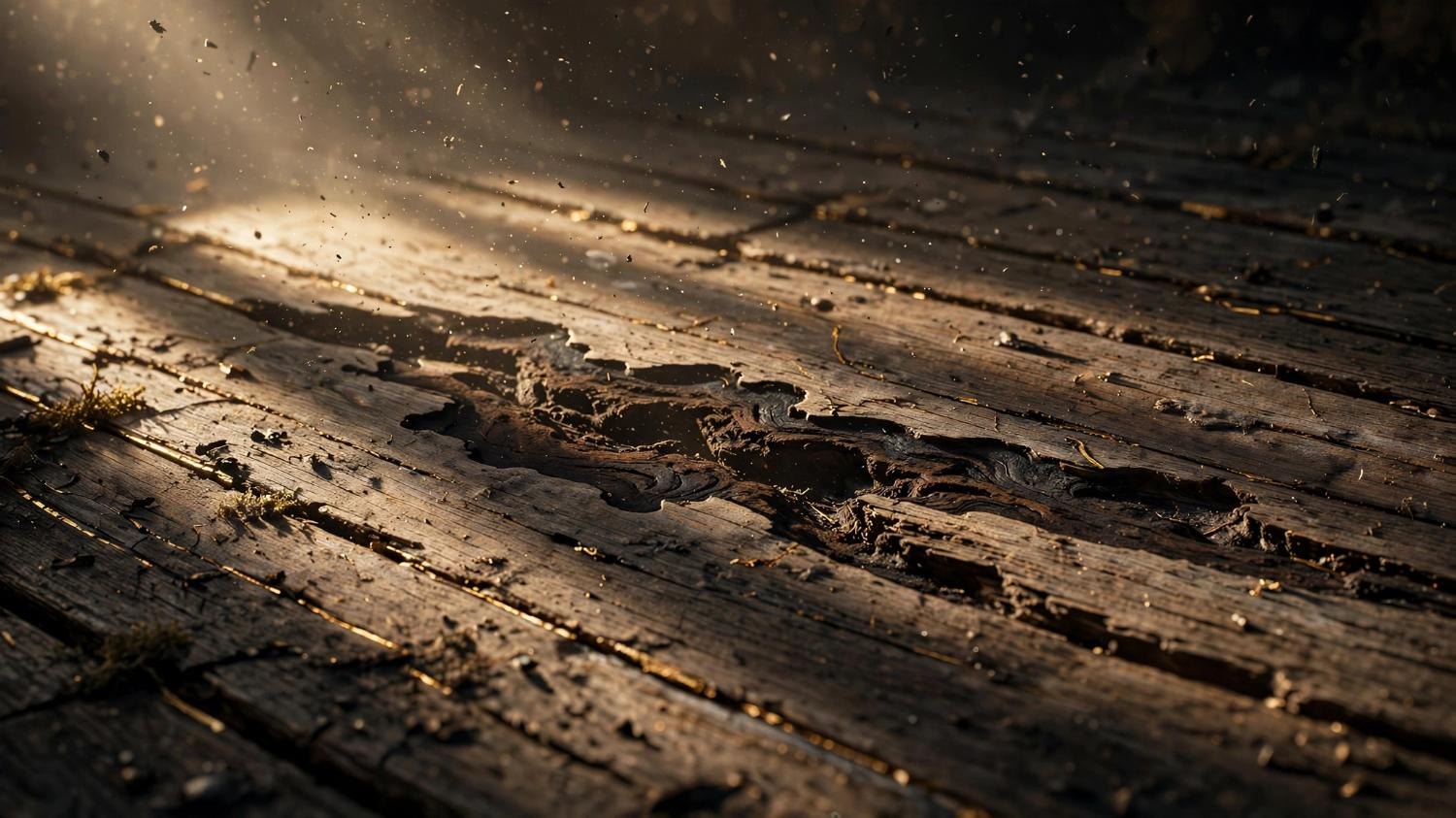
A dark mark sits in the floorboards where the room has grown crooked around it. Walls bow. The doorway leans. Dust hangs, then drifts, because the house is still enough to show the drift. A pane of glass is screwed over the mark at four corners. The screws are dull. The glass is clean enough to show the black in the wood and nothing else. Afternoon lies in a stripe across the boards and does not reach the mark.
A woman stands barefoot at the edge of the glass. Her toes stop where the darkness in the wood begins. She waits there. Dust settles on the tops of her feet and on the glass at the same rate. She kneels, works the screws free one by one, and sets each screw on the board beside her knee. The last screw sticks. She turns it until the threads complain and the pane loosens. She lifts the pane aside. The mark is not paint. It is a dent the shape of a step, worn blacker than the boards around it. The edges of the dent are smooth, as if many soles had used it and then stopped. She rests her fingers on the black wood and takes them back. No color comes off.
She steps across it.
The floor answers. A second dent opens under her sole, deeper than the first. Dust slides into the new hollow in a thin, steady pour and does not fill it. The walls ease outward by a hand's width so the house can hold the step. The doorway's lean eases with them, the same small distance, a change that follows the first and does not undo it. A pictureless nail in the bowed wall shifts with the easing and then holds. The glass on the boards cracks from corner to corner though nothing strikes it. The sound is short. The four screws jump once and lie still.
A hairline crack runs from the new dent toward the wall and stops at the baseboard, as if the house has finished growing for the moment. A second hairline leaves the first dent and travels the other way. It stops at the opposite baseboard and does not climb. Dust keeps moving. It finds both cracks, enters them, and leaves a pale thread that does not thicken further. The stripe of afternoon now falls a little farther into the room, because the walls have given it the extra width.
She draws her foot back. The second dent does not close. Her sole is dark at the ball and pale at the heel. She does not step in again. She stays kneeling at the edge, hands on her knees, and the house does not ask for another step. Both dents remain. The cracked pane stays on the boards, the break a bright line across the old mark. The walls hold the extra width. The doorway holds its corrected lean and does not return to the crook it had.
Dust keeps a thin river across the two dents, and the crooked room holds the size it has just taken.