The Afternoon That Stayed
Key art
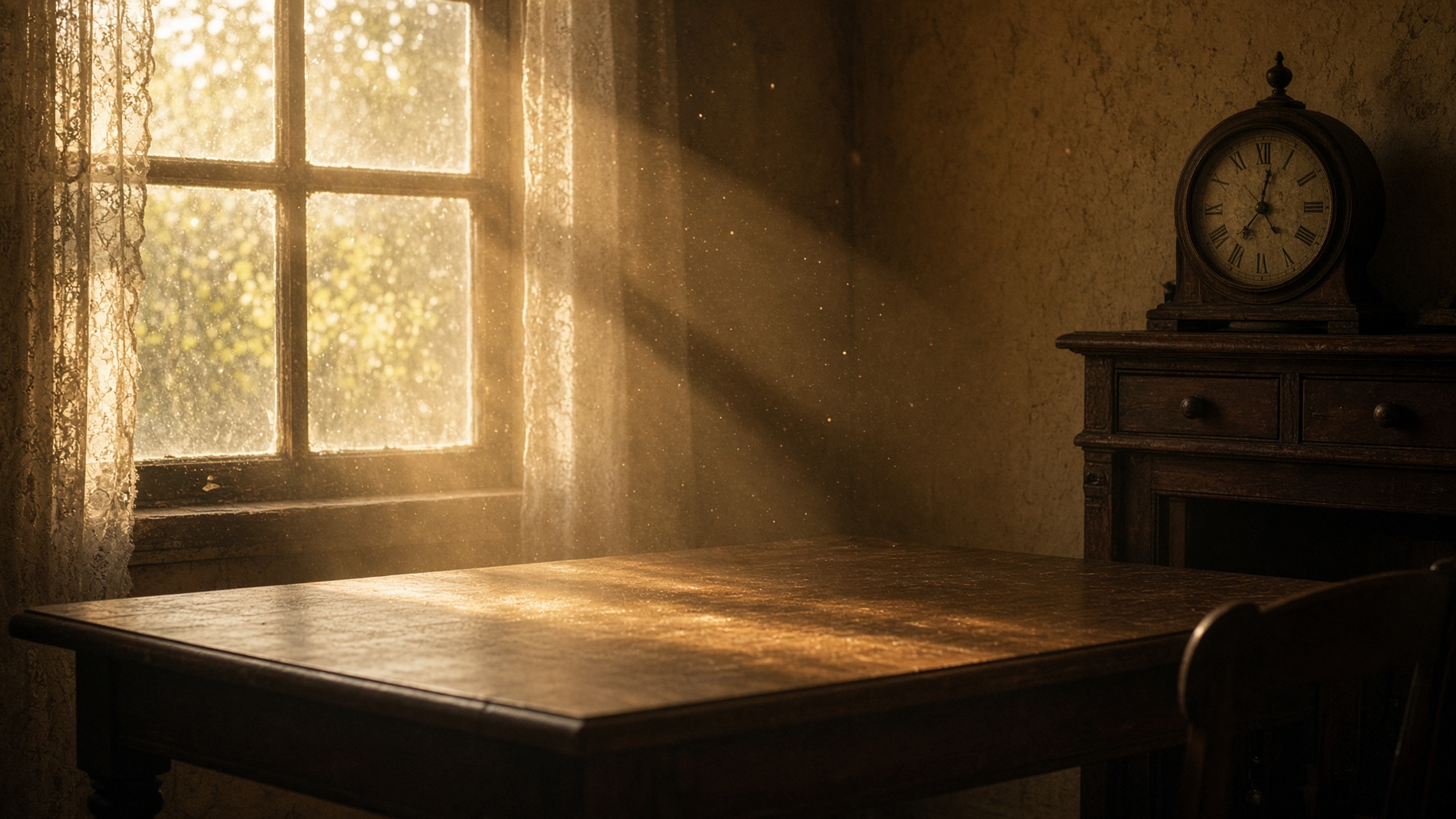
Filed beside the screening
The picture is The Afternoon That Stayed.
Scenario
2:57 · 16:9
Silas Reed tunes a piano in a house that no longer hosts concerts. The lid is up. His fork and his wrench are laid on the felt. Afternoon comes in as a gold bar across the floorboards and stops there, in no hurry to become evening. He plays one string, listens, and plays it again. The pitch is a small living thing. He is used to hearing linger in these instruments, the way a note refuses to die on schedule. Today he turns the same ear toward the daylight.
The room holds stacked chairs and a bench pulled out only far enough for his work. Dust lies along the fallboard. The gold on the floor has a hard edge where the window's shadow ends, and that edge does not creep. He tightens the pin a fraction, strikes the string, and waits for the beat against the fork. The beat slows. Minutes pass as that slowing and as the gold refusing to lengthen. No one comes to the door to ask for a song. He does not arrange music on the rack. The rack is empty.
He tightens the string until it sits where he wants it, then stops with the wrench still fitted. The gold on the floor has a tone of its own, a steady warmth without a melody he is obliged to chase. Waiting, in this room, is his work, not a delay before an audience arrives. He does not arrange the bench for a player who is not coming. He sits on it sideways, wrench in his lap, and listens to the room hold the note he just made.
The string decays. The light does not. He lifts the wrench off the pin so he will not fidget the tuning out of truth. Dust moves slowly in the gold. Somewhere in the house a clock marks an hour that the afternoon declines to obey. After the decay should be silence, the same string sounds once, faint, with no hand on it and no hammer he can see lifted. The sound is shorter than a note he would accept in a tuning, and it dies cleanly. He does not put the wrench back. The gold does not brighten to match the sound. It keeps the brightness it had.
The open piano holds the last tuned string in silence. The gold remains on the floorboards, and Silas stays seated inside the hour that would not move on. The fork on the felt does not ring again. Dust in the gold settles the rest of the way, and the hard edge of the light stays where the afternoon put it.
The house beyond the music room offers one more tick of the clock and then a long quiet. Silas does not go to the clock to correct it. The string he woke by accident stays quiet after that single faint voice. The bench holds him sideways. The open lid shows the tuned pin and the pins he did not touch, and the gold on the boards refuses to become evening while he is still sitting in it.