Portrait of a Quiet Life
Key art
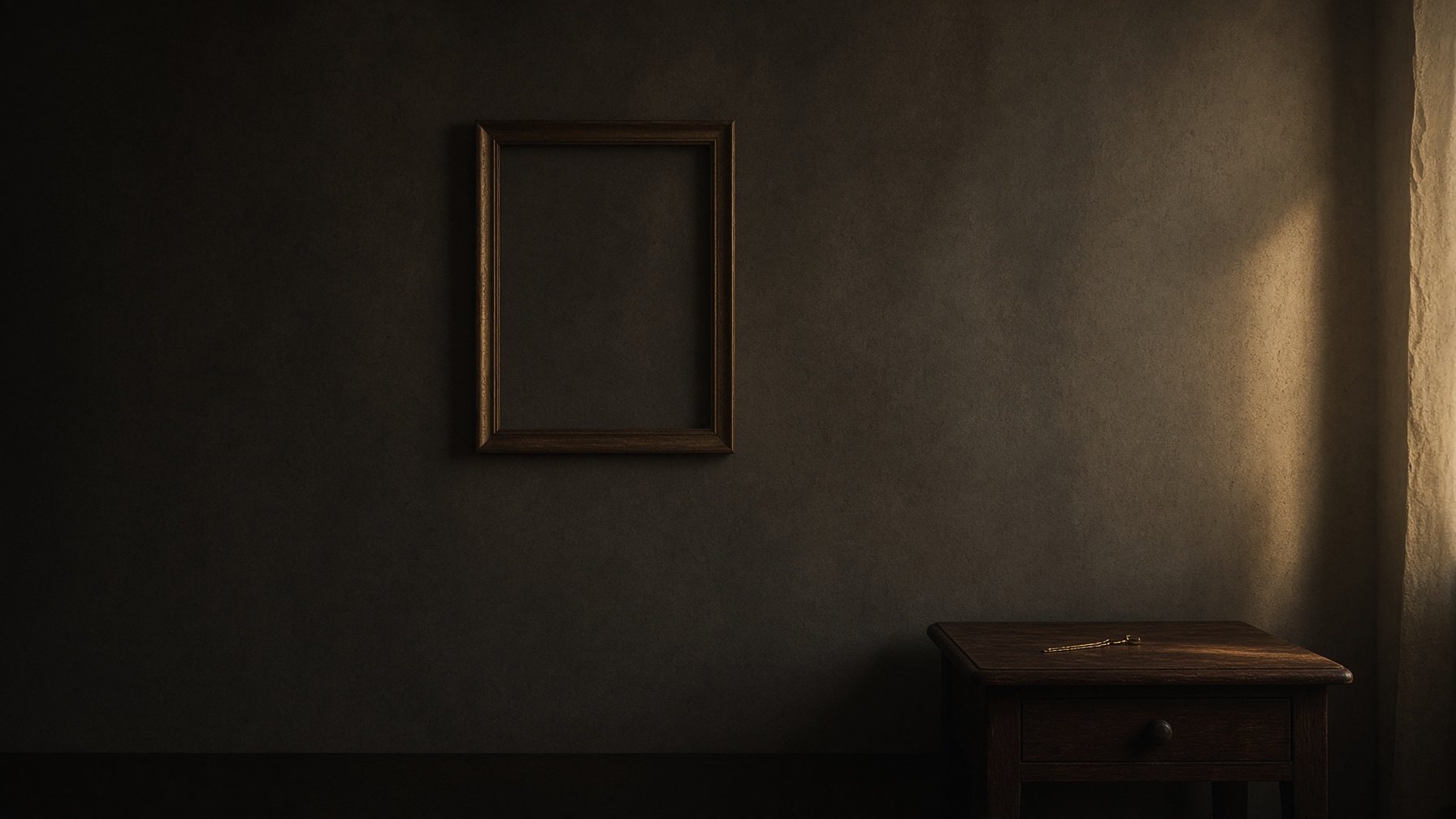
Filed beside the screening
The picture is Portrait of a Quiet Life.
Scenario
2:57 · 16:9
Elowen Hart paints a face that refuses to become a symbol. The sitter, a man in a mended sweater, occupies a chair and has occupied it long enough for the light to move from his left cheek to his collar. The mend in the sweater is a different brown from the yarn. He does not offer a tale. She does not ask for one. She knows how long a person can sit without turning into a story. The likeness on the board is only a likeness: pores, a tired mouth, an ear that sticks out more than vanity would allow. Paint goes down in small touches. On the wall a small picture hangs, unspectacular, not a clue and not a life waiting to hatch into plot. Its glass is dusty at the corners. Neither of them looks at it for meaning.
Halfway through the sitting he clears his throat, as if a confession might make the hour worth the fee. The sound is small. She lifts her brush and waits. The bristles do not touch the board. He lets the impulse pass and settles his hands again. The hands return to the same fold. She returns to the ordinary mouth. That is the change: the almost-story is declined by both of them, and the portrait stays a face. She mixes a duller red. The red is for the tired mouth and not for an emblem. It goes on the board as color and stays color. He does not clear his throat a second time.
When the time is done she sets the brush down. The handle ticks the jar. He stands and looks at the wet paint without asking what it means. It means his face, today, and nothing he will be asked to explain. He takes his coat from the hook and does not put a story into the sleeves. The chair holds the warmth and then only the shape. He leaves. The door closes at an ordinary speed. She does not call him back to invent a title.
The portrait dries as an unpromoted likeness. The duller red sinks into the mouth and does not become a sign. The small picture on the wall keeps its own quiet image, dust in its corners undisturbed. The chair holds the shape of a man who has gone back to his afternoon. Elowen wipes a thumb on a rag and does not sign the board with a name larger than the sitting. Light leaves the collar's place on the empty chair. The room keeps a face that agreed to be only a face, and the mended sweater is out in the day with the man who declined to explain it.
The brush stays down. The wet paint stays wet a while longer and does not rearrange itself into an emblem. No one reenters to ask the mouth for the sentence it almost hosted. The small picture stays small. The chair stays empty of a tale, and the board keeps pores, an ear, and a tired mouth in the order the hour actually had.