Page Torn From the World
Key art
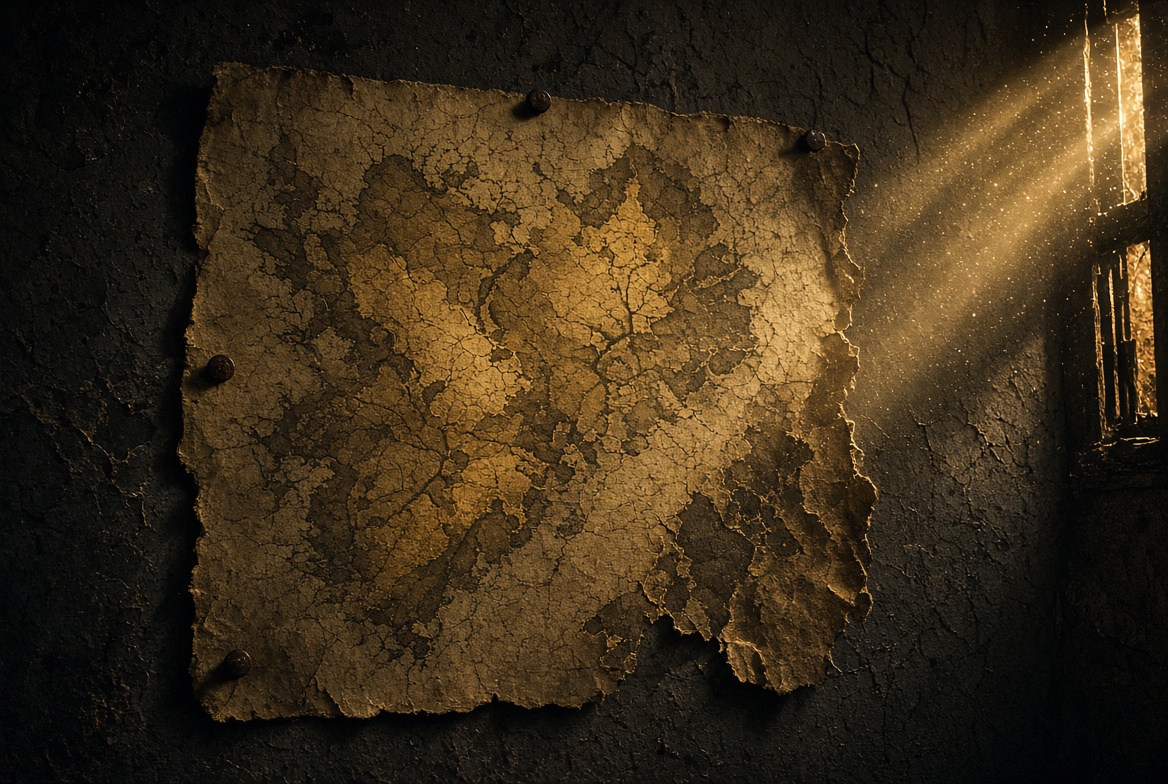
Filed beside the screening
The picture is Page Torn From the World.
Scenario
2:57 · 16:9
Blythe Orr mends books at a bench lit by a plain lamp. Thread, paste, and a bone folder sit in a row. The thread is already waxed. In her hands is a single page torn loose, print running to a ragged edge, the reverse still holding the deep crease of another volume. The crease is sharp enough to prove a gutter it no longer lives in. She does not have the world the page came from, and she does not invent one. She turns the page once, stair and bell on one side, the deep crease on the other, and turns it back.
She opens the book whose spine matches the crease's width. The cover boards agree with the bend. The signatures are tight. Where this page would have sat, the neighboring leaves talk about a harbor and a toll. The torn page talks about a stair and a bell. They do not continue each other. She reads both without supplying a sentence between them. She tries the page against the gutter anyway. The crease fits the bend. The paper seats as if it had been sewn there. The sentences refuse the join. Harbor stops. Stair starts. Nothing in the type crosses the gap. A toll and a bell do not become the same sound.
Her needle is threaded for the repair. The thread hangs. She sets the needle down. Completing the book would mean writing a bridge the paper does not own. She does not write one in the margin. She closes the harbor book, mended everywhere except at this absence, and lays the torn page beside it, crease up, still bent from the life it left. The bend does not relax. Paste skins over in its pot. A dull skin takes the surface. The lamp stays on the crease. The crease throws a small shadow that matches the book's closed spine and still does not make them one volume.
The torn page lies beside the closed book, its crease matched to a volume that does not continue it. Blythe's hands leave both. The needle stays threaded and unused. The bone folder stays in its place in the row. The lamp does not get moved to flatter the join. Harbor and toll remain inside the closed boards. Stair and bell remain outside them. The bench keeps the refusal as a physical fact: a fit of crease and a failure of sentences, side by side, with the paste already skinning over because the repair has stopped.
She does not open the book again to try a different signature. The ragged edge does not smooth itself. The lamp burns level on the crease. The page keeps the bend of a gutter it cannot reenter, and the closed book keeps a harbor that will not grow a stair to meet it.
The skinned paste does not get stirred back to use. Thread on the unused needle hangs still. Blythe stays at the bench with both objects in the lamp and does not force the stair to pay the toll.