Map of Absence
Key art
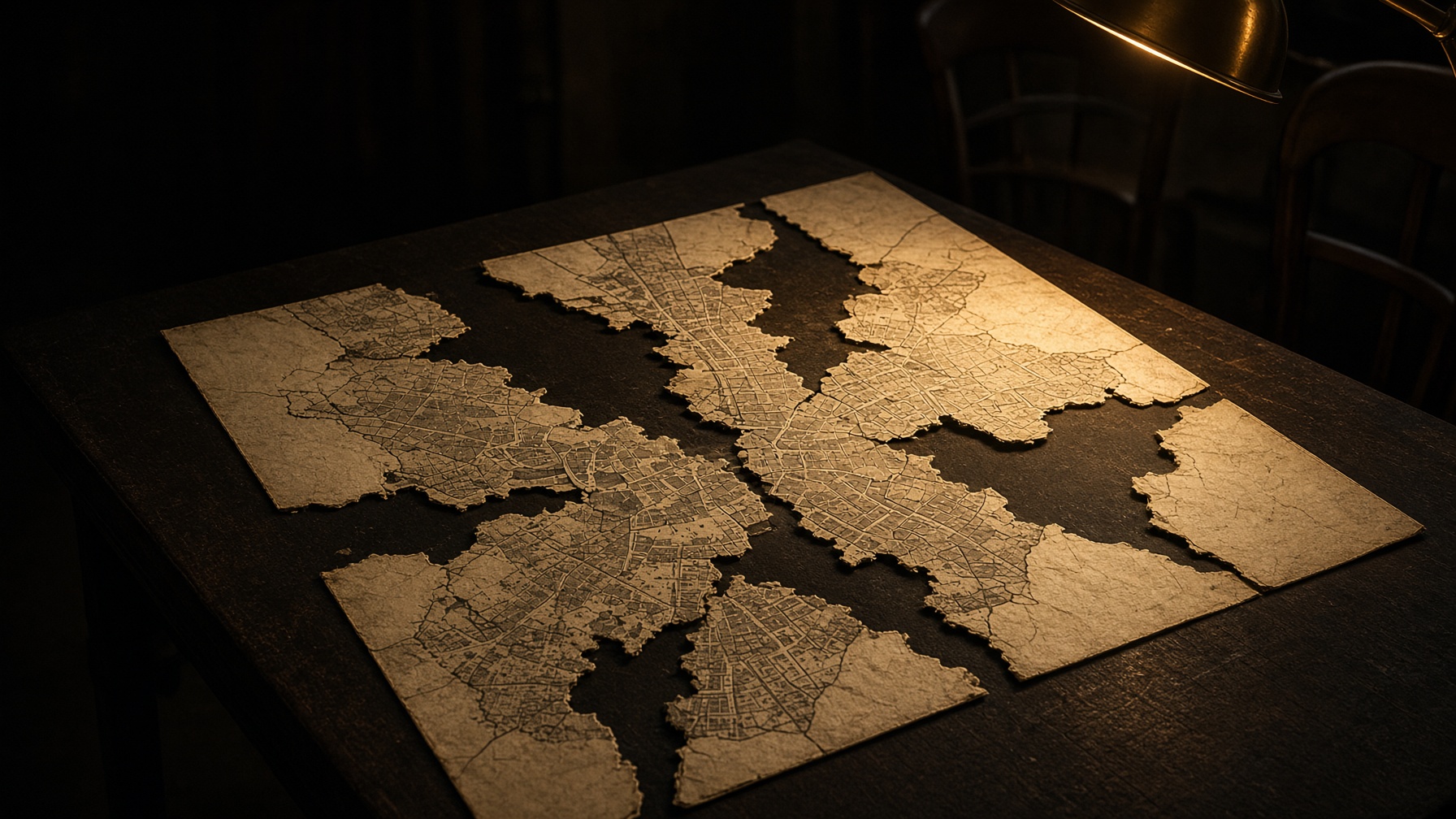
Filed beside the screening
The picture is Map of Absence.
Scenario
2:57 · 16:9
Lorne Kade works over a broad sheet that used to be weather for an office: streets as lines, corners as decisions. The office believed paper could stand in for a district. The sheet on his table now keeps the gaps and has dropped the labels. Where names were, the paper is blank in street-shaped gaps. The blanks are cleaner than erasure. They look never written. A crease runs through one of the blanks, bright where the fiber tired. Daylight from a high window lies across the crease and makes it a pale ridge.
He dips a pen. Habit wants a legend in the corner, a kindness of color and key so the white can be forgiven. The legend box is ruled and empty. He letters the start of a street name he used to know. The ink looks false against the gap, a claim the ground will not support. The letters sit too dark. He blots it until the letters are gone and the blank is blank again. The blotter takes the name and he does not read it back off the blotter. He turns that scrap face down.
He inks only the lines of what can still be walked, and he leaves the missing street as an edge with no word beside it. Filling it would make the sheet kinder than the district. He does not. His ruler holds the gap open and straight. The metal edge throws a thin shadow into the blank and the shadow is not a label. He lifts the ruler. The gap does not close. He sets the ruler back, same place, same width.
He sets the pen down. The nib ticks the tray. The crease ticks as the paper cools and settles. A corner of the sheet lifts and he weights it with the pen tray, not with a word. The unnamed gap keeps the width of a street, and the legend box in the corner stays empty. No color enters the box. No key explains the white. Lorne's hands leave the sheet. The lines of the walkable streets dry. The blank stays a blank with a bright crease through it, and the drafting room keeps the map honest by keeping the missing street unnamed.
The high window's light moves off the crease and the fiber stays bright anyway. He does not dip the pen again. The blotter with the refused name stays face down. The ruler keeps the gap's width for as long as he leaves it there, and he leaves it there. The sheet does not grow a label in the quiet after his hand stops.
Lorne aligns the pen with the ruler and then moves the pen an inch away, so the blank cannot be mistaken for a tool left as a label. The street-shaped gap keeps its clean fiber. Walkable lines around it are dry enough to touch, and he does not touch them. The face-down blotter stays face down. No one from the old office comes in to ask for the kindness of a name. The high window goes a shade duller. The crease stays bright. The legend box stays a ruled emptiness, and the sheet remains a sheet that will not forgive the district by filling it.