Grief Without Audience
Key art
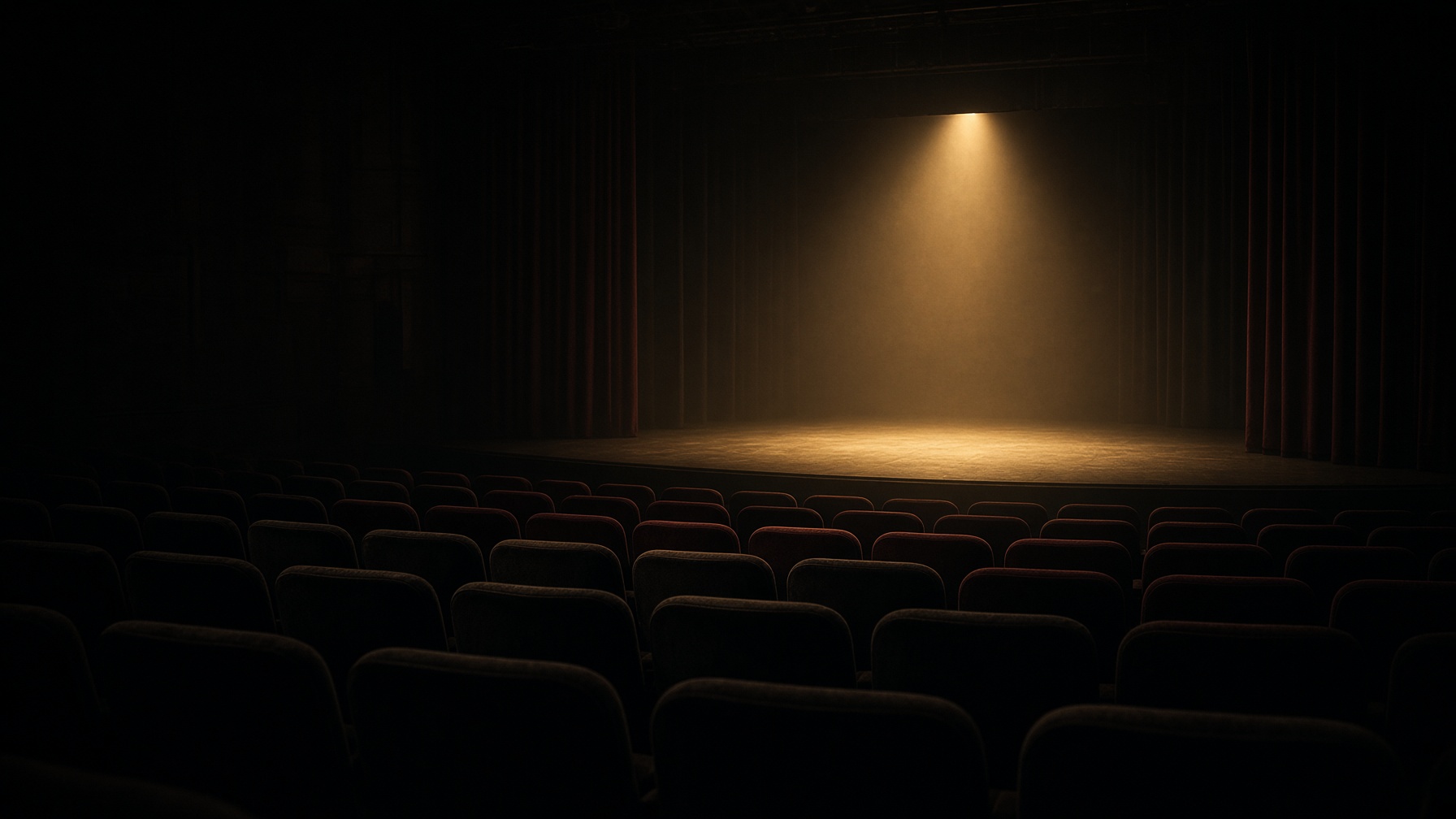
Filed beside the screening
The picture is Grief Without Audience.
Scenario
2:57 · 16:9
Calla Mire stands in a room that used to mean two people. She has a drain map unfolded on the table, the work she can still do exactly, and she looks lost anyway. The furniture is what remains when there is nowhere for speech to go. Afternoon lies flat on the wood. A clock on the shelf has stopped, and she does not wind it. She touches the back of a second chair, pulled out as if a toast might still be made, and aligns it to the table with a surveyor's care. The legs meet the same worn spots. She checks the alignment once more with two fingers along the seat rail and leaves the chair where a body would fit.
She sits in her own chair and tries to mark a junction on the map. The pencil stops. Graphite hovers over a crossing of lines and does not land. The second place setting is a plate, a folded napkin, a spoon. She studies them the way she studies grates and slopes. The plate is clean. The spoon's bowl faces the empty chair. The napkin's fold is exact and a little tired at the edge. She does not speak to any of it. The pencil rolls a fraction when she sets it down, and she stops it with one finger before it can reach the plate. Then she rises and moves the second chair. The first position, close to the table, no longer fits a body that will not arrive. She turns the chair to face the wall, a small, exact correction, and the legs leave pale tracks that end square to the baseboard. She puts the plate and the spoon away in a cupboard. The door shuts. The shelf takes their weight and goes still. The napkin she leaves, folded, because she cannot yet decide its category. It sits where the plate was, smaller than the circle of clean wood around it.
She returns to the map. Her hand is steady. She finishes the junction she could not finish while the chair implied a guest. The pencil line meets, dark and complete. She blows the loose graphite away and it does not drift far. A corner of the map, free of the plate, lifts once in the room's small air and lies down again. The cupboard door ticks as the wood settles, and the tick does not repeat. On the wall the chair's top rail makes a soft sound against the baseboard and stays. The room is quieter in a practical way, not a ceremonial one.
The second chair stays facing the wall. Its back is a plain shape and nothing leans on it. The drain map lies open on the bare table, the new junction dry, the stopped clock still stopped above it. The folded napkin remains the last thing set for two, and Calla's pencil rests beside the finished line without starting another mark.