Grey District
Key art
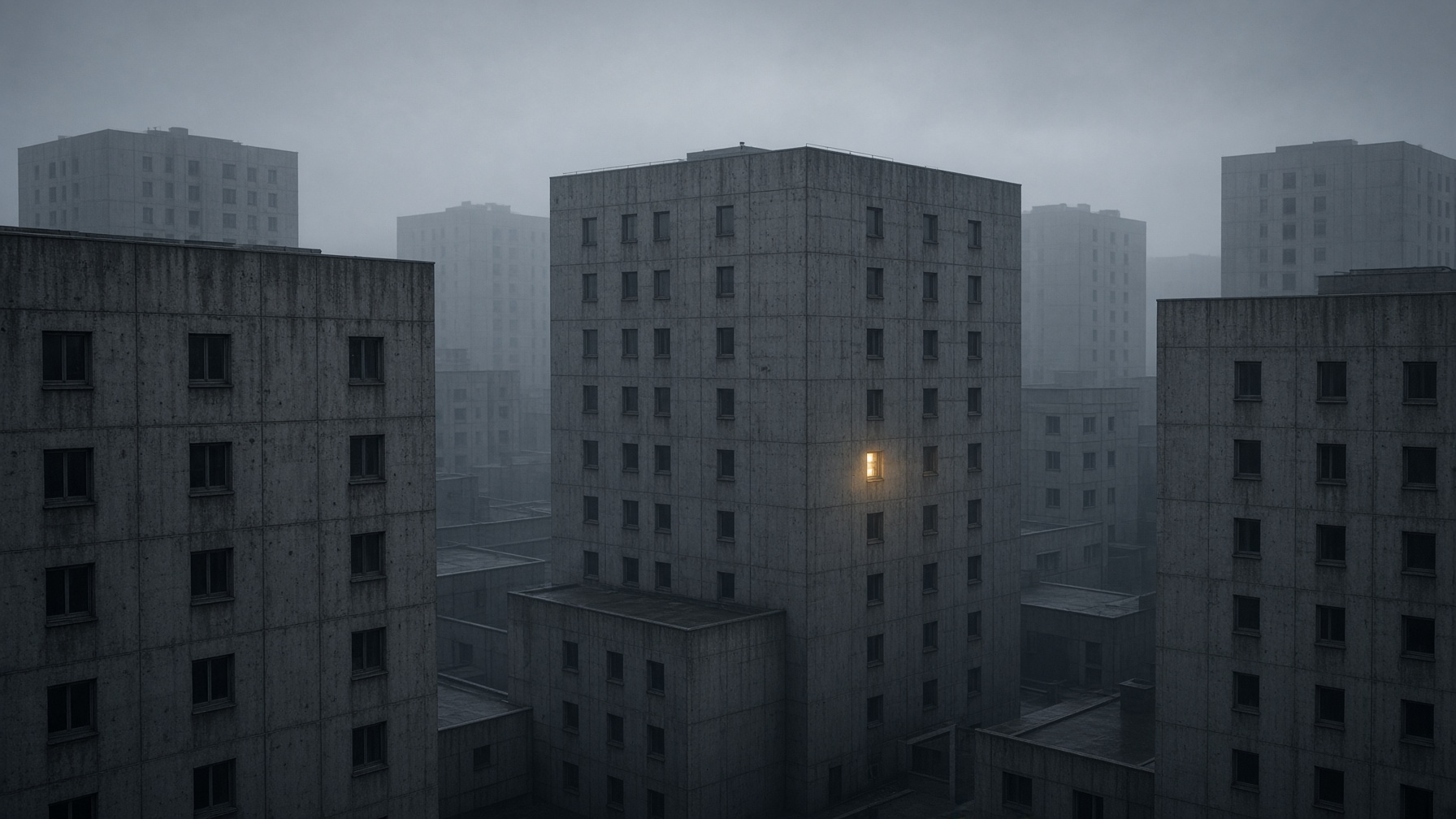
Filed beside the screening
The picture is Grey District.
Scenario
2:57 · 16:9
A room in a grey block holds a table, two chairs, and a window the color of tin. The paint on the sill is the same grey as the air outside. Nothing hangs on the walls. A woman and a man come in and set down nothing. Their hands open at their sides and stay empty. They move a chair. The chair slides back to its old mark before they sit, legs finding four pale scars in the floor. They turn a cup. The cup turns itself rim-out again, the way it was, a slow correction that finishes without a hand on it. They wait to see if it will turn a second time. It does not. The handle ends where it began.
They sit. The room goes still, and the stillness has a cost no one names: dust does not stir, and the window does not tick with rain. The tin light does not change its shade. Their breath does not fog the glass. Dust lies in rings on the table for two cups. A third ring is there too, smaller, older, the dust higher at its rim as if it has been keeping a place through more than one stillness. The woman looks at the third ring. The man looks at his own hands and then at the same ring.
A third cup fades up inside that ring. Neither of them brought it. It is dry and chipped, and it matches the ring exactly. The chip faces the woman. The fade is not sudden. The clay thickens out of the air until the chip is solid enough to throw a small shadow. She reaches and stops with her fingers above the chip. The man looks at the window. The grey outside does not offer a name for the extra cup. Her fingers hover. A grain of dust on the chip does not fall. She draws the hand back to her own cup and does not turn that one either. The third cup's shadow stays on the table after her hand is gone.
They do not drink. They do not move the third chair that is now under the window, its legs in four old dents. The dents are deeper than the scars under their own chairs. The third chair faces the table and holds no coat, no hat, no weight. The first two chairs hold them. The third holds no one. A floorboard under the third chair gives a small tick and goes quiet, as if it had accepted a sitter and then found the seat empty. The tick does not come again. The man's shoe shifts and he sets it back where it was.
The chipped cup stays in its ring. The chip does not lengthen. The two of them stay seated, coats unbuttoned and then left that way, with nothing poured. Their own cups remain rim-out and dry. The window keeps its tin color. The room keeps the third place ready, and neither hand takes it. Dust holds all three rings in the same still air, the smallest one no less exact than the two they might have claimed.