Fall of the Ordinary Man
Key art
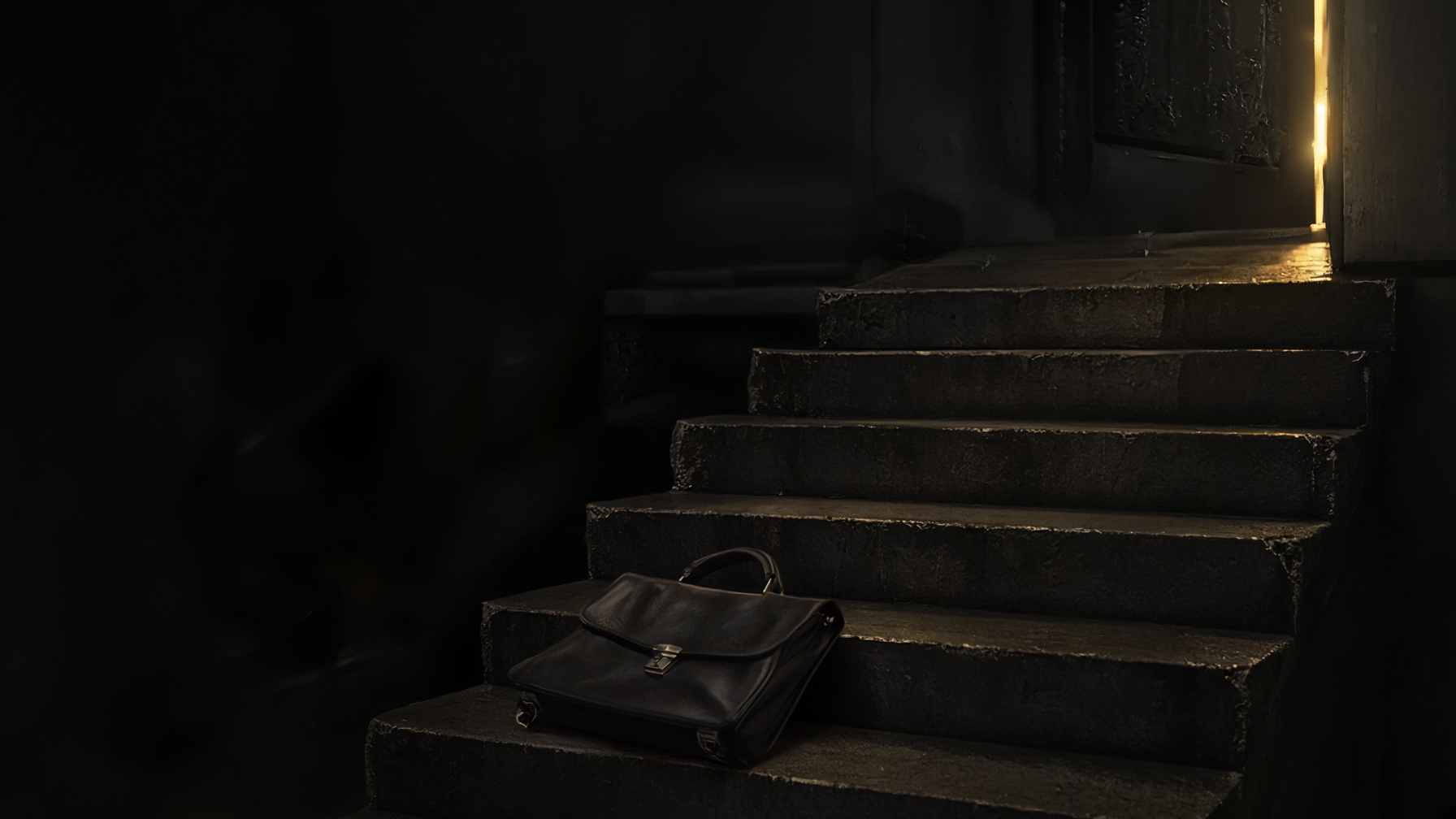
Filed beside the screening
The picture is Fall of the Ordinary Man.
Scenario
2:57 · 16:9
Alden Pike comes down the steps of a building where his days have repeated themselves into a shape that looked permanent. A badge on a lanyard rests against his shirt. In his pocket, a key. He has used both so often they seemed like weather. At the bottom step he turns, from habit, and holds the badge to the reader by the door. The reader does not answer. No click, no light. He tries again, slower, the badge flat to the plate. The door stays shut. No one inside performs a cruelty. The glass only shows an ordinary hall he is no longer called to enter, a desk, a plant, a light left on for people who still belong to the hours.
He walks to the small cafe table where he has set a cup most mornings. Today the chair is stacked, and the table has been pulled in against the shutter. The metal top is bare and cold. He sets the key on it anyway, because the inventory of the life is still in his hands: work, key, table, pavement. The key ticks once and lies still. A server, inside, shakes her head once, not unkind, and does not come out. The shutter stays down. Alden leaves the key. The badge follows it, the lanyard coiled so it will not blow into the street. The coil holds. He takes his hand away.
The reader by the door stays dark. Alden does not try the badge a third time, because the badge is already on the table. A pedestrian passes with a paper bag and does not look at the key. The shutter of the cafe gives a small tick as the wind tests it and remains shut. Inside, the server moves once behind the glass, a shape with a cloth in hand, and does not come to the door to return what he set down. The plant in the hall keeps its place under the light left on for other people. Morning traffic continues as if the steps had always ended in a shut door. His empty pocket, where the key lived, folds flat against his leg.
He stands on the pavement with his arms at his sides. Buses pass. Their wind moves his coat and does not move the key. The building keeps its hours without him. The table, the key, and the badge remain where repetition used to be. Time passes as a bus reflection crosses the door glass and the hall inside does not change. The lanyard loosens one loop in a later breeze and stops short of the street, the badge sliding until its edge touches the key. He does not bend to take them back. The ordinary objects stay in the morning shadow, touching, and the door above the steps does not reopen.
The key stays in his pocket while the building goes on without him.