Cycle of the Sixth Moon
Key art
Filed beside the screening
The picture is Cycle of the Sixth Moon.
Scenario
2:57 · 16:9
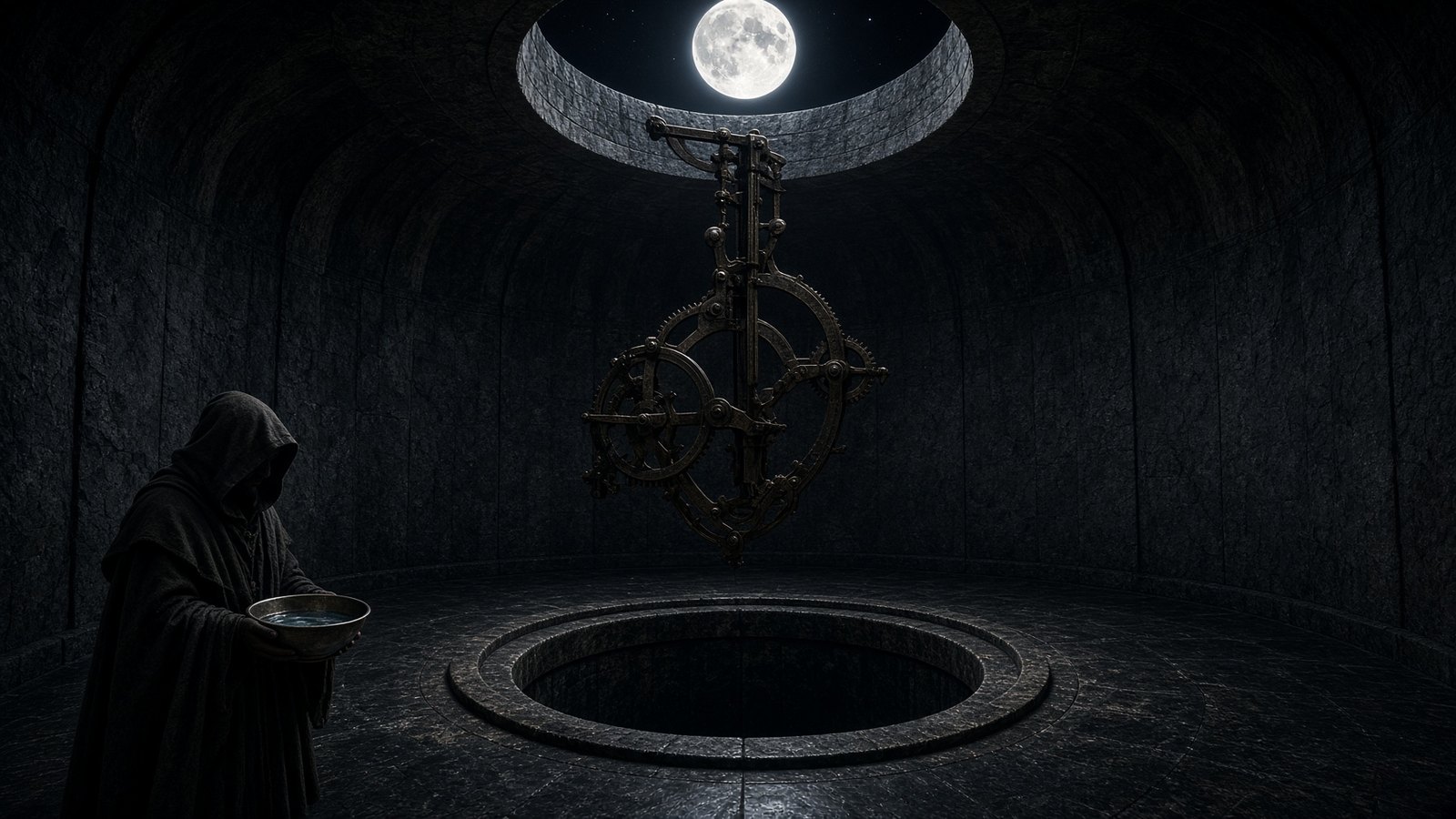
A stone pit opens under a roofless tower. The pale moon is already up, full enough to silver the rim and not new in any way that would matter. Nothing about it is a first. Orrin Vale stands at the edge in a wool robe, face in shadow, a pewter bowl of clear water in both hands. He does not look up. Salt lines and water lines inside the bowl record nights that have already repeated. The bowl is full. Five marks are dry, pale rings above the water, each one a night that did not alter the next. A sixth night will not improve them. His thumbs stay on the rim and do not wipe the salt away.
A clockwork arm turns above the pit because turning is what it was built to do. Gears tick in a measured poverty of sound. One drop falls from the iron onto dry stone and does not become a bell. The drop darkens the stone and begins, at once, to fail. The arm travels its arc and does not arrive at any stop that would change the moon. When the pass ends, the water in the bowl has not rippled. No ring runs to the pewter wall. Orrin does not tilt his face to see whether the sky agreed to be different. It did not. The moon stays where it was, pale over the open tower, unconsulted.
He sets the bowl on the stone where it was set before. The set-down makes a small kiss of metal and is done. The new pass is over. The moon is the same moon. The salt lines have not grown kinder or fewer. The arm slows and keeps the shape of another turn it has not begun. Gears tick farther apart. Time passes as the single drop on the pit stone loses its dark from the outside in.
He does not tilt the bowl to invite a change. Salt crust at the rim stays crust. The drop on the pit stone shrinks as it dries and leaves a faint sixth speck that is not one of the five marks inside the pewter. Orrin does not count it into the bowl, and he does not scrape it away. The moon, if he looked, would still be the moon he refused to check.
The dark shrinks to a speck and the speck dries into a faint mark on the stone, a sixth note that the bowl does not receive and the arm does not strike. The water in the pewter stays level. Orrin does not add the speck to the salt lines. The pewter bowl sits full on the stone. The moon has not changed. The arm's pass is already over, and the next turn remains only a shape the gears have not agreed to start.
The speck on the stone dries where the bowl refused it.