Crown of Fog
Key art
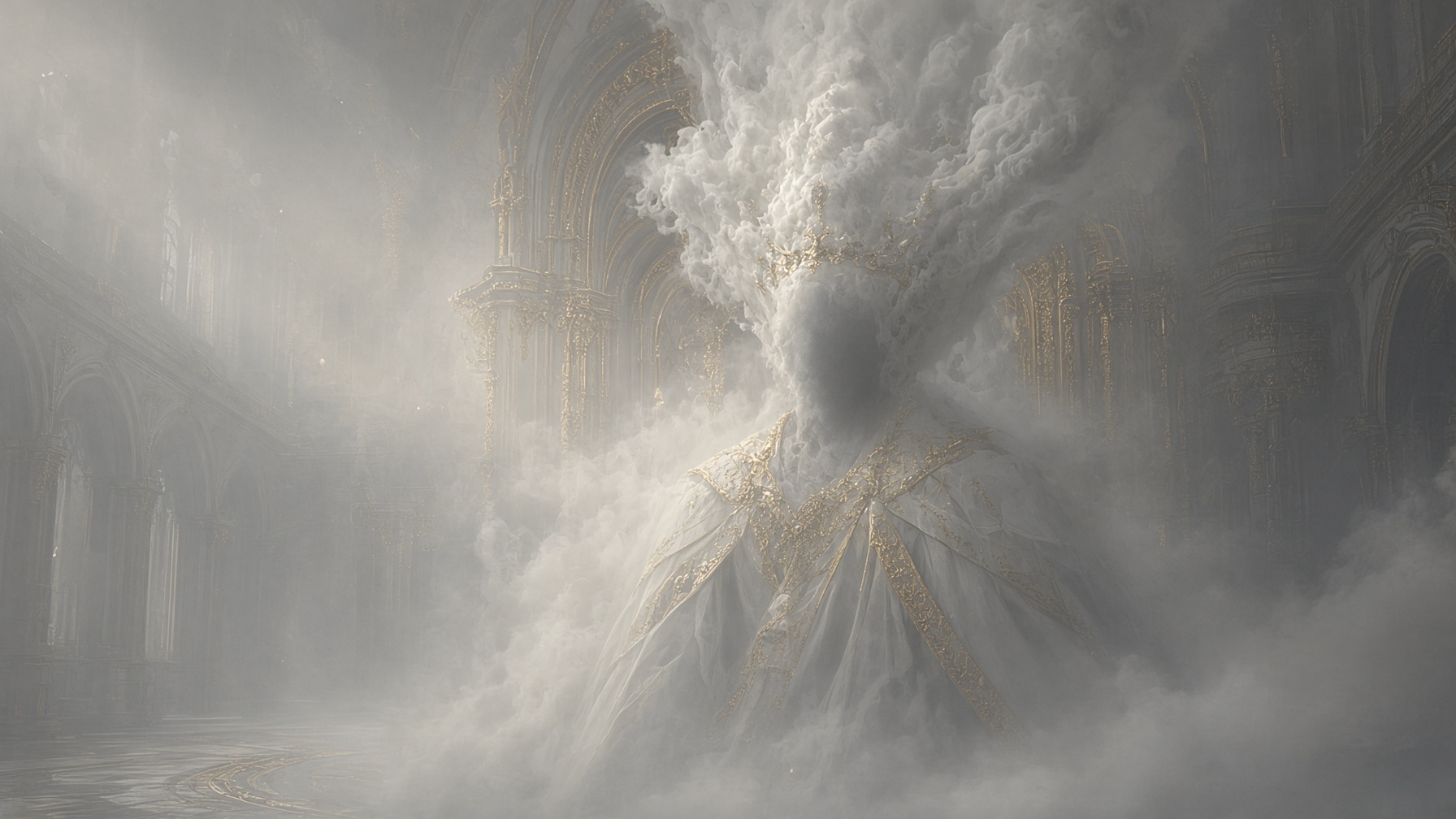
Filed beside the screening
The picture is Crown of Fog.
Scenario
2:57 · 16:9
A figure stands on a balcony with a crown of fog where a face should be. The mist holds a head's shape and refuses every feature. No eye resolves. No mouth opens. Below, subjects in work clothes face the silhouette. They bow when it turns, not because a mouth gave an order, but because the outline is what rule has become. Tools stay in their hands, idle. A clerk with a slate waits for a decision about the gate. The chalk on the slate is fresh. The gate itself is iron and clear, swung open on its hinge, a gap a cart could use.
The figure lifts one hand. The edge of the sleeve is soft, and that softness reaches the courtyard as a pressure, a change in the air that moves hems and does not become wind. The gate begins to close. No one can name a nod. The iron travels slowly, sure of the latch it has not met. The clerk writes a line, hesitates, and cannot name who decided. The chalk stops mid-word. He looks up. The fog shifts. For a moment a profile almost forms, a nose, a brow, then frays, and the almost-face is worse than none. The subjects who had begun to lift their eyes bow again. The gate meets the latch with a hard sound that the soft crown somehow sharpened.
A woman near the gate puts her palm on the iron, asking with the gesture to keep it open a little longer. The metal is cold. Her fingers spread. The silhouette does not answer in words. The lifted hand on the balcony does not wave her off and does not invite her through. The latch drops the rest of the way. She takes her hand back. A print of warmth fades on the iron. The subjects remain bowed to a ruler they could not pick out of a line of people.
Dust lifted by the closing gate settles back onto the steps in a thin skin. The woman's cooled palm print is gone. A work cloth hanging on a peg turns once and hangs straight. No one crosses the shut iron. The balcony figure's sleeve lowers at last, the softness going out of the courtyard air, and the bows do not rise with it.
The fog crown holds its shape without a face. Time passes as the hard sound of the latch leaves the stone and the courtyard stays quiet enough to hear a rope somewhere tapping. The line on the clerk's slate, unfinished, loses its last chalk stroke to a smear of his own cuff, so the record of the order is shorter than the order was. He does not rewrite it. The closed gate shows no seam a hand could use. The courtyard stays bowed a moment longer than courtesy requires, and the fog on the balcony keeps the shape of a head that will not become a person.