Chronicle of Small Ends
Key art
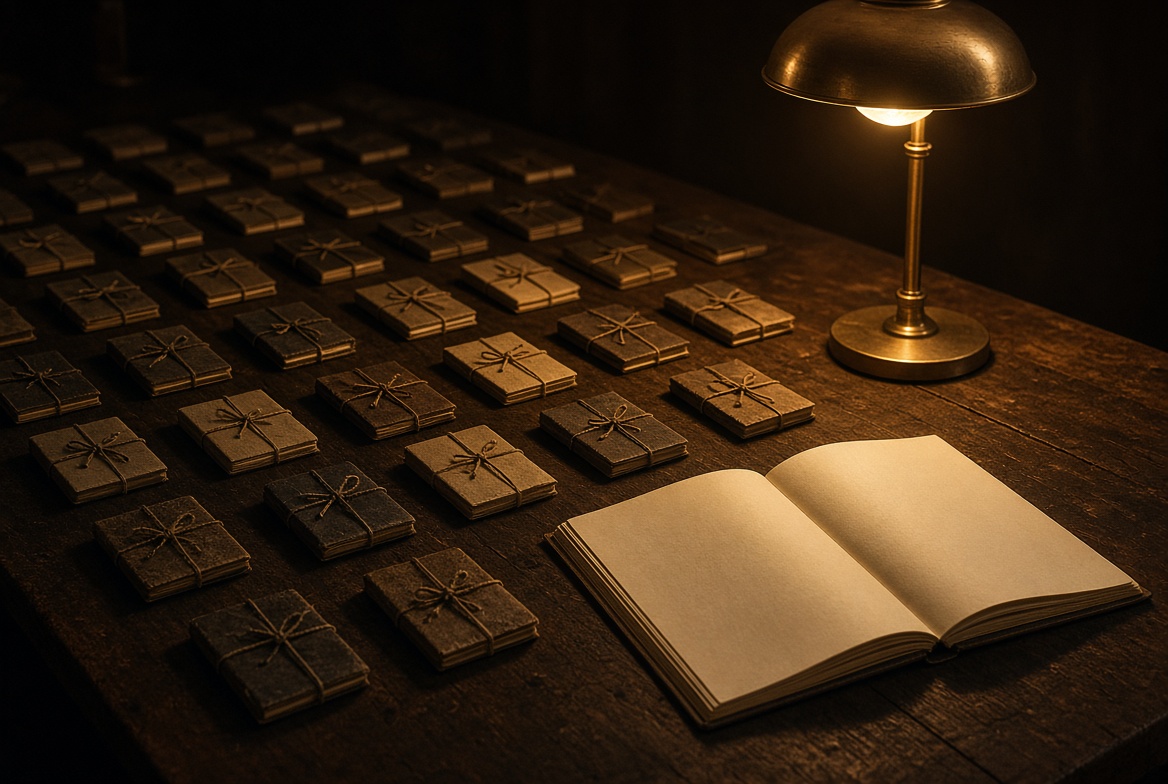
Filed beside the screening
The picture is Chronicle of Small Ends.
Scenario
2:57 · 16:9
Niles Arden writes endings too small for a monument. The logbook takes them one to a line, the paper thick, the ruling pale. A bakery key returned to a hook. A ferry whistle that did not sound at dusk. A stair lamp that was not replaced, noted without grief's enlarging voice. The ink of those lines is dry. He is the hand still filling the book, and the book is still the work. Quiet hours have their lines too, because they passed. A window beside the desk shows an ordinary street doing nothing that would ask for a heading. He does not look at it for long.
At the top of the page a space was ruled for a large heading, the kind that wants stone: a name, a date, a public loss. The space is blank and carefully measured, taller than the lines beneath. A draftsman's slip beside the book even proposes an inscription, letters drawn as if for carving, a date with room around it. Niles reads it. The proposed words are larger than anything the day has given him. He folds the slip once, the crease exact, and slides it under the blotter. The corner disappears. Stone is refused by the simple act of not copying it. He presses the blotter flat so the slip cannot be seen from the chair.
He returns to the small lines and adds a third: the last chair removed from a waiting room, time noted, no crowd described. The sentence fits on one line and stops. He does not add who sat there. He does not add why the chair was the last. The pen pauses. The street outside gives a cart sound and loses it. Together the lines are the only chronicle the day offered him. He does not gather them into a speech. He blots the third line. The blotter takes a little ink and gives the line a drier look. He numbers it, a small figure in the margin, and leaves the heading blank above them.
The pen cap stays off until the line is dull. Niles aligns the book with the desk edge, a small correction, and does not open a second volume that sits closed at his left. That volume's ribbon marker hangs at a place he does not consult. The window's ordinary street keeps its ordinary quiet. A bicycle bell sounds once far off and is not entered, because it is not an ending, only a passing.
Time passes as the fresh ink loses its shine. The first two lines stay as they were. The numbered figure feathers a hair into the paper fiber, a soft edge the other numbers do not have, and then it stops feathering. He does not rewrite the number. The folded slip under the blotter shifts enough to show a white corner and he pushes that corner back under without reading it again. Three short endings share the page. The large heading above them stays unwritten, and the feathered number dries beside a chair that the book will not describe further.