Camera That Lied
Key art
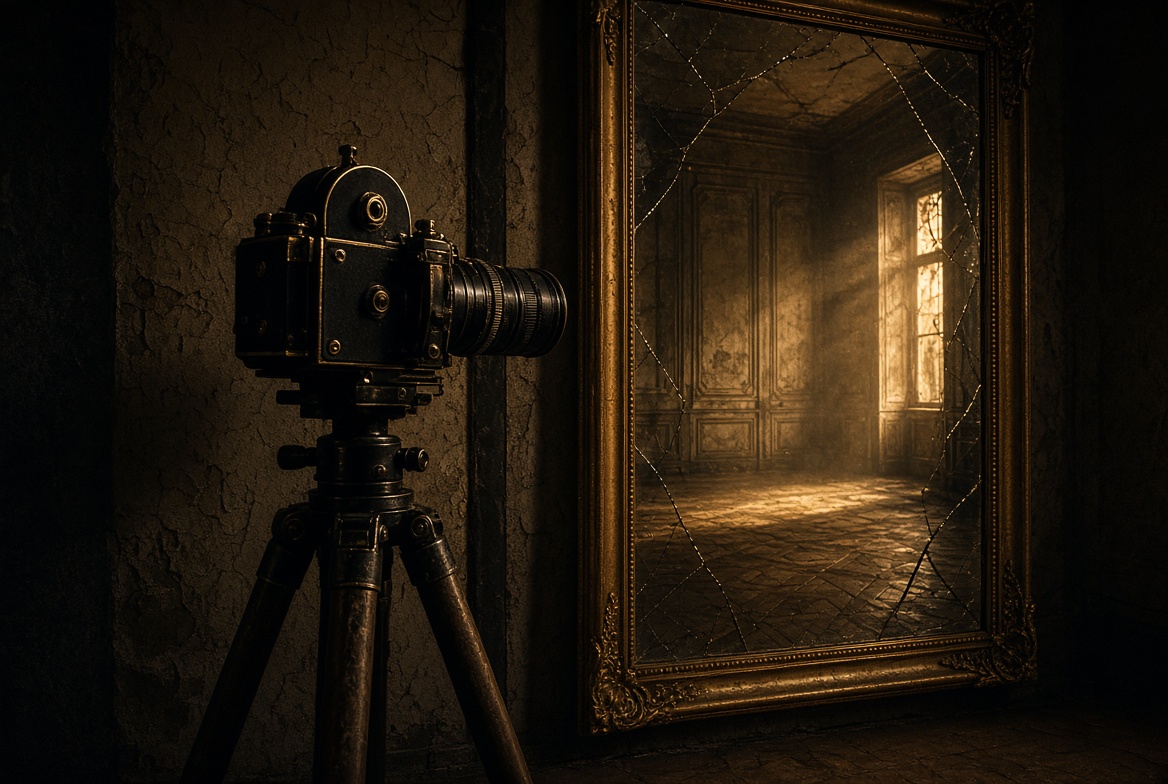
Filed beside the screening
The picture is Camera That Lied.
Scenario
2:57 · 16:9
Jules Kennett maintains the recorder the way another man maintains a lock. Tapes are labeled by hour, spines out, the latest one threaded. The room itself is plain: one door, shut; one table; one window with the blind down. He has just serviced the transport, oiled what needs oil, and proved the heads clean. A cloth with a dark smear of old oxide lies folded at the edge of the table. The machine is telling the truth about its own health. Its reels sit square. Its hum is even. He wipes his fingers and leaves no oil on the latch when he tests it. The latch is down. The room agrees with itself.
He plays the latest tape back on a small screen. On the screen the same room appears, and the door in it stands open. Day from somewhere else lies on the pictured floor. Jules turns to the actual door. It is shut. The latch is down. The seam is dark. He puts a palm to the wood and feels it solid. He opens the blind. Real daylight enters as a hard stripe and stops at the table leg. The window on the screen shows daylight the blind was refusing a moment ago, and it shows that daylight even now as a full wash, not a stripe. He stops the playback. The screen holds the open door as a still. He checks the cable, checks the housing, seats a plug that was already seated, and starts the tape again. The serviced machine repeats the lie without a stutter. The room denies it by remaining what it is. The hum does not change pitch to confess anything.
He does not confess a trick, because the trick is not his. He sets the housing back on. Screws turn down and stop. He leaves the tape threaded. The screen keeps its open door. His hand rests on the shut latch, the metal cold, the bar seated. Both versions continue, and only one of them is the room. The real blind stays up. The stripe of day on the floor does not match the wash on the screen. Time passes as the reels turn and the pictured door does not swing. Oxide smell stays faint and ordinary.
The cloth with the oxide smear stays folded. He does not use it on the screen, because the screen is not dirty. The lie is in the playback, not on the glass. The hour label on the tape spine remains the hour he wrote, and the room's plainness does not revise it.
On the screen the blind, which had been absent, rises into the picture on its own and stops halfway, while the real blind is already fully up. The pictured door remains open under that half covering. The actual latch under his hand does not lift. He does not correct the tape. He does not lower the real blind to force the two to agree. On the small screen a door stands open that the actual door, shut under his hand, keeps refusing.