Ash of Distant Suns
Key art
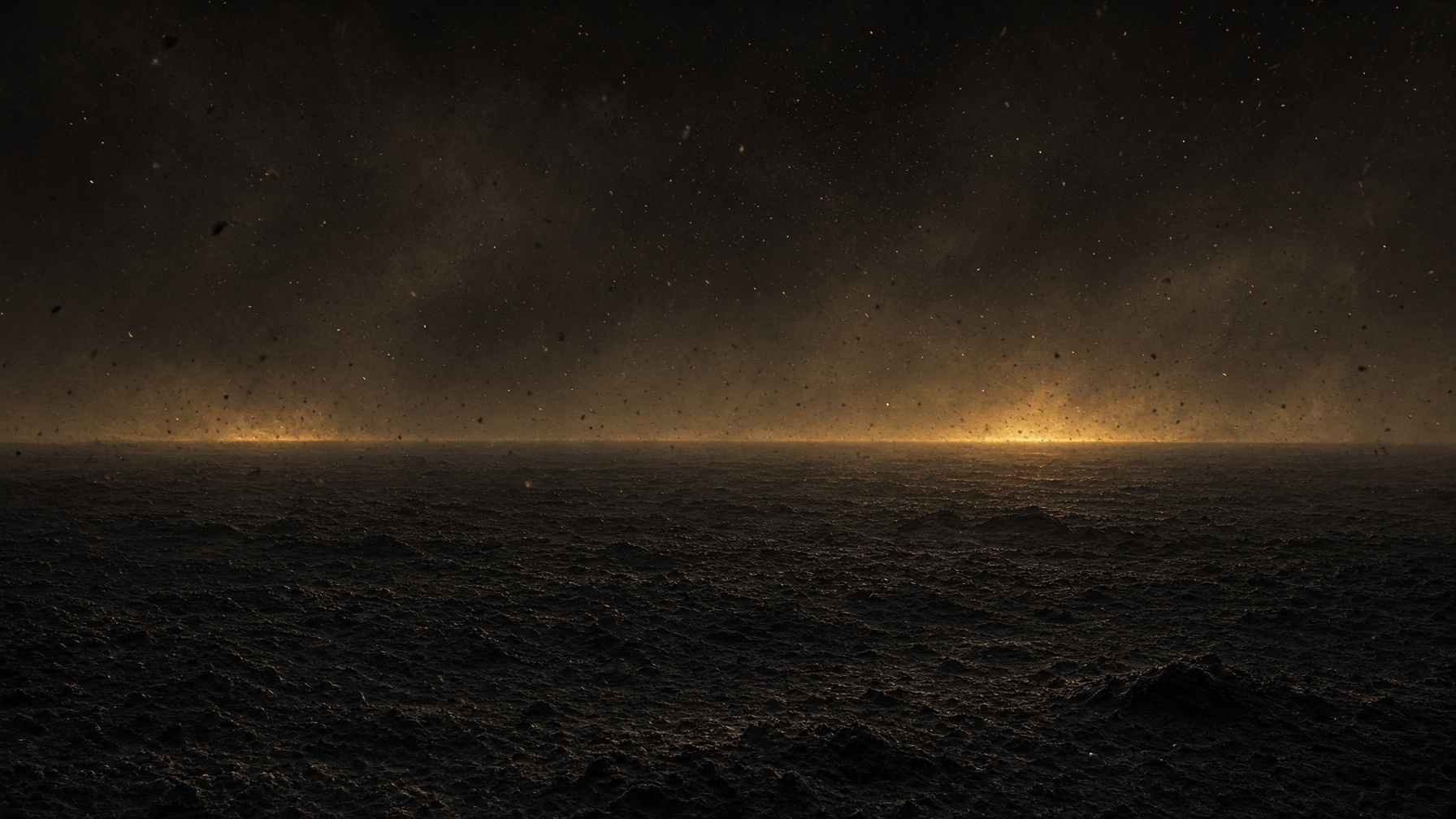
Filed beside the screening
The picture is Ash of Distant Suns.
Scenario
2:57 · 16:9
Ash falls on a city plaza while the sun overhead stays whole and white. The flakes land warm, then cold, and they are not soot from any chimney. They are what remains of a light that died somewhere else. Each flake is thin enough to show the paving through it for a moment, and then it is only grey. Benches, a dry fountain, and a pitted statue wear the grey. The statue's face is already marked with small holes, old ones, the size of seeds. A few people cross with papers held over their hair and do not stay long enough to speak. Their papers collect the flakes and are shaken once, and the people are gone between the buildings. Footsteps fade. The fall does not.
A woman remains. She catches a flake on her glove. A core of brightness holds in it, a point no larger than a pin, and then the point breaks to dust. The dust leaves no heat on the leather. On the statue a new pit opens in the stone cheek, the size of the flake, while she watches the dust leave her palm. The new pit is darker than the old ones, as if the stone had only just agreed to be missing. She does not touch the cheek. Her glove stays at her side, palm emptied.
The fountain, dry a moment ago, gives a thread of water. The thread comes out grey and fills the basin with light that has no color left in it. The water rises without sound to the first course of the basin and stops. Sun stays sharp on the paving around the wet. The ash ignores that sun. Flakes land on the grey water and do not float. They sink and take their brightness with them. She turns the glove over, and the brightness is gone. Only a pale smear remains in the crease, and then not even that. The leather looks as it did before the flake chose it.
The plaza empties of the last crossing. A paper hat blows as far as a bench and lodges under a slat. Ash keeps settling into the joints of the stone. Time passes as the thread of water stutters, steadies, and stutters again, never becoming a fall. The new pit in the cheek fills level with grey and then shows its dark again when a small slide of ash lets go of the stone.
Another flake finds the same hollow and the hollow deepens by a grain, still only the size of a small coin. The grey water in the basin sinks a finger and leaves a pale ring on the stone, a line that does not dry. She does not put the glove back under the fall of ash. The flakes keep working into the joints, a fallen light lying quiet under an afternoon that has not changed its own sun, and the deepened pit holds its grain of dark in the statue's cheek.