Apartment 47
Key art
Filed beside the screening
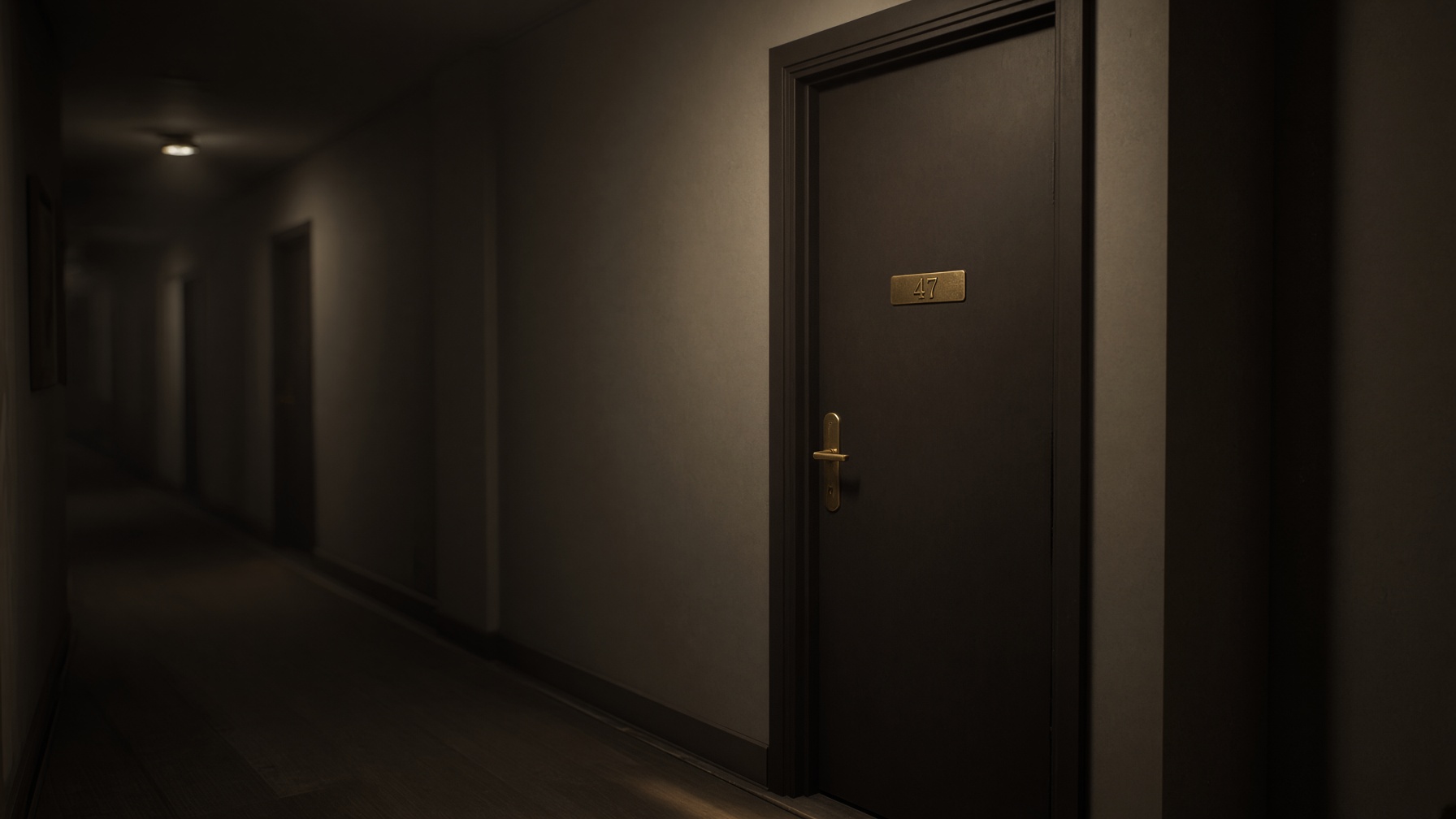
The picture is Apartment 47.
Scenario
2:57 · 16:9
Tess Orin comes along a corridor that smells of other people's dinners, oil and onion and a sweetness that is not hers. The number 47 is paint on a door, nothing more, a little chipped at the curve of the seven. She carries a ring of copied keys from a locksmith who no longer asks what they open. The copies click against one another in her pocket before she draws them out. Voices travel behind other doors, a laugh, a kettle lid, a chair pushed back, and none of them include her. She fits a key, unlocks her own door, and steps into one lamp and one table. The corridor stays brighter than the room she enters. She shuts the door on that brightness and leaves the lock unturned behind her.
She hangs the ring on a nail by the jamb. The nail already holds nothing else. She keeps back the key she finished copying before she left the shop and sets that bright new copy on the table, teeth up. It belongs to a lock she will not be told about. The shine on it is still the shine of the shop bench. She heats a small pot on a coil that ticks as it warms. She eats standing, spoon slow, eyes on the key and not on the food, then sits. The chair takes her weight and gives one small complaint. The building's conversations continue in the walls. Someone in the corridor says a name twice. It is not Tess. The second saying is softer, already walking away toward the stairs. She looks at the door and does not open it to correct the hallway. That is the turn of the night: she could have stood in the crack of light and been almost present, and instead she stays with the single lamp.
She rinses the pot. Water runs clear, then stops. Steam leaves the metal from the rim inward. She turns the extra chair to the table though no one will use it, aligning the seat with the place a second bowl would go. The chair legs scrape once and are quiet. She sits again with the copied key under her fingers. The teeth press lightly and leave no mark on her skin. The number on the outside of the door does not become special by being hers. A draft under the door moves a thread of dust and quits.
The bright copy, cooling in the lamp, loses its shop shine and becomes the same dull metal as the ring on the nail. She watches the dulling and does not hang it with the others. Corridor talk passes, a last laugh stopped short by a shutting door, and fades. The extra chair holds its new angle. The rinsed pot dries in a ring. The key lies beside the lamp, ordinary now, and the room remains only the table, the lamp, and her, with the unread lock still somewhere else.