After the Gods
Key art
Filed beside the screening
The picture is After the Gods.
Scenario
2:57 · 16:9
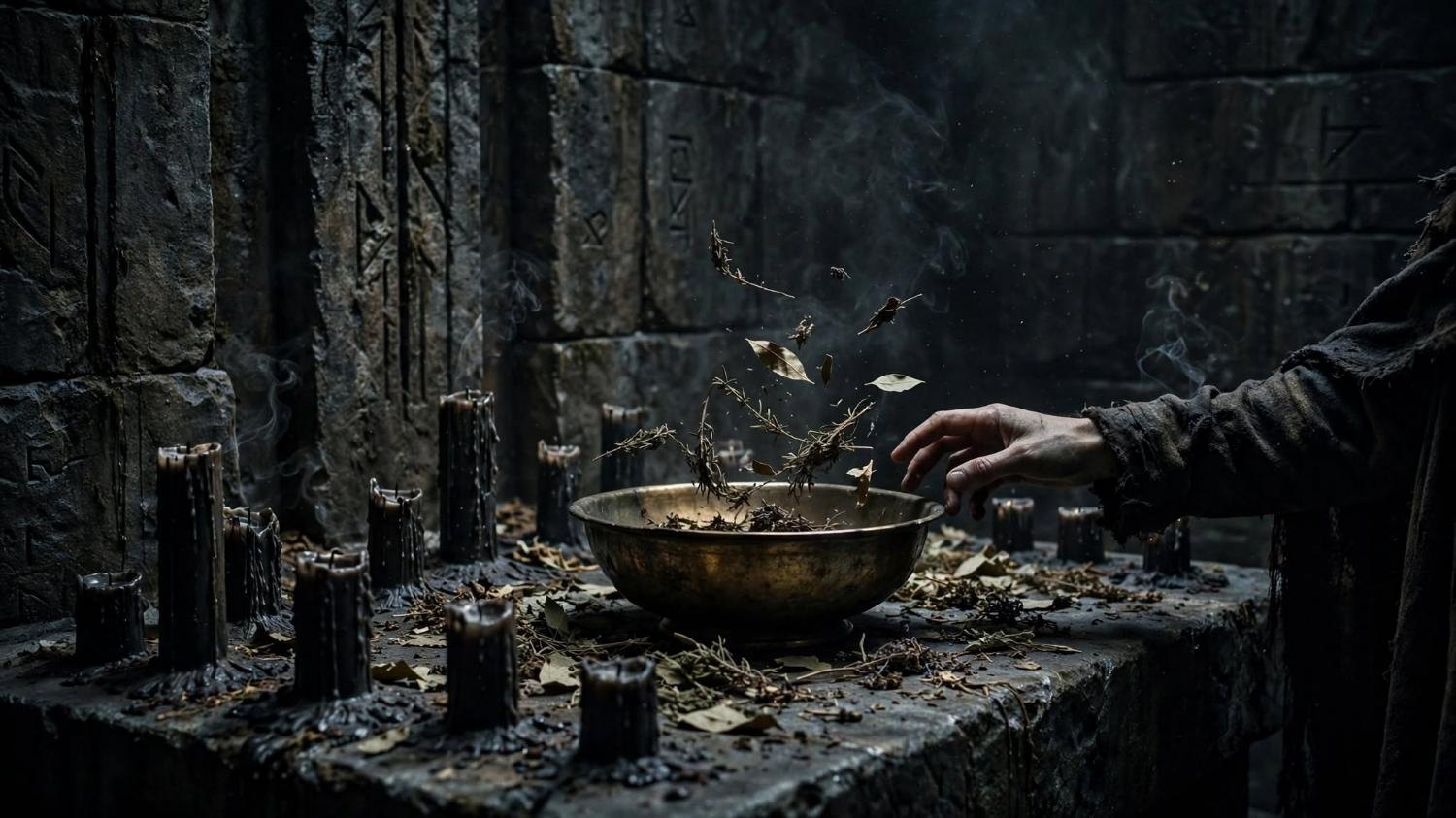
A brass bowl sits on bare stone. Dried herbs fill it, brown and light, already past any green. Black candles stand around the bowl, burned down to heavy stubs, their wicks curled. A hooded figure waits at the edge of the light. Breath shows in the cold and thins before it reaches the bowl. A hand comes forward and stops at the rim, fingers short of the herbs. The sleeve hangs still. Wax on the nearest stub has a dull skin. The stone under the bowl is darker than the stone around it, a long use worn into the grain.
The herbs rise once, all of them, a finger's height, and hang. Stems stay separate. Nothing spills over the brass. The hand does not follow. The candles do not flare. Their flames, what little is left, burn level and small. The figure's breath comes again and does not stir the hanging herbs. They turn a fraction, as if listening for a heat that is not offered, and the turn stops halfway.
The herbs shift, leaning toward the hand, every stem agreeing, and then they fall still. They do not drop back into a heap at once. They settle by degrees until the bowl looks as it did, only a little higher in the center. The hand draws back into the sleeve. Nothing else in the room moves to take its place. The stubs tick as they cool. One drop of wax lets go of a rim and hardens on the stone, a small coin of black that will not be picked up.
The figure lifts the bowl with both hands. The circle it leaves in the dust is clean, a pale ring with a darker center. The stubs go into a cloth, wrapped so the wicks cannot touch. The figure carries bowl and cloth out through the door and sets them on the step in the open dark. Wind moves the hem of the hood and does not follow the figure back inside. Smoke from the bowl thins to a thread and almost goes. The door remains open. No second figure comes to the threshold.
Inside, the altar stone is clear. No other light is left in the room. The mark of the bowl remains a clean circle. Fine dust begins to drift across the circle's near edge, not enough to hide it, enough to show that the stone is done being an altar. The wax coin stays where it fell.
On the step the bowl sits alone. The stubs in the cloth are cold to the air, their wax no longer shining. One herb, only one, rises again above the rim in the night air, hangs the same finger's height, and lies back down among the others. It does not lean toward the door. The last of the smoke stands over the herbs and then lies down into them, thread by thread, until the bowl is only brass, leaf, and cold wax. The hood does not come back for the bowl or the stubs.