After the Fall
Key art
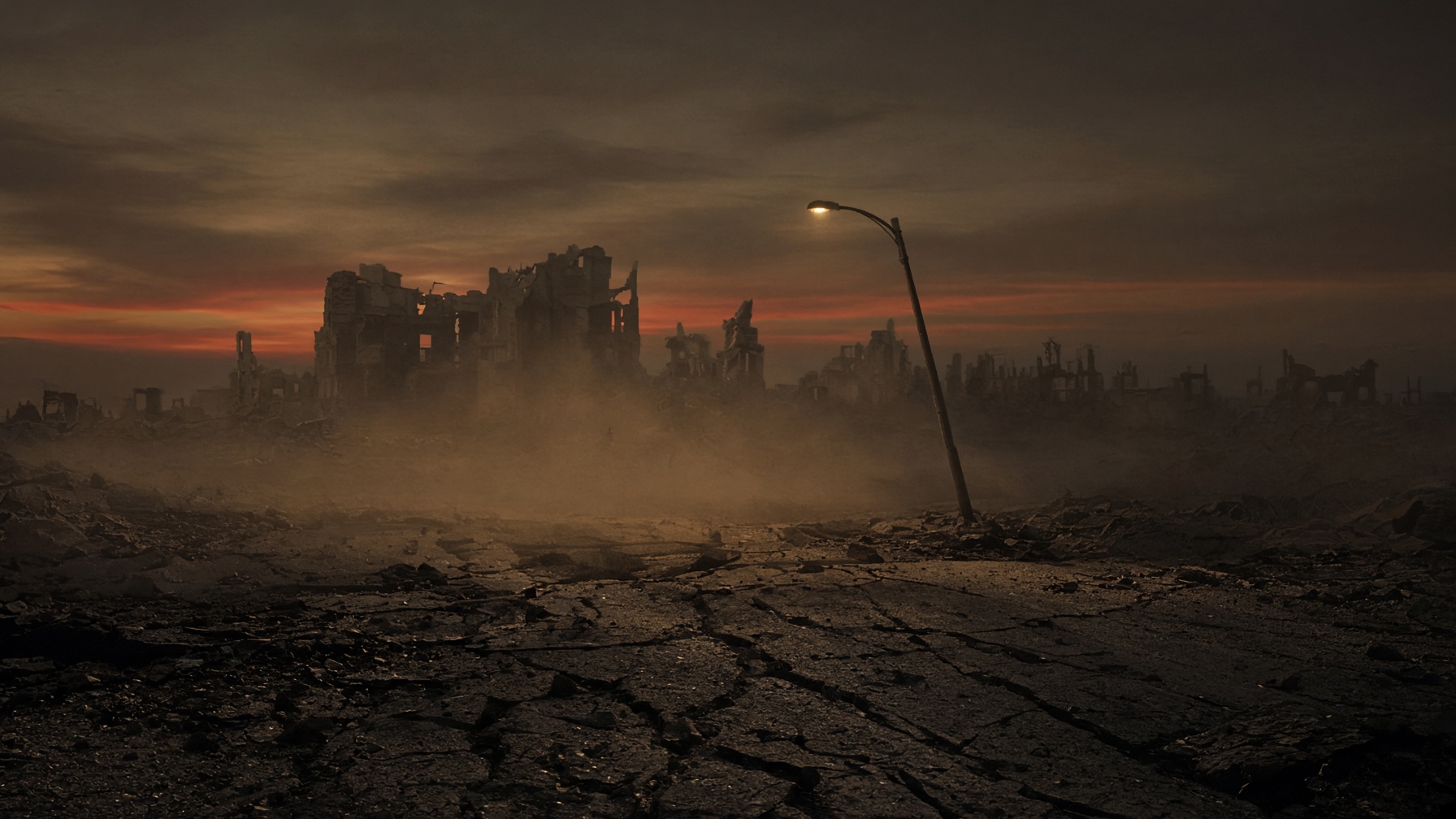
Filed beside the screening
The picture is After the Fall.
Scenario
2:57 · 16:9
Dust hangs in a single beam and does not hurry. The motes turn once and hold their height. Kael Morrow stands in a kitchen that still has walls, a counter, and a chair, and no longer has a job attached to any of them. His clipboard, the one an office used to send him out with, is blank. The clip bites an empty sheet. The office has not sent him. The event that ended the usefulness of the room is already over, and he does not restage it. A tap drips once into a dry basin and does not drip again.
He walks the length of the counter. His fingers test the edge, the seam, the place a kettle used to sit. A drawer sticks. He works it with the flat of his hand until it gives a short distance and shows him nothing: a bare well, a paper scrap faded to the color of the wood, no tool. He pushes the drawer shut. It sticks again on the way in and stays short of flush by the thickness of a coin.
He measures the room the way he used to, heel to toe, and writes only what occupies space. Wall. Beam. Chair. The pencil makes a dry sound. On the next line he begins the word repair, the letters small and careful, and then stops the pencil with the word unfinished. A rebuilt kitchen would be a kindness offered to a day that has finished. He scores the half word, stroke over stroke, until it is only graphite. The graphite dusts his thumb. He does not blow it off the page.
The chair is the accurate thing. Its legs are whole. Its seat holds a coat of grey the same as the table, the same as the sill. He sets a hand on the back. The dust there takes the print of his fingers and does not fall. He does not sit, because sitting would look like use, and use has ended. The seat stays smooth. Minutes pass as the beam travels a finger's width along the chair rail and makes the grey look thicker, then the same.
The drawer he left short of flush settles on its own, a slow creep, until the face is even with the counter. Nothing inside rattles. The paper scrap stays in the dark. On the clipboard the scored line has begun to shine where the graphite is heaviest, a black bar with no letters left under it. He does not write beneath it.
He closes the clipboard. The clip snaps once. The beam keeps its dust. The walls keep their places. His hand leaves the chair back, and the print of his fingers remains in the grey, five small absences that do not fill. The chair holds an empty seat in the lit dust, unasked, and the scored page stays shut against any plan.